
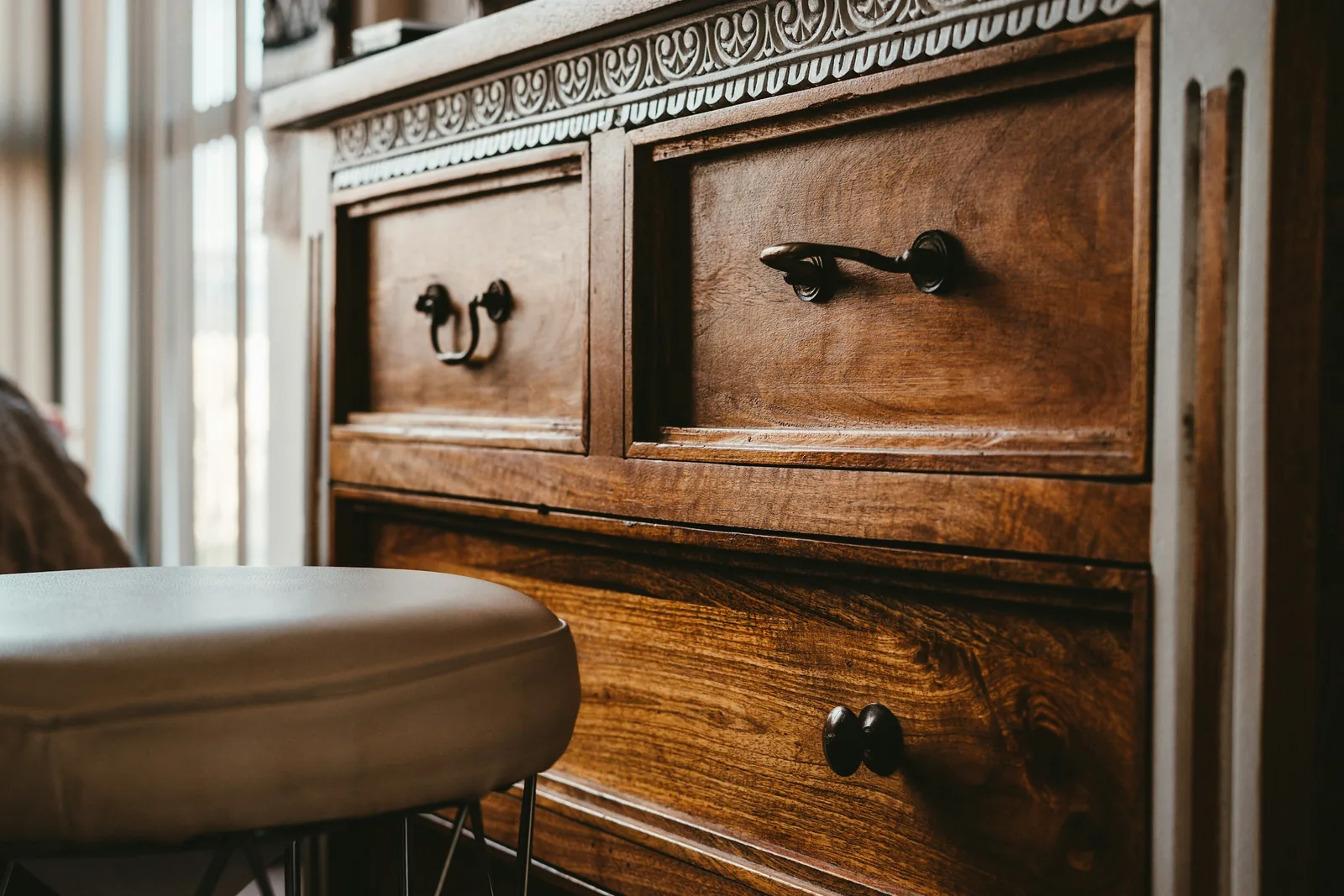
To sell antique furniture, choose the route that fits the piece and your timeline: an auction, a consignment shop, a dealer, or selling it yourself. Whichever you pick, leave the finish alone. Measure it, photograph it, keep every key and shelf with it, and write down what the family knows.
Most old furniture leaves a family one of four ways. An auction sets no price ahead of time and lets bidders decide on one closing date. A consignment shop displays the piece and pays you after it sells, which can take a while. A dealer buys it outright and quickly, though the offer has to leave the dealer room to resell. Selling it yourself keeps every decision in your hands, along with every photo, question and pickup.
The route matters less than what you do in the week before you choose one. Don't refinish, don't strip, don't polish the brass. A piece of antique furniture carries its own evidence of age in the finish, the joints and the hardware, and the next owner wants to read that evidence firsthand. If a whole house is involved, start with our guide to what an estate auction is.
Where to sell antiques: four routes compared
Each route trades money, time and control differently. None is right for everything, and the best choice for a single walnut dresser is often the wrong one for a farmhouse full of oak. If you're weighing a weekend tag sale against an auction for a whole household, our estate sale vs. auction comparison goes deeper.
| Route | How it works | Fits best | What you give up |
|---|---|---|---|
| Auction | Bidders compete and the market sets the price on one closing date | Whole households, collections, pieces with a following | Certainty on any single lot |
| Consignment shop | The shop displays the piece and pays you a share after it sells | A few good pieces and no deadline | Time and floor space; a piece can sit |
| Dealer | The dealer buys outright, then resells | Speed, one or two pieces | The margin the dealer needs to resell |
| Selling it yourself | You list it, answer questions and arrange pickup | A handful of items and plenty of time | Your evenings and weekends |
Our editorial guide, not a measurement. Fees and terms vary by business, so ask before you agree to anything.
Antique furniture and trunks are among the categories in our past catalogs. Our August 2026 multi-estate sale, for example, included antique trunks and a cherry drop-front secretary alongside the trains, tools and Wisconsin pottery. When you're ready to talk about your own pieces, here's how selling with us works.
Read it before you clean it
Here is the one rule we'd ask every seller of antique furniture to follow, and it's our editorial judgment rather than a published standard: read it before you clean it. Before anyone sands, strips, oils or polishes a piece, look at it closely, write down what you see, and then leave the surface alone.
Conservators back the second half of that rule. The Canadian Conservation Institute (CCI) says original furniture finishes carry historical, aesthetic and financial value and should be maintained, and its basic care guide is blunter: stripping wooden furniture is not recommended, and once an original finish is removed, it can't be put back. The National Park Service tells its own staff that cleaning historic wood furniture beyond dusting is not always desirable, because wear and soil patterns can show how a piece was used.
Should I refinish antique furniture before selling it?
Usually not. Refinishing replaces the very surface a buyer uses to judge age and originality, and nothing you do afterward brings it back. A worn, honest finish tells a bidder what they're looking at. A fresh one makes them wonder what's underneath. If a piece truly needs repair, let the next owner decide who does it and how.
What clean should mean before a sale
- Dust with a soft, dry cotton cloth. The CCI notes that much furniture made before World War I is sensitive to water.
- Skip the spray polish, the oil soap and the restoring products. According to the CCI, wood doesn't need to be fed, and many of those products can leave a sticky build-up.
- Leave the brass alone. The CCI notes that museums and historic houses no longer polish metal hardware; they buff it with a clean, dry cloth.
- Empty the drawers, but leave old labels, stamps and pencil marks exactly where they are.
Antique furniture identification: clues to write down
You don't need to date a piece to sell it well. You need to notice the clues and keep them intact. The list below is our editorial guide, not a dating method: a single clue proves nothing, and later repairs muddy all of them. Write down what you find and bring the notes to your free consultation.
Joints and drawers
Pull a drawer all the way out and look at the corners. Hand-cut dovetails tend to vary a little in size and spacing, while machine-cut ones repeat exactly. Look at how the drawer bottom is fitted, too, and whether the runners are worn smooth.
Tool marks
Turn the drawer over and look at the back of the case. Saw marks, straight or curved, and the shallow ripples a hand plane leaves behind are easiest to see on surfaces nobody was meant to look at.
Hardware and fasteners
Check the pulls, hinges, screws and nails. Extra or filled holes behind a pull usually mean the hardware was changed at some point. That isn't a flaw to hide. It's a fact to note.
Secondary woods
Makers often used a plainer wood for drawer sides, backs and bottoms. Note whether those surfaces are unfinished or stained to match the front, and write down any labels, stamps or chalk marks you find. Don't remove them.
Get it ready to sell: measure, photograph, keep the parts
Whatever route you choose, the person on the other side of the deal will ask the same questions about your antique furniture. Answer them before anyone asks.
- Measure height, width and depth at the widest points, plus any leaves, shelves or mirrors that come off.
- Photograph the front, both sides, the back, the top, one open drawer, the joints and any label or maker's mark, in good daylight.
- Note condition plainly: cracks, veneer loss, old repairs, replaced pulls, missing keys.
- Bag and label loose parts such as keys, finials, shelf pins, bed rails and casters, and keep the bag inside a drawer of the piece it belongs to.
- Move it carefully. The CCI suggests taking out drawers, shelves and doors first, lifting a piece by its strongest points instead of dragging it, and carrying a marble top upright.
Keep every part with the piece
The most common mistake isn't a scratch. It's separation: the key that stays in a kitchen drawer, the marble top that goes to a cousin, the mirror that leaves without its dresser. Keep sets, pairs and parts together until the sale is planned, and bring your measurements and photos when you tell us what you're working with.
Write down what the family knows
Provenance is simply a piece's history, and in most families it lives in one person's memory. Write it down while you can: who owned it, which room it stood in, where it came from, and any receipts, letters or photos that show it in the house. Keep that paper with the piece.
Be careful with family legend. "Grandpa said it's from the 1850s" belongs in your notes as exactly that: something Grandpa said. Let the evidence in the wood speak for itself, and let buyers weigh the story.

If the furniture belonged to a parent who has died, settle who has legal authority to sell it before anything leaves the house.
How to sell antiques when there's a whole house of them
One dresser is a decision. A farmhouse full of oak, pressed glass, trunks and tools is a project, and selling it piece by piece can take a season. That's where an auction earns its place: one catalog, one closing date and one pickup window instead of dozens of separate deals. Our guide to how an estate auction works walks through it, and these downsizing tips for seniors help when a move comes first.
We run estate, household, antique and farm auctions from downtown Deerfield, about 15 minutes east of Madison, and all bidding happens online through HiBid. Every lot is numbered, described and photographed, so bidders well beyond Dane County can see what's in the sale before they bid.
One request before you start: don't throw anything away until we've looked at it. The things families are sure nobody wants are often the ones that draw the most attention.
Common questions
How can I tell if my furniture is antique?
Look for clues rather than a single answer: hand-cut joints, saw and plane marks on hidden surfaces, original hardware and plain secondary woods inside the drawers. No one clue proves age, and later repairs complicate all of them. Write down what you see, photograph it, and leave the finish alone so the next person can judge too.
Is it a mistake to refinish an old dresser before selling it?
Usually, yes. The Canadian Conservation Institute advises against stripping wooden furniture because an original finish can't be put back once it's gone, and buyers judge age and originality from that surface. Dust it with a soft, dry cloth, skip the polish, and let the next owner make any decision about refinishing.
Should I polish the brass pulls on an antique dresser?
No. According to the Canadian Conservation Institute, museums and historic houses no longer polish metal hardware; they buff it with a clean, dry cotton cloth. Metal cleaners can also damage the wood and finish around the pulls. Leave the hardware as it is, and make a note of any pulls that look like replacements.
Can I sell just one antique piece at auction?
Often, yes. Single pieces and single collections get consigned into our sales regularly, alongside full estates. Call Marv at (608) 628-1631, describe the piece, and have your measurements and photos handy. If an auction isn't the right route for it, he'll tell you that instead of taking it.
How do I move antique furniture without damaging it?
Empty it first, then take out the drawers, shelves and doors. Lift by the strongest points, such as a table's apron or a chair's seat, and never drag a piece across the floor. Carry a marble top upright. The Canadian Conservation Institute also warns that attics, basements and garages are poor places to store furniture.
Where can I sell antique furniture near Madison?
You have the same four routes anywhere: auction, consignment shop, dealer or selling it yourself. Dorshorst Auctions works out of downtown Deerfield, about 15 minutes east of Madison, and antique furniture and trunks are among the categories in our past catalogs. A first conversation with Marv is free and carries no obligation.
Sources
- Basic care: Furniture and objects made of wood, Canadian Conservation Institute
- Care of Furniture Finishes, CCI Notes 7/2, Canadian Conservation Institute
- Conserve O Gram 7/1: Cleaning Wood Furniture, National Park Service