

A soft close auction keeps each lot open while bids keep coming. At our sales, a bid in the final minute pushes that lot's close back another minute, so a lot ends only after a final minute with no new bid. That takes the edge out of sniping.
Online auctions used to have a classic ending: a lot sat quietly all week, then someone dropped a bid in the last two seconds and walked away with it. That move has a name, sniping, and the soft close is the rule built to answer it.
Every lot at our sales closes this way, so it helps to know exactly how one works. Below: what a soft close auction is, how it differs from a hard close, what it does to sniping, and how to bid when the clock can move. You can see when the next sale starts closing on our current auctions page.
What is a soft close auction?
A soft close auction keeps each lot open as long as bids keep arriving near the end. At our sales, a bid in the final minute pushes that lot's close back another minute.
The National Auctioneers Association also calls it a "dynamic ending" and says it is meant to "mimic the back and forth of a live auction." Extension windows vary by company, and the NAA's example uses two minutes. Ours is one minute, and it works lot by lot: a late bid on one lot extends that lot only.
Online sales count as auctions under Wisconsin's rules, too. SPS 120.02 defines an auction to include services provided through a website when an auctioneer conducts it, and Marv runs every one of our sales as a Registered Wisconsin Auctioneer, #344.
Soft close vs hard close
| Hard close | Soft close | |
|---|---|---|
| When the lot ends | At a fixed time, no matter what | After a final minute with no new bid (at our sales) |
| A bid in the last seconds | Can win with no chance of a reply | Adds another minute for everyone |
| What it rewards | Timing and a fast connection | The highest real limit |
| How to bid | Watch the clock | Set your max and let it work |
The last two rows are our editorial judgment, not a measurement.
The idea is older than the internet. Wisconsin's sale-by-auction statute, Wis. Stat. 402.328, says that when a bid comes in "while the hammer is falling in acceptance of a prior bid," the auctioneer may reopen the bidding. The online version does something similar on a timer: a late bid keeps the lot open for another minute.
Auction sniping, and why a soft close takes the edge off
Auction sniping is placing a bid in the final seconds of a hard close, timed so no one has a chance to answer it. The sniper hopes to win below what the other bidders would have paid.
On a hard close, sniping can work, which is why some bidders hold back all week and pounce at the end. An extending close removes the reason to wait. When a bid in the final minute only adds another minute, the bidder who held back gets an answer like everyone else. The NAA says it "eliminates sniping or other online strategies or technologies."
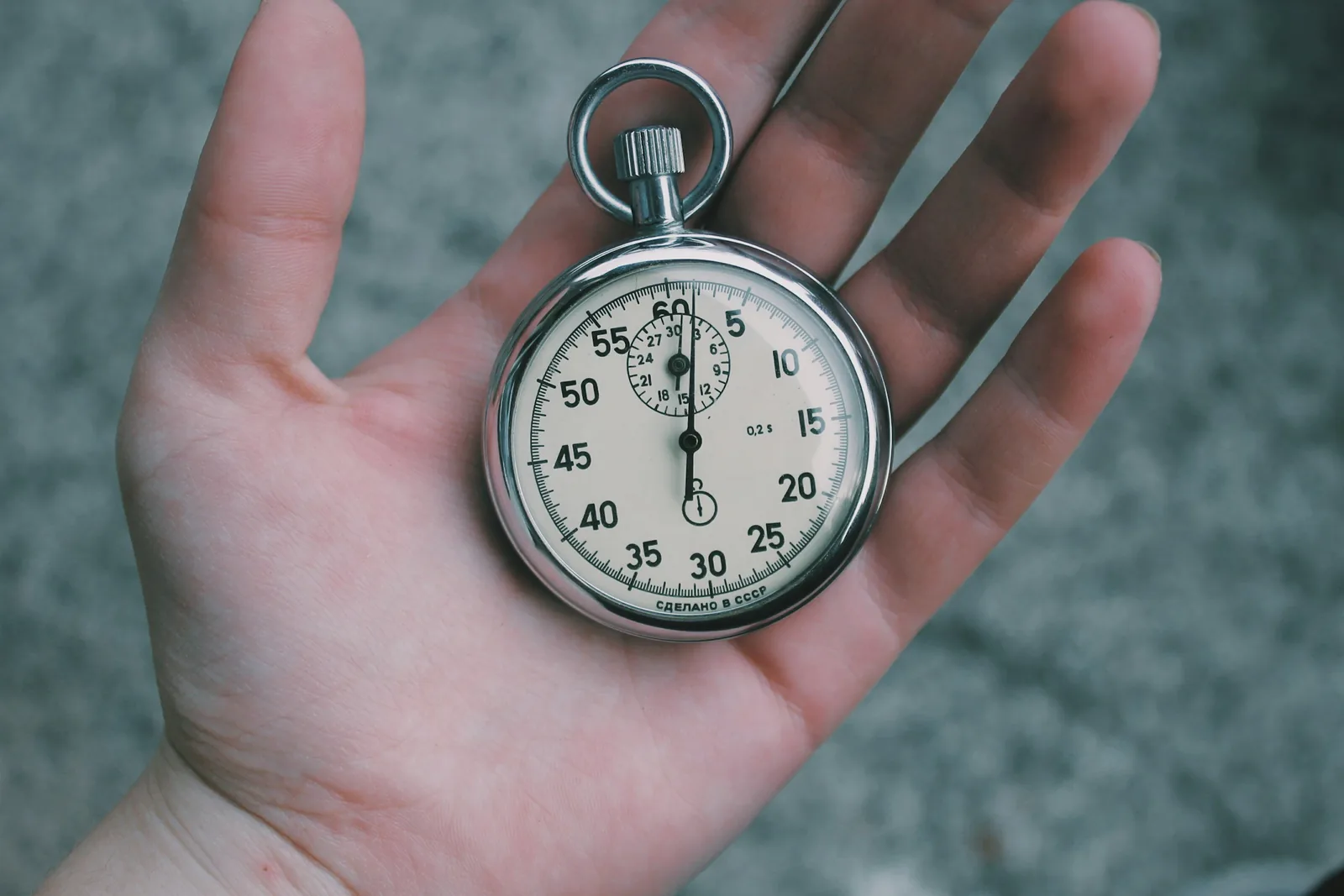
Our bidding tips put it plainly: a last-second bid does not guarantee a win. If you were waiting for the final seconds, take the extra minute as your cue to decide your number earlier instead.
The quiet minute: how a lot actually ends
Here is how we suggest reading a closing time. This is our editorial judgment, not a rule: the posted time is when a lot can start to close, not when it will. A lot ends after its first quiet minute. The bidder who wins is whoever is still willing when everyone else has gone quiet.
Our August 2026 sale, for example, posted "Soft Close at 5:00pm CST on 8/17/26." Here is how any one lot can play out from that point, as a hypothetical:
- The lot enters its final minute before the posted closing time.
- A bid lands in the final minute, so the lot gets another minute.
- Another bid lands inside the new final minute, and the lot gets another minute again.
- A full final minute passes with no new bid. The lot closes, and the high bid becomes the hammer price.
Two things follow. A lot with no late interest closes right on time, and a lot that two people want can run past the posted time. Many online auction companies also stagger lot end times so lots don't all close at once, the NAA notes, so check each catalog's schedule and give yourself room past the posted time if you plan to watch.
It also explains a common complaint, losing a lot "by seconds." At our sales, a bid that lands in the final minute pushes that lot's close back another minute, so others have time to answer it. If you bid late and still lost, check the likely reason first: another bidder's max may already have been higher, and it answered your bid at once.
How to bid in a soft close auction
The extension changes when bidding pays off, not what your limit should be. These steps keep the extra minutes from turning into extra spending:
- Find the posted closing time in the catalog before you register.
- Decide your out-the-door limit for each lot, allowing for the 4% credit card transaction fee, 5.5% Wisconsin sales tax where applicable, and any shipping.
- Enter that limit as a max bid before the close. HiBid bids for you in standard increments, only as far as needed; our max bid guide explains how.
- Watch your email. HiBid emails you if you are outbid, and that is the moment to decide, calmly and before the final minute, whether to raise your max.
- Let a lot go once it passes your limit. Another catalog will come.
If you watch the close live
Watching is fine, and plenty of bidders enjoy it. Keep your written limit in front of you. A slow connection matters less here than on a hard close: the NAA notes that this kind of close puts bidders with slower or unstable connections on a more even footing, because every late bid opens another minute to answer it. What still matters is the limit, since a bid in the extra minutes is a binding offer to purchase like any other. For the mindset that keeps a limit a limit, read The Art of Bidding.
After the last minute: invoice, payment and pickup
Once a lot's final minute passes quietly, the bidding on that lot is over. Winners get an emailed invoice after the sale closes, and cards are charged within 24 hours after the close; to pay cash, arrange it before the close. There is no buyer's premium, and our buyer's premium guide shows how the card fee, tax and shipping lines work.
Then comes the posted pickup window. Small lots can ship for a $10.00 handling fee plus the actual USPS or UPS cost, within 7 days after the pickup window, and larger lots are pickup only. Everything sells as is, where is, so a bid in the extra minutes is a bid on the lot exactly as listed. Our guide to as is, where is explains what that covers.
Common questions
How long does a soft close extend an auction?
It depends on the sale. Each auction company sets its own extension window, and the National Auctioneers Association's example uses two minutes. At our sales it is one minute: a bid in the final minute pushes that lot's close back another minute, and the lot closes once a final minute passes with no new bid.
Can you still snipe a soft close auction?
You can bid in the final seconds, but it won't end the lot. A bid in the final minute only adds another minute, so other bidders get a chance to answer. At our sales a last-second bid does not guarantee a win, and a max bid set before the close is the better tool.
Does a soft close apply to the whole sale or to each lot?
At our sales it works lot by lot. A bid in the final minute pushes that lot's close back another minute, and other lots keep their own clocks. So one popular lot can run past the posted closing time while quieter lots in the same sale close right on schedule.
Do I need to watch the end of a soft close auction?
No. Set a max bid before the close and HiBid bids for you in standard increments, raising you only as far as needed, including in any extra minutes. HiBid emails you if you are outbid, so you can decide whether to raise your limit without sitting at the screen until the end.
What is the opposite of a soft close?
A hard close, where a lot ends at a fixed time no matter how many bids arrive in the last seconds. Hard closes reward timing, which is why sniping works there. A soft close extends a lot when late bids come in, so the bidding ends on interest rather than on a stopwatch.
Why do auctioneers use a soft close for online sales?
To let every bidder answer a late bid. The National Auctioneers Association says a soft close is meant to mimic the back and forth of a live auction, and that it puts bidders with slower internet connections on a more even footing. The lot ends when the bidding does, not when a timer says.
Sources
- What Is A Soft Close Or Dynamic Ending Of An Online Auction?, National Auctioneers Association
- Wis. Stat. 402.328, Sale by auction, Wisconsin State Legislature
- Wis. Admin. Code SPS 120.02, Definitions (auctioneers), Wisconsin State Legislature