
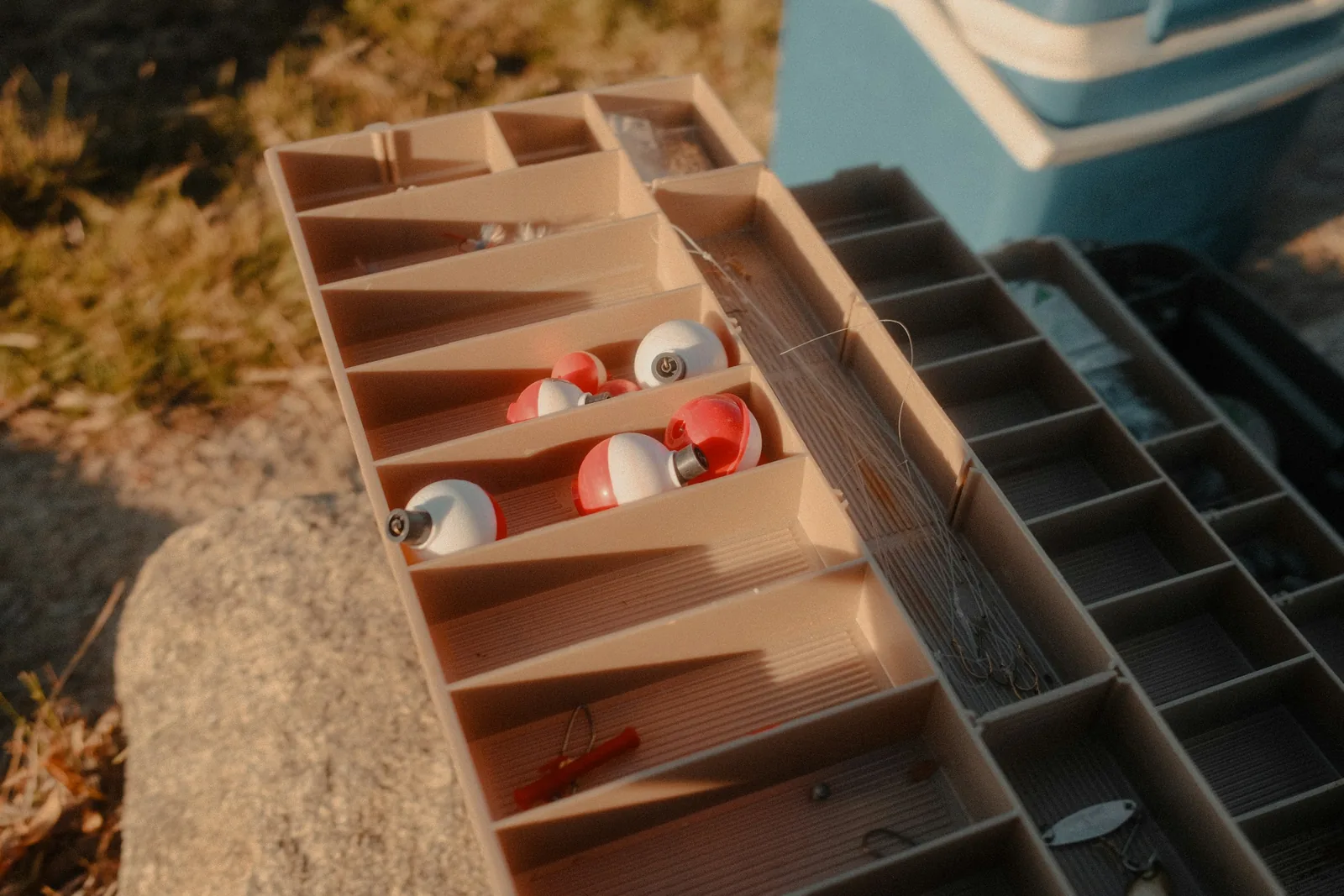
Most old fishing lures in a family tackle box are common: mass-produced spinners, spoons and plastic baits. Collectors look harder at early wooden lures, original boxes and paper, and makers with a following. Sort the box before anyone dumps it, leave everything as it is, and keep the hooks covered.
Fishing runs deep in Wisconsin. State law names the muskellunge as the state fish, and the Fresh Water Fishing Hall of Fame in Hayward says its museum holds over 50,000 historical and vintage artifacts, from lures to rods, reels and accessories. So it's no surprise that the tackle box from a parent's cabin or garage gets a second look before anyone empties it.
The honest short answer: most old fishing lures are common. Spinners, spoons, jigs and soft plastics were made by the millions and sold in every bait shop. What draws collectors is narrower: early wooden lures, lures still in their original boxes, old catalogs and paper, and makers with a following. Here's how to tell what you have and how to sell it.
Are old fishing lures worth money? What decides it
No one can say from a photo of a tackle box. Interest in a lure comes down to a handful of things a buyer can check:
- Age and material. Early plugs were carved wood, often with glass eyes, and the way the hooks attach changed over the years, which helps date a lure. Many classic shapes were later made in plastic.
- Maker. A 2014 article in Missouri's state conservation magazine profiles early wooden lures from makers such as Heddon, Pflueger, South Bend and Creek Chub, and notes that Heddon's Dowagiac Minnow is as popular with collectors today as it was with anglers in the early 1900s.
- Box and paper. An original box, card or instruction sheet can matter as much as the lure.
- Condition. Paint loss, rust, chipped eyes and replaced hooks all count.
- Color and pattern. Some finishes were made in far smaller numbers than others.
One caution about prices you see online: an asking price is not a sold price, and a single high listing tells you nothing about the lure in your hand. If you're weighing whether to sell at all, here's how selling with us works.
Vintage fishing tackle beyond the lures
Lures get the attention, but collectors look at the whole box. The National Fishing Lure Collectors Club, founded in 1976, describes its hobby as every aspect of collecting fishing-related tackle and ephemera, including catalogs and advertising. That means old reels, rods, tackle boxes, minnow buckets, store displays, catalogs and the paperwork that came with them all deserve a look before anything is tossed.
Some names in a Wisconsin box are local. Mepps says every Mepps in-line spinner and spoon sold in the United States is hand assembled in Antigo, Wisconsin. Those carded spinners are a Wisconsin story, but they're still made today, so most of them are common. Newer gear counts too, including ice fishing equipment.
Notice the honest listing: "not tested." Electronics, reels and motors sell better described as they are than oversold. If the garage holds more than fishing gear, our guide to what to do with old tools covers the workbench.
Antique fishing lures value: what collectors check
You don't need to identify a lure to sell it well. You need to notice the details and keep them intact. Write down what you see on each one that looks old, and photograph it front, back and belly.
Body, eyes and hardware
Note whether the body is wood, metal or plastic, whether the eyes are glass, painted or missing, and how the hooks attach. Don't swap hooks, retie, sharpen or straighten anything. Replaced parts are a fact to note, not a flaw to fix.
Boxes, cards and paper
Keep every lure with its box or card, even a battered one, and keep loose paper together: catalogs, instruction sheets, receipts. A lure still in its package tells a buyer more than a loose one. Paper is the easiest thing to lose in a cleanout, which is why it's high on our list of what not to throw away.
Paint and wear
Hook rash, chipped paint and faded color are part of a lure's history. Don't touch up paint, polish metal or wipe anything down. A buyer would rather see honest wear than wonder what was done to it.
Reels and rods
Look for a maker's name and model stamped on a reel's side plate or foot, and on the butt section of a rod. Don't oil, open up or reassemble a reel; just note whether the handle turns and whether any parts are missing. A rod that came in a cloth bag or tube should stay in it.
The tackle box triage: three trays
Here's how we'd suggest sorting a box before anyone else touches it. It's our editorial judgment, not a collector's standard, and it keeps the few pieces that matter from vanishing into a bag of sinkers. Cover hook points or keep lures in closed containers while you work.
| Tray | What goes in it | What to do |
|---|---|---|
| 1: Set aside | Wooden lures, glass eyes, anything in an original box, old reels, catalogs and paper | Leave as is, photograph, keep each box with its lure |
| 2: Box lot | Carded spinners and spoons, soft plastics, bobbers, sinkers, loose hooks | Keep together in a closed container |
| 3: Gear | Rods, nets, minnow buckets, ice fishing gear, electronics, motors | Note make and model; say if untested |
Our editorial guide, not a measurement. When in doubt, a piece goes in tray 1.
Tray 2 isn't junk. Everyday tackle still sells, and grouping it into a box lot lets a buyer take the whole drawer at once instead of picking through it. The point of the sort is simply to keep a boxed wooden plug from riding along unnoticed with the sinkers.
Selling vintage fishing tackle from a Wisconsin estate
- Don't dump the box. Sort it into the three trays first.
- Leave everything as it is. No oiling reels, repainting lures or swapping hooks.
- Keep boxes, cards and paper with the lure they came with.
- Photograph tray 1 piece by piece, front and back, plus any marks on reels.
- Write down the family story: the lake, the cabin, the years someone fished it.
- Settle who can sell. If the angler has died, start with our checklist for when a parent dies, then read up on transfer by affidavit in Wisconsin.
We run estate, household, antique and farm auctions from downtown Deerfield, about 15 minutes east of Madison, and all bidding happens online through HiBid, so anglers and collectors well beyond Dane County can see every lot. Single pieces and single collections are consigned into our sales regularly, and the past sales list shows how broad a catalog can be. One request: don't throw anything away until we've looked at it. The box a family is sure nobody wants is often the one that draws the most attention.
Common questions
What kind of old fishing lures do collectors want?
Collectors look hardest at older lures with wooden bodies and glass eyes, lures from makers with a following, and anything still in its original box or card. Catalogs and paper draw interest too. Mass-produced spinners, spoons and soft plastics are common, though they still sell, usually grouped together as a box lot.
How can I tell how old a fishing lure is?
Look at the body material, the eyes, the hook hardware and any name stamped on the lure, lip or box. Wooden bodies and glass eyes generally point older than plastic. No single clue settles it, so photograph each lure, keep it with its box, and let someone who knows tackle look before you decide.
Should I clean old fishing lures or reels before selling them?
No. Don't repaint, polish, oil or swap hooks. Paint wear, hook rash and patina are part of how buyers judge a lure, and a fresh repair raises questions instead of value. Leave everything as it is, cover the hook points for safety, and note any damage or replaced parts plainly in your notes.
Does the original box matter for an old lure?
Often, yes. A box, card or instruction sheet can identify the maker and model and helps show the lure is what it seems, so collectors pay attention to it. Keep every lure with its own packaging, even if the box is torn or stained, and don't throw out loose boxes until someone has matched them.
Are old tackle boxes worth keeping?
Keep them until the sort is done. The box itself may interest a collector, and the trays often hide the oldest lures, loose paper or reel parts. Empty it carefully, tray by tray, with the hooks covered. After that, decide what to keep, and sell the rest as a group rather than throwing it out.
Can I sell a whole tackle box at auction?
Yes. Box lots of everyday lures, hooks and baits appear in our sales, and Marv can tell you whether older or boxed pieces should stand as their own lots. Our August 2026 sale included a box lot of lures and a separate lot of hooks and baits. Call Marv to talk through what you have before anything is split up.
Where can I sell vintage fishing tackle near Madison?
Dorshorst Auctions works out of downtown Deerfield, about 15 minutes east of Madison, with all bidding online through HiBid. Single pieces and whole collections are consigned into our sales regularly, and fishing gear has appeared in our recent catalogs. Call Marv at (608) 628-1631 for a free consultation, and keep the tackle box untouched until he has seen it.
Sources
- Wis. Stat. 1.10, State symbols, Wisconsin State Legislature
- Museum Information, Fresh Water Fishing Hall of Fame, Hayward, Wisconsin
- Mission and History, National Fishing Lure Collectors Club
- Mepps Spinners: Hand Assembled in the USA, Mepps (Sheldons', Inc.)
- Hooked on Old Wooden Fishing Lures, Missouri Conservationist, Missouri Department of Conservation (December 2014)