Redline Hot Wheels are Mattel's early cars, made from 1968 into the 1970s, with a thin red stripe on each tire. Most cars in a family box are later ones. Check the wheels first, don't trust the year on the base, keep packaged cars sealed, and leave every car unpolished.
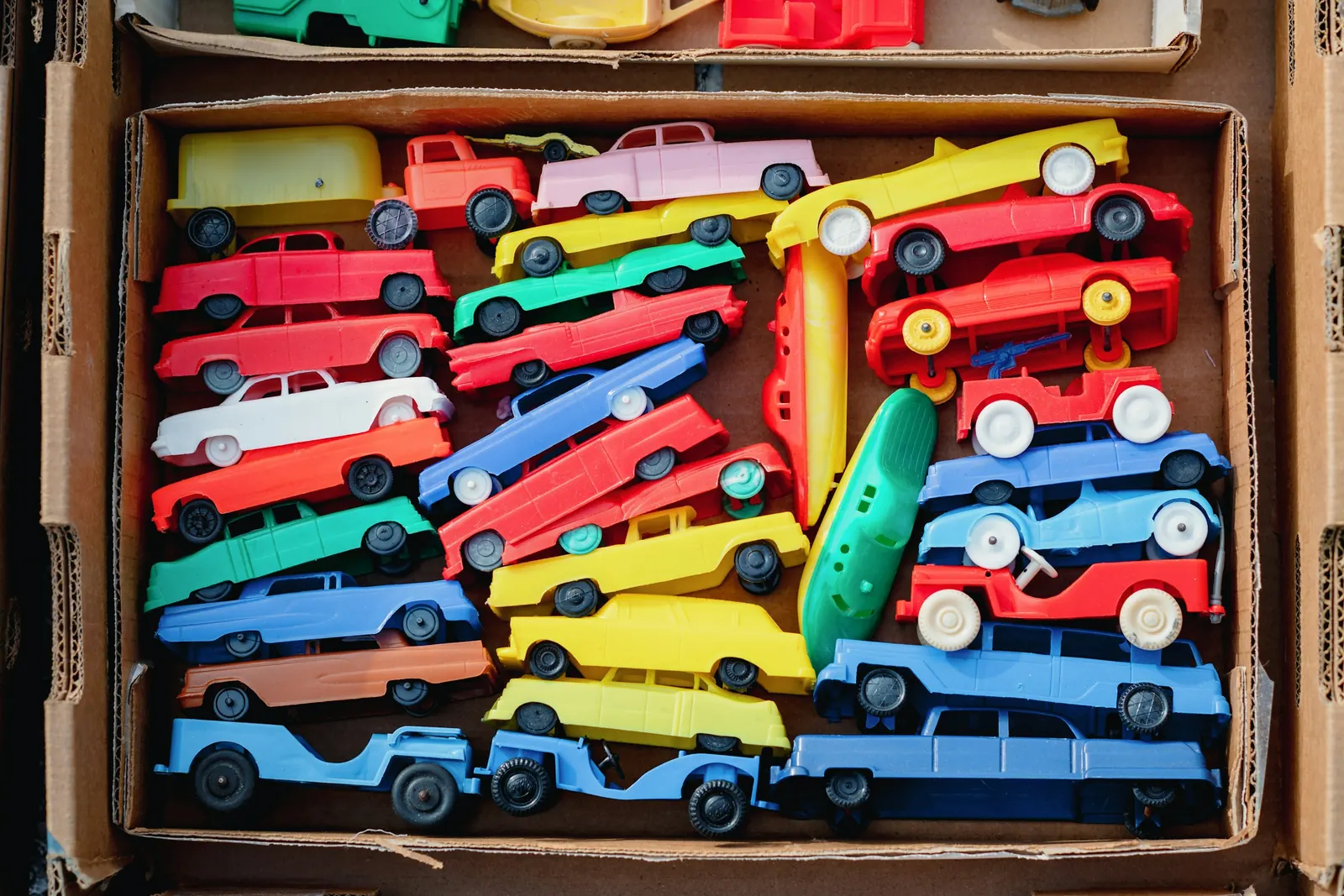
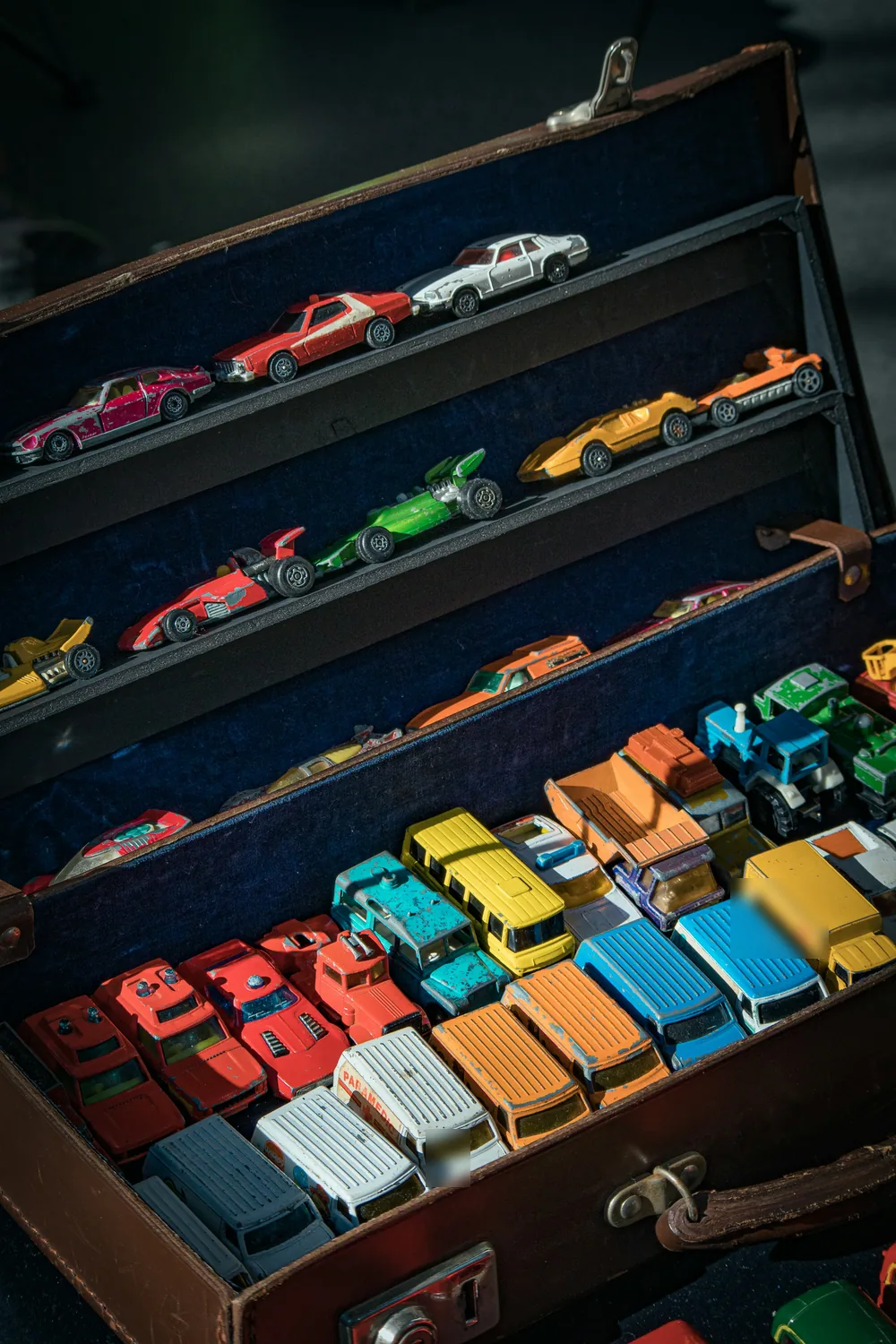
In a lot of Wisconsin attics there's a shoebox or a carrying case full of little cars, and this time of year it tends to come down with the Christmas boxes. If the kid who played with them grew up between 1968 and the late 1970s, a few of those cars may be Redlines, the early Hot Wheels collectors know best.
The honest short answer: most cars in a family box are later ones, and a common car is common no matter how loved it was. A true early car in good, original condition draws real interest, and condition decides a great deal. We don't put dollar values on cars in our articles. What we can do is show you how to sort the box without hurting anything.
What makes a Hot Wheels car a Redline
A Redline is an early Hot Wheels car with a thin red stripe around each tire. Collectors generally use the name for cars from the line's first decade, 1968 through 1977. That span is collector convention: The Strong describes red-stripe tires on the early cars but gives no end date.
The Strong National Museum of Play traces the line to Mattel cofounder Elliot Handler, who wanted a die-cast car to surpass the popular English Matchbox brand, and to Harry Bradley, a Chevrolet designer who led the toy design team. Mattel first offered 16 muscle models in 1968.
In a 2011 piece on the line's induction into the National Toy Hall of Fame, a museum curator described what set those first cars apart: they rolled fast on thin music-wire axles, and they came with red-stripe racing tires and, in the first few years, a metallic Spectraflame finish. Collectors particularly prize the Sweet 16, the first 16 models. NBC News reporting from 2004 described the Redlines collectors were hunting as cars made in the late 1960s and early 1970s with a trademark thin red line on the tires.
If the same box holds vintage Tonka trucks or 1/64 farm toys, those have their own guides.
The wheel-first test
Sorting a box of little cars goes faster with a fixed order. This is our editorial guide, not a collector standard: check the wheels, then the paint, then the base, then the package, and handle every car by its edges.
- Wheels. Look at the tire sidewall for a thin red line. Cars with plain black tires go in a separate pile.
- Paint. On the earliest cars, look for the metallic finish The Strong calls Spectraflame, a painting process that revealed the shiny metal beneath the colors.
- Base. Read what's printed on the bottom and write it down, but don't treat the year as the year the car was made.
- Package. If a car is still on its card or in its blister, leave it sealed and note any tears or dents in the card.
A red line is the first clue, not the last word. NBC's reporting noted that some cars offered online had been artfully repainted or otherwise doctored to look like more valuable models, which is one more reason to leave every car exactly as you found it. Bring your piles and notes to a free consultation.
One more thing to check on the base: the maker. A family box can hold more than one brand, with Matchbox and other makers' cars mixed in among the Hot Wheels, and the name on the bottom settles which is which before you go any further.
Why the year on the base misleads
The year molded into a car's base is the easiest clue to read and the easiest to misread. The Strong counts more than 800 models and 11,000 variations made since 1968. Collectors read the year on the base as the design's date, not the car's: a casting can stay in production for years and keep that year. Use the year to identify the design, not to date the car in your hand.
Vintage Hot Wheels value: what collectors look for
Vintage Hot Wheels value comes down to which car it is, whether it's a true early car, the condition of the paint and wheels, whether it's original, and whether it's still in its package.
| Clue | What to note | Why it matters |
|---|---|---|
| Wheels | Red line on the tire, wear, bent axles | The red line marks the early cars, and bent axles change how a car rolls |
| Paint | Chips, scratches, fading, any touch-ups | Original paint matters, and repaints are a known problem |
| Model | The name or design on the base | The first 16 models, the Sweet 16, are especially prized |
| Package | Card or blister, sealed or opened, any tears | A sealed package shows the car as it left the store |
| Set | Carrying case, track, the rest of the collection | A whole collection tells a clearer story than a few singles |
Our editorial guide, not a measurement.
Asking prices online aren't sold prices, and a record car in a viral post says nothing about the car in your box. We can't tell you what yours will bring, but Marv can tell you how a collection would fit a sale. The same rule applies to Hess trucks and Beanie Babies.
Later Hot Wheels that collectors chase too
Not every collectible Hot Wheels car is an early one. NBC's 2004 report described Treasure Hunts, slight variations on new models mixed into cases of new stock, which first surfaced in 1995. So a carded car from the 1990s or later can interest collectors too, for entirely different reasons. Our August 2026 sale had carded Treasure Hunt cars in a mixed box lot, Lot 298.
That's why we'd sort a family box by wheels and packages before anything else, and keep the later carded cars as carefully as the old loose ones.
Before you sell a box of old Hot Wheels
If the box came down with the decorations this month, there's no rush. Let the grandkids look, then put the cars back exactly as you found them and follow these steps before anything leaves the house.
- Leave packaged cars sealed, and don't flatten bent cards or tape torn blisters.
- Don't polish, wash, oil or repaint any car. Leave it as it is until Marv has looked at it.
- Keep the carrying case, track and any paperwork with the cars.
- Make two loose piles, red line and everything else, and count each one.
- Photograph the bases of the red-line cars and write down what they say.
- Bring your counts and photos to a free consultation.
Single collections are consigned into our sales regularly, and if an auction isn't the right route for yours, Marv will say so. We run about seven or eight sales a year, each open about a week, with all bidding online through HiBid: sign up for sale alerts and check the current auctions page. Small lots at our sales can ship, so a box of little cars isn't limited to bidders near Deerfield. And if the cars turned up during a cleanout, our estate cleanout guide explains why nothing should be tossed first.
Common questions
How do I know if my Hot Wheels are Redlines?
Look at the tires. A Redline has a thin red stripe around each tire, and collectors generally use the name for cars made from 1968 through 1977. Then check the paint and read the base. A red line is the first clue, not proof, so leave the car exactly as it is and let Marv see it.
What years are Redline Hot Wheels?
Collectors generally date the Redline era from 1968, when Mattel introduced Hot Wheels, through 1977. The Strong National Museum of Play notes the first few years' production also had Spectraflame paint. Don't rely on the year printed on the base to date a car, since a design can carry the same year for years.
Does the year on the bottom of a Hot Wheels car mean the year it was made?
Not necessarily. The year on the base goes with the design, and a design can stay in production for years. The Strong counts more than 800 models and 11,000 variations since 1968. Use the base to identify which car you have, then look at the wheels, paint and package to judge its age.
Should I take Hot Wheels out of the package?
No. Leave packaged cars sealed and note any tears or dents in the card or blister. A sealed package shows the car as it left the store, and opening it can't be undone. If you're curious about a car inside, photograph the package front and back and bring the photos to Marv.
Should I clean old Hot Wheels before selling them?
No. Don't wash, polish, oil or touch up anything. Leave every car as it is until Marv has looked at it. NBC News reported that some cars offered online had been repainted or doctored to look like more valuable models, so original, untouched paint is what an honest catalog describes.
Are Hot Wheels Treasure Hunts the same as Redlines?
No. Treasure Hunts are a later series. NBC News described them in 2004 as slight variations on new models mixed into cases of new stock, first found in 1995. Redlines are the early cars, which collectors generally date from 1968 through 1977, identified first by the thin red stripe on their tires.
Can I sell a box of old toy cars at auction?
Often, yes. Single collections are consigned into our sales regularly, alongside full estates. Count the cars, keep packaged ones sealed and call Marv at (608) 628-1631 for a free, no-obligation consultation. If an auction isn't the right route for your box, he'll tell you so rather than taking it.
Sources
- Hot Wheels, National Toy Hall of Fame, The Strong National Museum of Play
- Hot Wheels: A 2011 National Toy Hall of Fame Inductee, The Strong National Museum of Play
- The hot race for Hot Wheels, NBC News (msnbc.com, 2004)