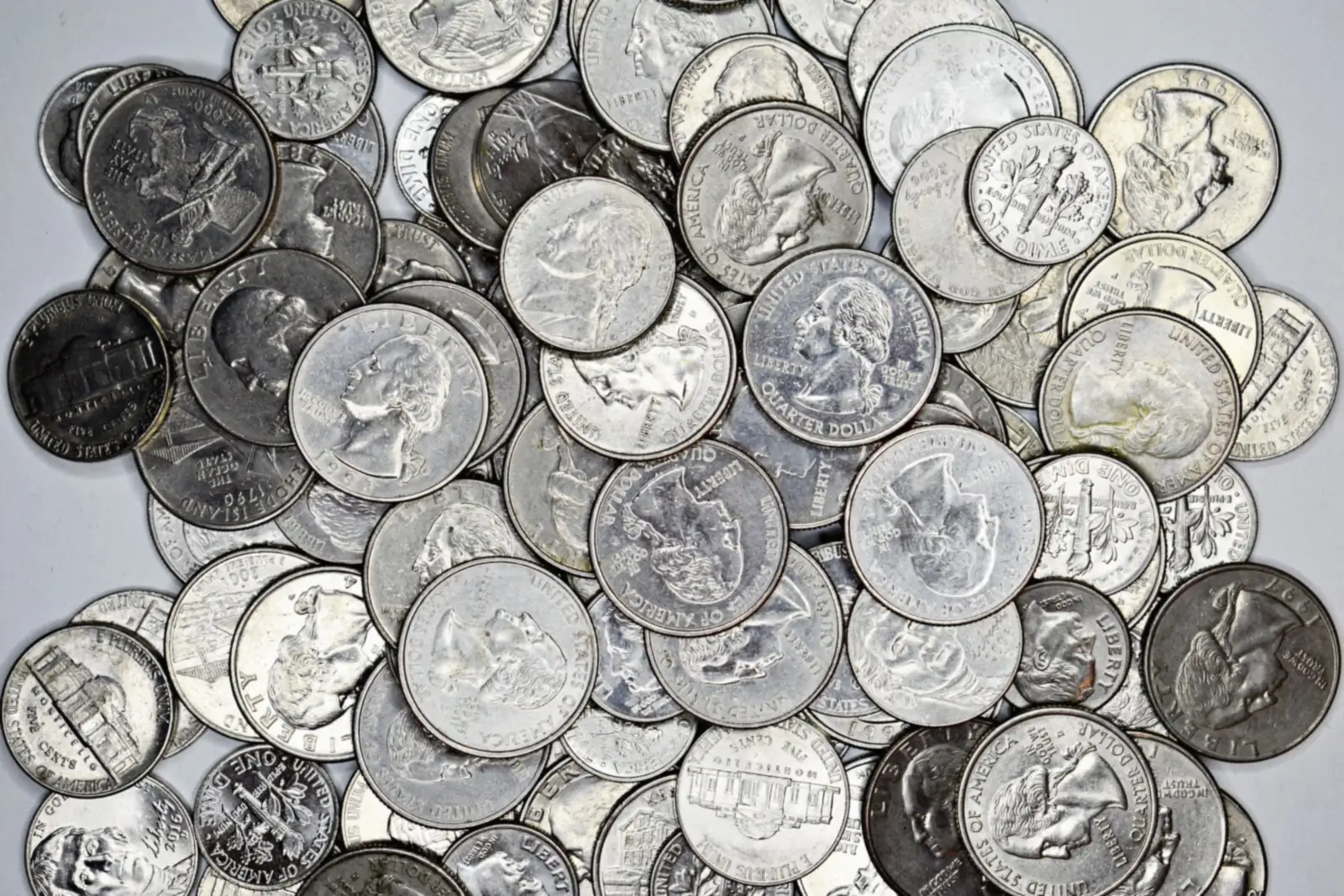
Most circulated Buffalo nickels are common, and many have lost their dates to wear. Value comes down to three things collectors check: a readable date, the mint mark letter on the back, and how much detail survives on the bison's horn and tail. Don't clean them, and keep them together.
These nickels turn up in old coin jars, cigar boxes and half-filled blue folders. They're easy to spot as Buffalo nickels, with a Native American on one side and a bison on the other, and they're old enough that families assume they must be special.
Some are. Most aren't. The difference comes down to a few details you can learn to see in a minute, starting with where the date hides. Here's how collectors look at them, and what to do with a handful you've inherited.
Buffalo nickel value: the honest short answer
Most circulated examples are common coins, and many are so worn that the date is gone. What decides how much attention a particular coin draws is the same short list every time: whether the date can be read, which mint struck it, how much of the design survives, and whether it's one of the few known varieties collectors look for.
A dateless one isn't an error and isn't worthless as money. The American Numismatic Association says a nickel with no date more than likely had one that wore away in circulation, and it still carries its face value of five cents (ANA FAQ). Like every coin, it should be left exactly as you found it; our guide to selling a coin collection explains why cleaning costs coins collector interest.
What is a Buffalo nickel?
The Buffalo nickel is the US five-cent coin struck from 1913 to 1938, designed by sculptor James Earle Fraser, with a Native American on the front and an American bison on the back.
The US Mint notes the bison was the second animal, after the eagle, to appear on a US circulating coin, and that Thomas Jefferson replaced the design in 1938 (US Mint). A 1997 article in the ANA's journal The Numismatist points out that the animal is a bison, not a buffalo, and that the portrait is a composite of three faces rather than one chief (The Numismatist).
The design changed once. The first 1913 coins showed the bison on a raised mound with FIVE CENTS on it, and because those words wore quickly, they were recessed below a flat line on coins from mid-1913 to 1938, the ANA explains (ANA type set guide). Collectors call these Type 1 and Type 2.
If your nickels came out of a penny jar, our guide to what's in a jar of old pennies covers the cents that usually come along with them.
How to read a Buffalo nickel date
The date is on the front, at the bottom of the Native American's shoulder. The ANA explains that it sits on a high point of the design, so it's one of the first places to wear, and The Numismatist notes that on a well-worn coin the date can be wiped out entirely while the feathers and braid stay clear.
- Hold the coin by its edges over a soft cloth or towel.
- Find the shoulder. The date runs along it, just below the portrait.
- Tilt it under a strong lamp. Light from the side picks up shallow numbers that vanish under overhead light.
- Turn it over. A small D (Denver) or S (San Francisco) below FIVE CENTS is the mint mark; Philadelphia coins have none.
- Write down what you can read, including "last digit unclear." Don't guess, and don't treat the coin with anything.
That last step matters. You'll find online tips for chemicals that bring a worn date back up. Skip them: they change the surface of the coin for good. A partly readable date is honest information, and the lot 18 listing below records it that way.
Look closely at that catalog line for lot 18: one coin is listed as "1928 OR 1926." On a worn coin, the last digit is often the hardest part to read, and an honest listing says so. The fifth coin, the 1945-S, is a Jefferson nickel from the war years, when the National Park Service says nickels were made with 35 percent silver (NPS).
The date, letter and horn check
This is our editorial guide, not a grading standard or a measurement: three things to look at on every one of these nickels before you decide anything. It won't tell you what a coin will bring. It tells you which coins deserve a careful description and which are the common, honest workhorses of the series.
| Check | Where to look | Why collectors care |
|---|---|---|
| The date | Front, bottom of the shoulder | No readable date means a dateless coin: wear, not an error, the ANA says |
| The letter | Back, below FIVE CENTS | Through the Depression, D and S coins were only a fraction of the nickels in most years |
| The horn and tail | Back, on the bison | Graders judge wear by how much horn and tail detail remains |
Sources: ANA FAQ (dateless nickels); The Numismatist, May 1997 (branch-mint share and the horn and tail as grading points).
The second row comes from The Numismatist, which reports that up through the Great Depression, D and S mint marks appeared on only 5 to 20 percent of five-cent coins, depending on the year. The third row is why a coin with a full horn draws a closer look than a smooth one with the same date. Questions about your own group? Ask us on the sell with us page.
Selling Buffalo nickels: keep the group together
They rarely travel alone. They come with wheat pennies, a silver dollar or two, and sometimes a folder with holes for every date and mint. Keep all of it together. A half-filled folder shows a bidder exactly what's there and what's missing, and loose coins kept with their original container tell the story of how they were saved.
- Don't clean, polish or dip anything, and don't try to restore dates.
- Leave coins in their folders, rolls, envelopes or jars.
- Keep any notes in the collector's handwriting with the coins they describe.
- Don't spend old nickels at face value or pick out favorites.
Coins reach our sales in dedicated sales, like the online coin auctions on our past-sales list from April 2024 and April 2026, and as lots inside multi-estate sales like the August 2026 catalog. Single collections are consigned regularly. Every lot is numbered, described and photographed, then bidding runs about a week on HiBid. Call Marv at (608) 628-1631 to start.
When to talk to the estate's attorney or personal representative
If the coins belong to an estate, confirm who has the authority to sell them first. Small Wisconsin estates often pass property by affidavit, which our transfer by affidavit guide explains. Bring in the estate's attorney or personal representative if several heirs share the coins, a will names who gets them, or a probate case is open. This is general information, not legal advice.
Common questions
Where is the date on a Buffalo nickel?
On the front, at the bottom of the Native American's shoulder, just below the portrait. The American Numismatic Association notes the date sits on a high point of the design, so it wears away early. Tilt the coin under a strong side light to catch shallow numbers, and write down only what you can actually read.
Is a Buffalo nickel with no date worth anything?
As money, it's still five cents. The ANA says a dateless Buffalo nickel more than likely had a date that wore away in circulation, rather than being an error coin. Keep it with the rest of the collection rather than spending it, picking it out or treating it with chemicals to bring the date back.
Where is the mint mark on a Buffalo nickel?
On the back, below the words FIVE CENTS. A D means Denver and an S means San Francisco; coins struck in Philadelphia carry no letter. The Numismatist reported that through the Great Depression, D and S mint marks appeared on only 5 to 20 percent of five-cent coins.
What years were Buffalo nickels made?
From 1913 to 1938, according to the US Mint, which notes the bison was the second animal after the eagle to appear on a US circulating coin. Thomas Jefferson replaced the design in 1938. Early 1913 coins show FIVE CENTS on a raised mound; later ones have it recessed below a flat line.
Should I clean my Buffalo nickels before selling them?
No. The American Numismatic Association's answer to cleaning coins is a firm no, because cleaning generally lowers a coin's value. That includes chemicals sold to bring back worn dates. Leave the coins exactly as they are, in their folders, rolls or jars, and let collectors judge the original surfaces.
How do I sell a Buffalo nickel collection?
Keep it together, unwashed and in its original folders or containers, then talk to an auctioneer. Our past-sales list includes dedicated online coin auctions, and single collections are consigned into our sales regularly. Call Marv at (608) 628-1631 or start on our sell with us page for a free consultation.
Sources
- Coin Collecting FAQs, American Numismatic Association
- The Nickel, United States Mint
- The Buffalo Nickel: America's Handsomest Coin (The Numismatist, May 1997), American Numismatic Association
- Assembling a Type Set of Nickels, American Numismatic Association
- Currency on the World War II Home Front, National Park Service