Many "silver dollars" in a family drawer aren't silver. Circulating US dollar coins stopped being made of silver by 1971, so Eisenhower, Susan B. Anthony and golden dollars are clad coins. For true Morgan and Peace dollars, value rests on the silver plus what collectors check: date, mint mark, variety and condition.
A silver dollar is the coin families set aside on purpose: a birthday gift, a souvenir, a roll Grandpa wouldn't spend. When those coins turn up after a move or a funeral, the first question is usually what they're worth. The more useful first question is simpler: is it actually silver?
Here's how to tell in a minute, what decides interest in the ones that are, and how to sell silver coins without undoing what collectors look for.
Silver dollar value: the honest short answer
Every true silver dollar has two layers of value. The silver in it gives it a baseline that moves with the metal market, and on top of that sits whatever collectors will pay for its date, mint mark, variety and condition. The American Numismatic Association notes that many older coins are collectible and some are worth more for their precious metal content, which is why it calls spending some older coins unwise (ANA FAQ).
Modern dollar coins are a different story. They're legal tender, and most are common. We don't put numbers on coins in articles, and nobody can honestly promise what one will bring before bidders see it. Our guide to selling a coin collection explains how a collection gets from the drawer to a sale.
Is it really silver? The silver, clad or golden sort
This sort is our editorial guide, not a measurement or an assay. It uses dates and looks to put any US dollar coin into one of three groups before you go further. The modern dates rest on the US Mint, which says the dollar was a silver coin from its first year, 1794, and that by 1971 it was no longer made of silver (US Mint).
| Coin | Dates | Group | What it means |
|---|---|---|---|
| Morgan dollar: Liberty head, eagle with spread wings | 1878 to 1921 | Silver | Silver content plus collector interest |
| Peace dollar: Liberty in a rayed crown, eagle on a rock marked PEACE | 1921 to 1935 | Silver | Silver content plus collector interest |
| Eisenhower dollar: large, Eisenhower's profile | From 1971 | Clad | Copper-nickel layers, no silver in circulating coins |
| Susan B. Anthony dollar: small, close to a quarter | From 1979 | Clad | No silver |
| Sacagawea and Presidential dollars: golden color | From 2000 (Presidential from 2007) | Golden | No silver and no gold |
Silver dollars older than 1878 exist too, and they belong in the silver group. Dollars the Mint sold to collectors, such as proof and commemorative issues, can differ from the circulating coins above, so keep anything in Mint packaging with the collection.
Our August 2026 sale shows how this plays out. It offered a single 1928-S Peace silver dollar in one lot and, in lot 245, ten Eisenhower dollars dated 1972 and 1974: same denomination, very different coins.
Peace dollar value: what collectors check
The Peace dollar was struck from 1921 to 1935 (ANA) to celebrate peace after World War I. Anthony de Francisci won the national design competition, and his wife, Teresa, was the model for Liberty, according to an ANA classroom presentation on the silver dollar (ANA presentation). The Morgan dollar it replaced was designed by George T. Morgan, with Philadelphia teacher Anna Willess Williams as his model, and came out of the Bland-Allison Act of 1878, which required the Treasury to buy silver every month, the same presentation notes.
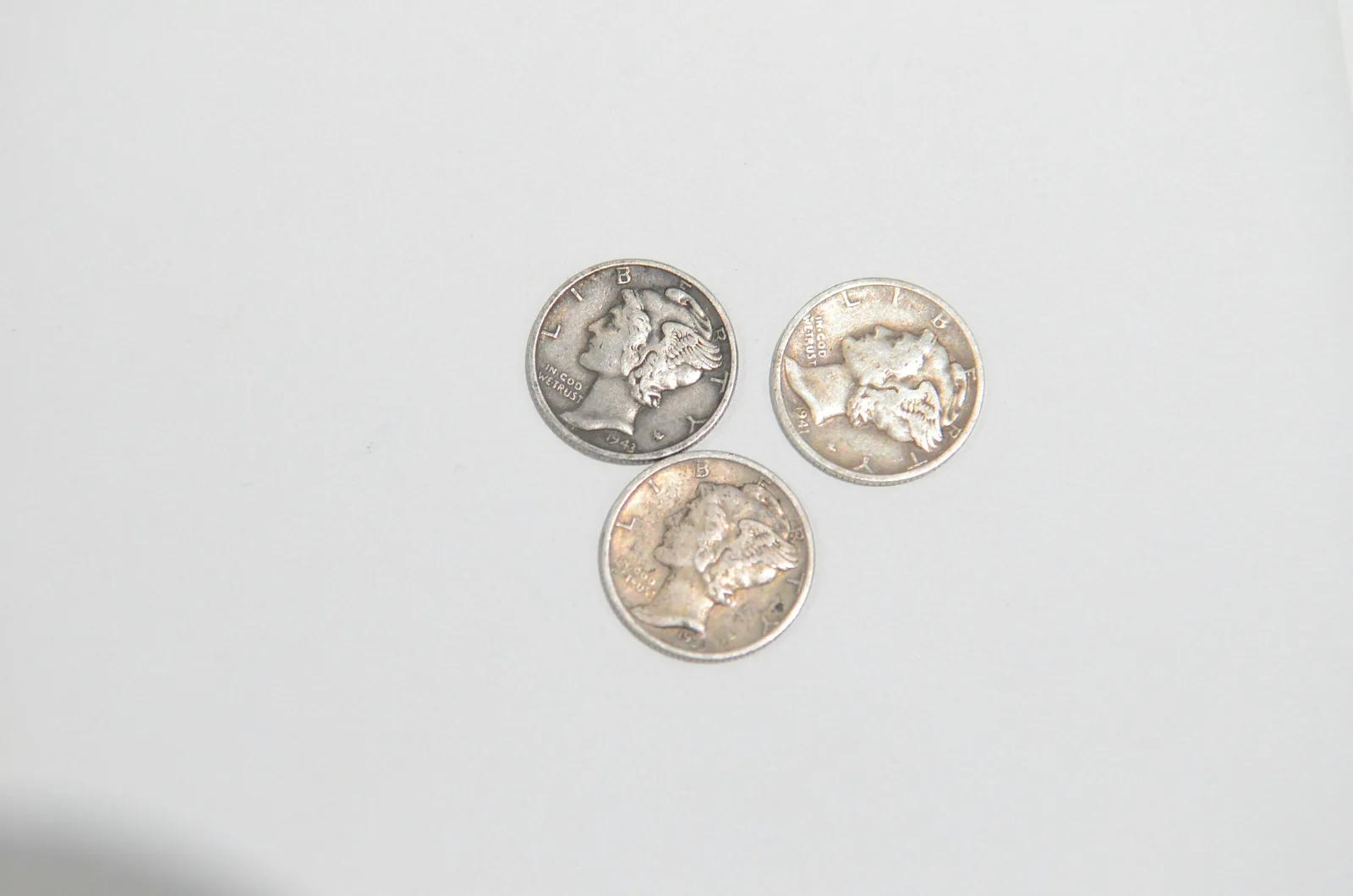
Two quick myths. The motto reads IN GOD WE TRVST, with a V, and the ANA says there's no misspelling: the lettering follows the classical style the designer chose, so it adds nothing. And while 1964-D Peace dollars were struck, the ANA's account says they were melted, and as far as anyone knows, nobody owns one.
For real Peace dollars, the ANA lists the factors that move any coin's value: mintage, variety, collector demand, condition and special strike designations (ANA, 5 key factors). Condition is "one of the weightiest factors," one more reason never to clean a coin. Lot 261 in our August 2026 sale was cataloged the way collectors read these coins: date, mint mark and denomination.
Modern dollar coins: why most aren't silver
The Eisenhower dollar of 1971 was a clad coin, copper and nickel layers around a pure copper core, and the Susan B. Anthony dollar followed in 1979 as the first circulating US coin to show a real woman, the US Mint says.
The ANA explains the Anthony dollar wasn't popular because it was so close in size to the quarter, which led to the 2000 golden dollar with its distinct color. That color isn't gold. Asked how much gold the golden dollar holds, the ANA explains that it is struck from the same basic composition as the Anthony dollar, with manganese added to the outer layers for the golden hue.
None of that makes modern dollars junk. They're legal tender, and they're offered as lots in their own right, as these were. Just don't sort them in with the silver. If paper money turned up beside them, our silver certificate guide covers the blue seal notes.
How to sell silver coins and silver dollars
- Read the dates, then put every coin back. Note which groups you have; don't break up rolls or sets.
- Don't clean, polish or dip anything. The ANA's answer on cleaning coins is a flat no.
- Keep the original holders. Rolls, wrappers, flips, boxes and the collector's notes stay with the coins.
- Don't spend them or cash them in at face value.
- Talk to an auctioneer before you commit. Call Marv at (608) 628-1631 or start on our sell with us page.
An auction lets collectors compete for each lot instead of one buyer naming a price. Coins come through our sales in dedicated sales, like the online coin auctions on our past-sales list from April 2024 and April 2026, and inside multi-estate sales like the August 2026 catalog, which offered these dollars alongside Buffalo nickels and wheat pennies. Commission is set at the consultation, and nobody can honestly promise what a coin will bring before it sells.
When to talk to the estate's attorney or personal representative
If the coins belong to an estate, confirm who has the authority to sell them first. Small Wisconsin estates often pass property by affidavit, which our transfer by affidavit guide explains. Bring in the estate's attorney or personal representative if several heirs share the coins, a will names who gets them, or a probate case is open. Tax questions belong with a tax professional. This is general information, not legal or tax advice.
Common questions
How do I know if my silver dollar is real silver?
Check the date and design. Morgan dollars (1878 to 1921) and Peace dollars (1921 to 1935) are silver. The US Mint says the dollar was no longer made of silver by 1971, so circulating Eisenhower, Susan B. Anthony, Sacagawea and Presidential dollars aren't. The ANA says golden dollars get their color from manganese, not gold.
Are Eisenhower dollars silver?
Circulating Eisenhower dollars are not. The US Mint describes the 1971 Eisenhower dollar as a clad coin, with copper and nickel layers around a core of pure copper, and says the dollar was no longer made of silver. Keep them anyway: they're legal tender, and they're offered as lots in their own right.
Is TRVST on a Peace dollar a misspelling?
No. The American Numismatic Association says the V in TRVST reflects the classical lettering style that designer Anthony de Francisci chose, so there is no misspelling and no added value. Every Peace dollar carries it. Collectors look instead at the date, the mint mark, any variety and the condition of the coin.
Do Sacagawea dollars have gold in them?
No. Asked how much gold it holds, the ANA explains it's struck from the same basic composition as the Susan B. Anthony dollar, copper-nickel outer layers bonded to a pure copper core, with manganese added to the outer layers to give it a golden color. It's a modern clad dollar, not a precious metal coin.
Should I clean my silver dollars before selling them?
No. The American Numismatic Association's short answer to cleaning coins is no, because a coin generally loses some of its value after being cleaned. Toning and original surfaces matter to collectors, and polish or dips can't be undone. Leave the coins exactly as they are, in their rolls, flips or boxes.
Can I still spend a silver dollar?
You can: the ANA says all coins issued by the US Mint are legal tender regardless of age. But it also says spending some older coins would be unwise, since many are collectible and some are worth more for their precious metal. Keep silver dollars with the rest of the collection and ask about them first.
How do I sell a silver dollar collection?
Keep it together, unwashed and in its original rolls, flips or boxes, then talk to an auctioneer. Our past-sales list includes dedicated online coin auctions, and single collections are consigned into our sales regularly. Call Marv at (608) 628-1631 or start on our sell with us page for a free consultation.
Sources
- The Dollar, United States Mint
- Coin Collecting FAQs, American Numismatic Association
- Evolution of the U.S. Silver Dollar (Coins in the Classroom), American Numismatic Association
- The Dodo Bird of U.S. Coinage: The 1964-D Peace Dollar, American Numismatic Association
- 5 Key Factors That Influence Coin Values, American Numismatic Association