Christmas blow molds are hollow plastic figures lit from inside, and many families now wonder whether the yard Santa is worth keeping or selling. Marks, the light cord, color and complete sets decide the interest. Old glass ornaments follow similar rules, and wartime Shiny Brite changes help date them.
Mid-November is when the plastic Santa comes up from the basement, the snowman gets a fresh bulb and somebody asks whether the old candles on the porch are worth anything. Those lit plastic figures have gone from yard decoration to collectible in a lot of families' minds, and the honest answer is more useful than a viral headline.
Here it is: most of them were mass-produced plastic decorations sold in stores, so a common Santa or snowman is common. What draws bidders is the subject, the condition of the plastic and paint, the maker's mark, the light cord, and whether a set is still together. We don't put dollar values on anything in our articles, and a listing price isn't a sold price. Before you decide, don't throw anything out; our estate cleanout guide explains why.
What a Christmas blow mold is
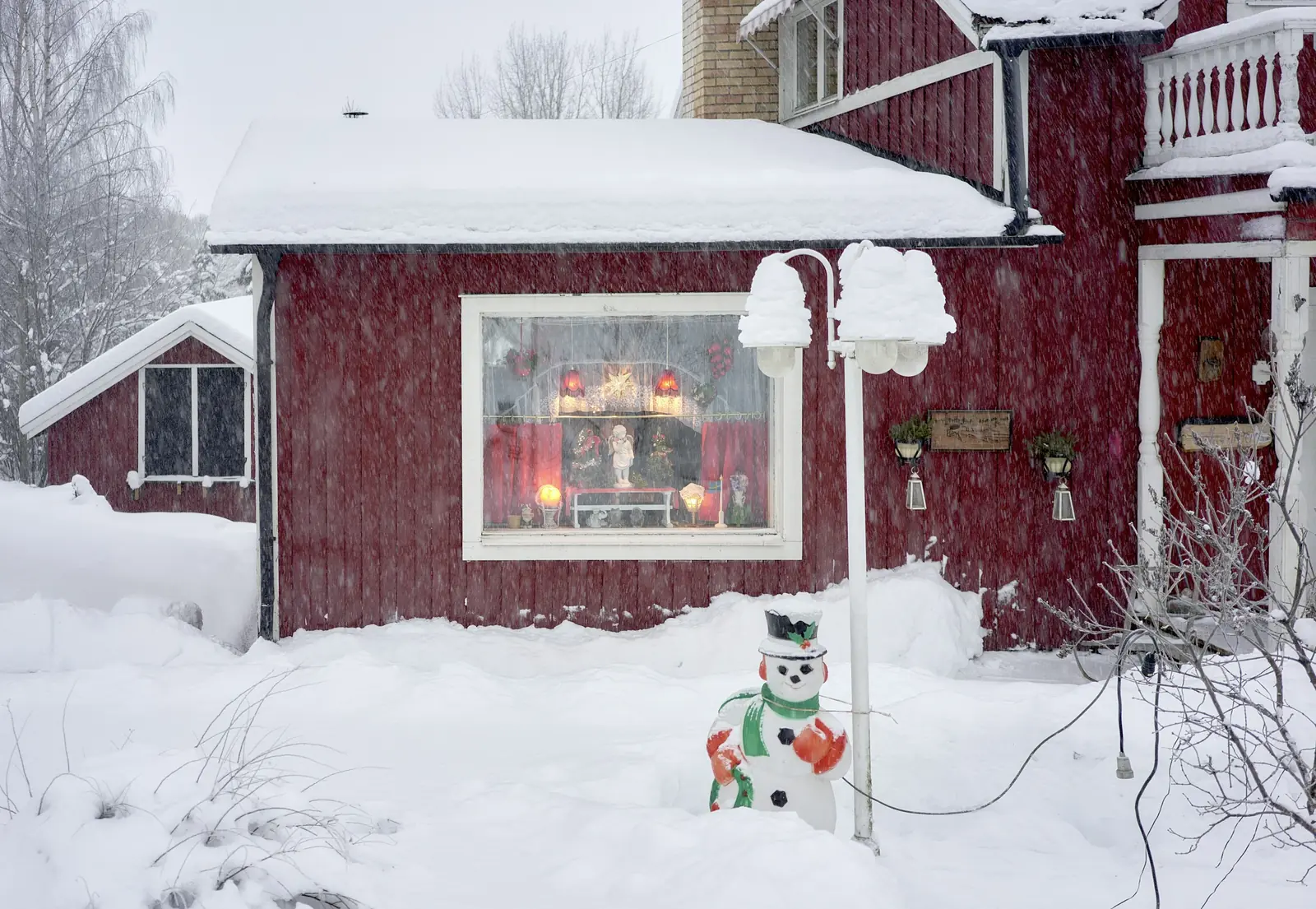
A Christmas blow mold is a hollow plastic figure, such as a Santa, snowman, candle or nativity piece, made by blowing air into melted plastic inside a mold and lit from inside by a bulb.
A December 2023 Joplin Globe story on a museum exhibit of one collector's pieces described a blow mold as a "hollow piece of plastic illuminated from the inside." That glow is the whole appeal: a figure meant to be seen from the street on a dark December night.
The same process made more than yard figures, as one of our own lots shows. In our August 2026 sale, Lot 28 was a vintage blow mold clown piggy bank.
Why vintage blow molds still pull at families
In our judgment, nostalgia is most of the pull: people want the Santa that stood in their grandparents' yard, not just any Santa. It's the same feeling behind the comeback of the vintage ceramic Christmas tree.
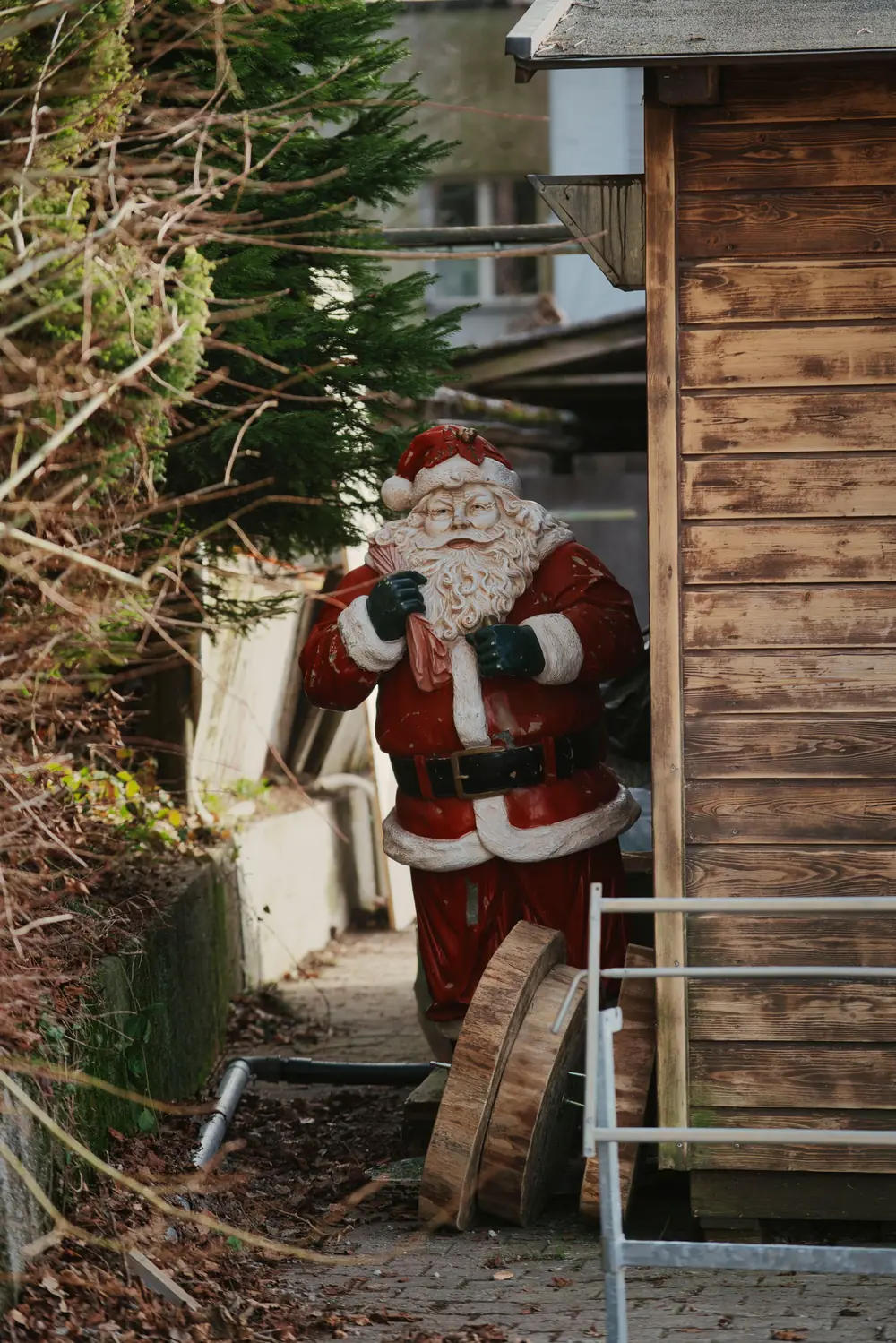
For a family deciding what to do, that interest cuts both ways. Collectors know which figures they're missing, and they look closely at condition. A figure that spent forty winters on the lawn shows it, and that's fine, as long as the catalog says so honestly. Our guide to what an estate auction is explains how a household of pieces gets cataloged and sold. It's also why sets matter: a nativity missing one figure is a different lot from a complete one.
The yard-to-auction check: mark, light, color and set
Before you look anything up, walk each piece through four checks. This is our editorial guide, not an industry standard, and it works the same whether you have one Santa or a garage full.
- Mark. Turn the piece and look for raised lettering molded into the plastic, such as a company name, a city or a year. Write it down exactly as it appears and photograph it.
- Light. Note whether the cord, socket and bulb holder are there, and whether the cord looks cracked or brittle. Don't rewire anything.
- Color. Note fading, especially on one side, plus cracks, holes, dents and paint loss. Don't repaint, touch up or scrub.
- Set. Keep pieces that belong together, such as nativity figures or a Santa with his sleigh and reindeer, and count how many you have.
Then measure each piece's height. At our sales, size decides whether a lot can ship or is pickup only, so it matters to the catalog. Bring your list and photos when you talk to Marv about selling.
Vintage Christmas ornaments value: glass, boxes and Shiny Brite
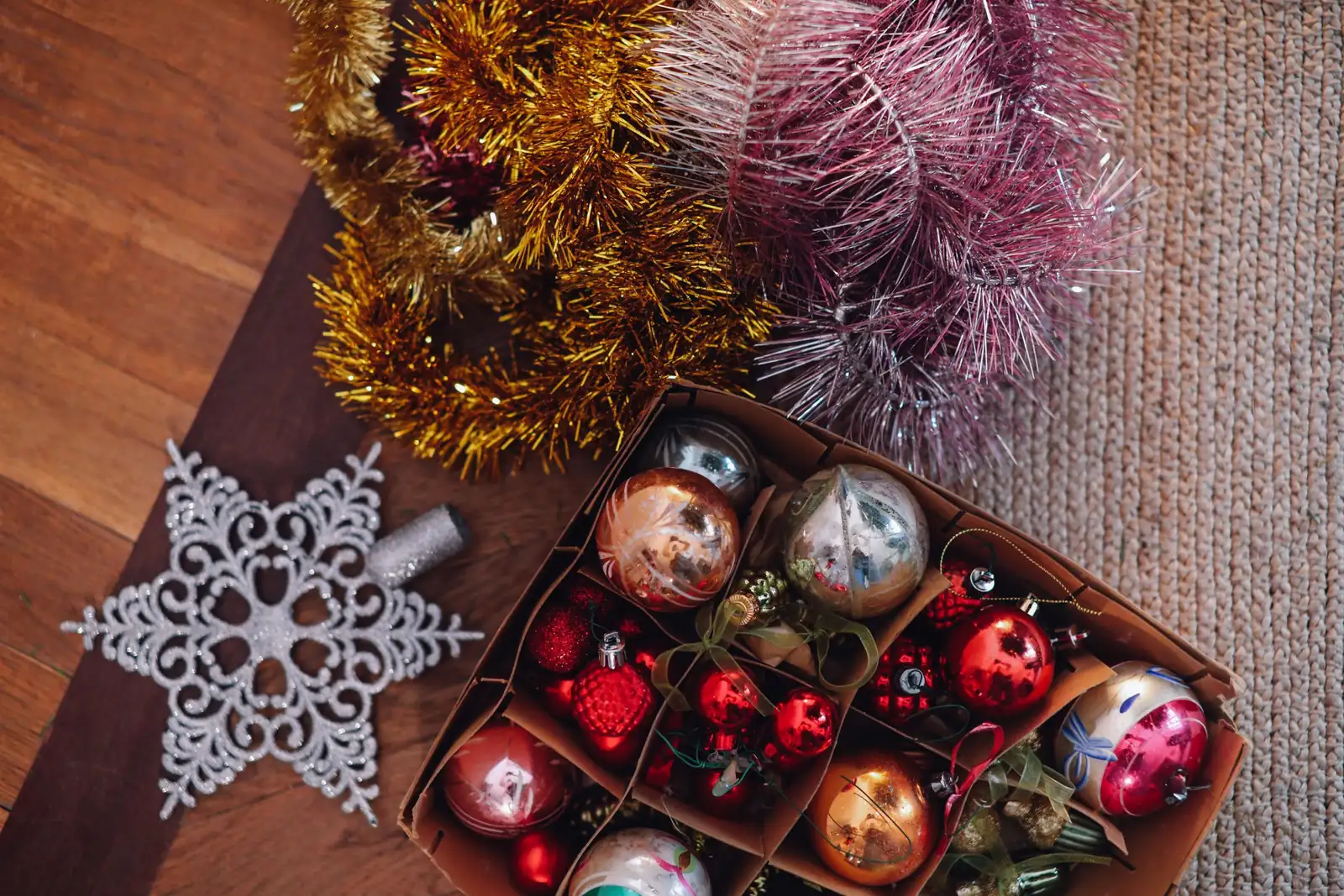
Old glass ornaments follow the same logic as the yard figures: age, maker, condition and the original box decide the interest, and a full box of a common style is still a common style.
One of the best-known American names is Shiny Brite. The Henry Ford explains that when war threatened the supply of German ornaments, Corning converted one glass ribbon machine built for light bulbs to make ornament bulbs, and within a few months Corning Glass Works was making more than half the Christmas tree decorations sold in the United States. Max Eckardt, who decorated Corning's blank bulbs in four New Jersey plants, sold some of the most popular ones under the Shiny Brite name.
Dating a Shiny Brite ornament by its cap
War changed the ornaments, and the changes help date them. According to The Henry Ford, metallic lacquers were hard to come by early in the war, and when nearly all American metal went to the war effort in 1942, Shiny Brite turned to folded cardboard hangers, then replaced metal caps and hooks with cardboard, string and glue. The museum's later examples show silver lacquer and metal caps back after the war.
- A cardboard cap or hanger points to the war years.
- A clear, unsilvered glass ball can be wartime too.
- Keep ornaments in their original boxes, which may name the maker.
- Don't wash, wipe or rehang them with new hooks. Count them and note any broken pieces or missing caps.
If the ornaments are part of a whole household, our guide to how estate sales work compares a tag sale with an auction.
Plugging in an old blow mold, and buying one
Before an old plastic figure goes back on the lawn, look at the cord. If it's cracked, frayed or brittle, or the socket is broken, leave it unplugged and tell Marv rather than fixing it. The CPSC's December 2025 holiday safety release gives two rules of its own for the season: never string together more than three sets of incandescent lights, and never overload electrical outlets.
If you're buying, the same release says to check secondhand products against CPSC.gov/recalls before you buy. Everything in our sales sells as is, where is, with no warranties, so study every photo and read the description before you bid. Previews are by appointment; call Marv. Our as is, where is guide explains what that means for a buyer, and our auction tips cover the rest.
Selling Christmas blow molds and ornaments after the season
Many families decide once the decorations come down in January. We run about seven or eight sales a year, each open about a week, with all bidding online through HiBid, so there's no promise of a holiday-season sale. Sign up for sale alerts and watch the current auctions page.
Size shapes the plan. At our sales, small lots can ship for a $10.00 handling fee plus the actual USPS or UPS cost, while larger lots are pickup only. A big yard figure may well be a pickup lot; Marv can tell you which group a piece falls in.
One blow mold or a whole yard's worth: single pieces and collections are consigned into our sales regularly, and if an auction isn't the right route, Marv will tell you. See how selling with us works. The same goes for the rest of the holiday shelf, from Hess trucks to Lionel trains.
Common questions
How can I tell how old my blow mold is?
Look for raised lettering molded into the plastic, often on the base or back: a company name, a city or a year. Write it down exactly and photograph it. A year in the mold may mark when the design was made rather than your piece, so treat it as a clue, not proof, and bring it to Marv.
Are old blow molds worth anything?
Some draw strong interest and many are common. What decides it is the subject, the condition of the plastic and paint, the maker, whether the light cord is there, and whether a set is complete. We don't put values on items in articles; Marv can tell you at a free consultation whether yours suit an auction.
Should I repaint a faded blow mold before selling it?
No. Leave it as it is until Marv has looked at it. Fading, scuffs and old repairs are part of an honest description, and fresh paint makes a bidder wonder what's underneath. Note the faded side in your list, photograph it, and keep the cord and any parts with the piece.
How do I know if my ornaments are Shiny Brite?
Start with the box, which may carry the name, and then the caps. According to The Henry Ford, Shiny Brite was Max Eckardt's brand for glass bulbs made by Corning and decorated in New Jersey. During the war, metal caps gave way to cardboard, string and glue, so a cardboard cap points to those years.
Do missing caps or broken ornaments matter?
They do, so count them. A box with every ornament intact and every cap in place is a different lot from a box with breaks and missing caps. Don't swap in new hooks or caps. Write down what you have, keep the pieces in their original box, and let the catalog describe the condition honestly.
Can a big blow mold be shipped if I win it?
At our sales, small lots can ship for a $10.00 handling fee plus the actual USPS or UPS cost, within seven days after the pickup window. Larger lots are pickup only. Read each lot's description and the posted pickup details before you bid, and call Marv if you're unsure which group a piece falls in.
Can I sell a few holiday pieces without a whole estate?
Often, yes. Single pieces and single collections are consigned into our sales regularly. Call Marv at (608) 628-1631, tell him what you have, and mention the sizes and any marks you found. If an auction isn't the right route for your pieces, he'll say so rather than taking them on.
Sources
- History museum displays local collector's holiday blow mold decorations, The Joplin Globe
- From Light Bulbs to Christmas Baubles, The Henry Ford
- Don't Be Left Out in the Cold This Holiday Season with Unsafe Presents: Buy from Trusted Sources, U.S. Consumer Product Safety Commission