Depression glass is inexpensive, machine-pressed American glassware from roughly the 1920s into the 1940s, and most of it was mass produced. What sets a piece apart is its pattern, color, condition and, above all, whether it's original, because reproductions are common. Check that before you think about value.
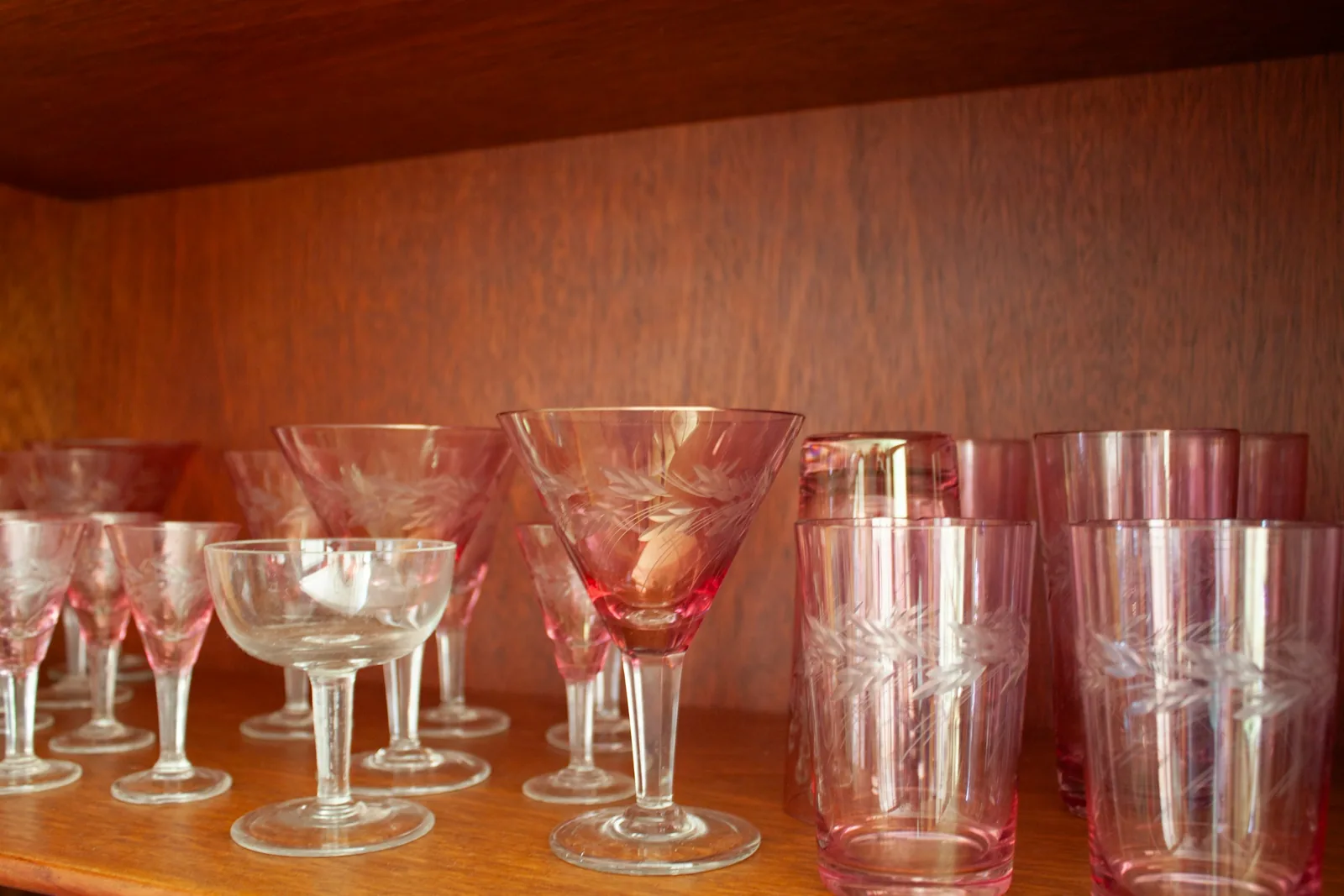
The pink glass in the china cabinet comes with a family story almost every time: Grandma got it free at the movies, or in a box of oats, or at the gas station. Some of those stories are true. That's exactly why so much of it survives, and why so much of it is common.
So the honest answer comes first. Most Depression glass is common, and most families have the everyday patterns. What decides interest is the pattern, the color, the piece and its condition, and before any of that, whether it's original or a later reproduction. Copies have been made for decades, and they're the most useful thing to rule out before you talk to us about selling.
What Depression glass is
Depression glass is inexpensive, machine-pressed American glassware made in great quantity from about the 1920s into the 1940s. Companies sold it cheaply and often gave it away as a premium.
The Corning Museum of Glass's research library answers the question this way: "Inexpensive, machine-pressed American glassware made between about 1920 and 1950." It adds that pink, green and yellow were popular colors, that the glass was often handed out as a gift, incentive or prize, and that it often shows rough edges or prominent seams from mass production. Collectors draw the window a little tighter; the National Depression Glass Association's primer for new collectors describes machine-made glass from the late 1920s and recalls the dish nights when "local movie houses" gave away "different pieces each week."
Those seams and rough edges matter. They're part of how the glass was made, not damage, so write them down as you see them. If the cabinet sits in a house you're settling, here's how selling a household with us works, glass included.
Depression glass value: the honest short answer
Depression glass value depends on five things: whether the piece is original, the pattern, the color, the kind of piece and its condition. Popular colors were mass produced, so a pink sherbet dish is rarely a surprise. A less familiar pattern, an unusual piece or a complete set in good condition is what makes bidders lean in.
A photo rarely settles what a piece of glass will bring. Even the Corning Museum of Glass says that, as a nonprofit educational institute, it cannot answer questions about rarity or value of your glass. We won't put a value on your glass in this guide either. What a piece brings is decided by bidders in an open sale, and asking prices online are hopes, not results. Our estate sale vs. auction comparison explains how the two routes set prices differently.
The reproduction red-flag check
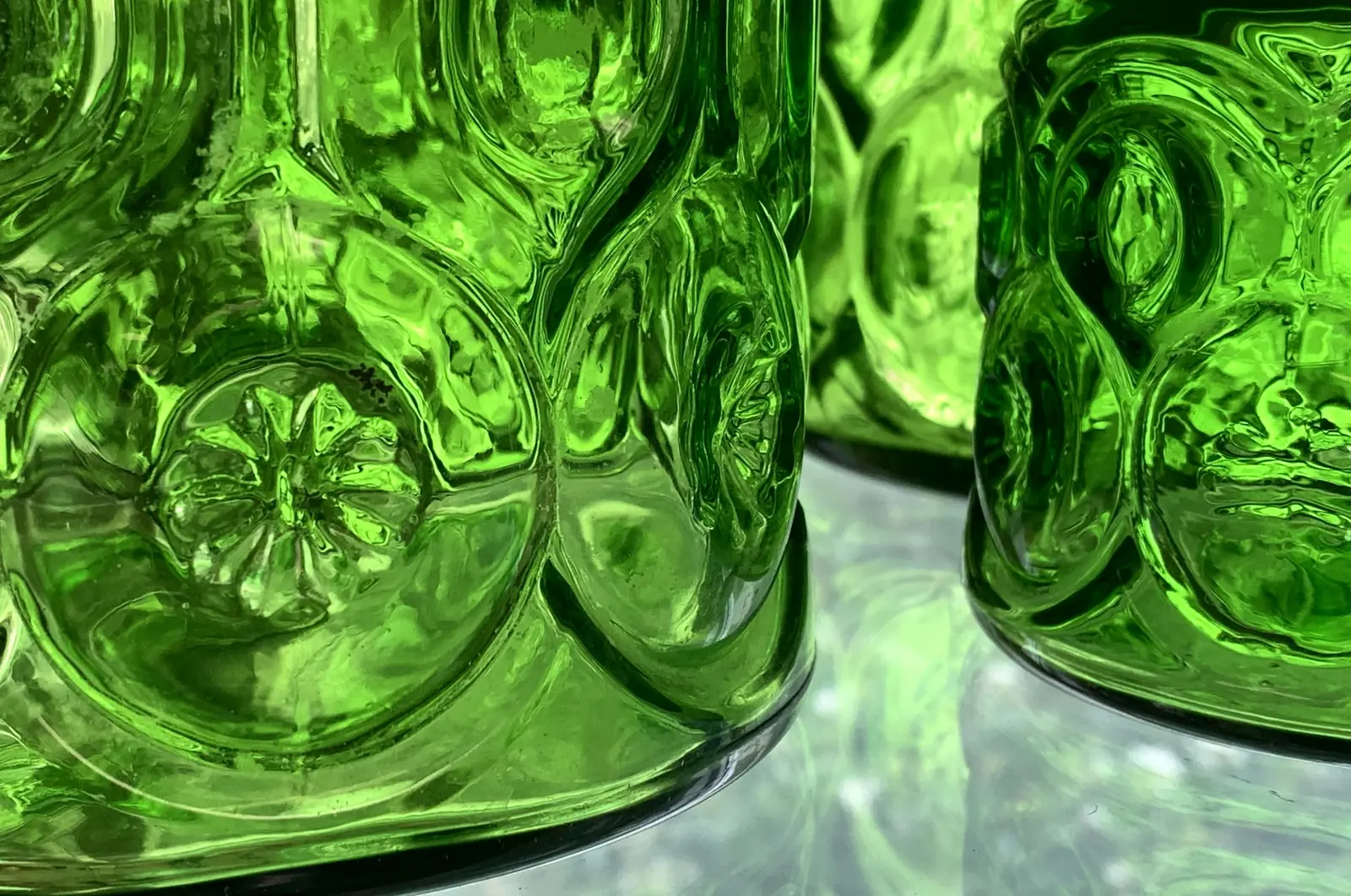
Reproductions are the problem nobody mentions in the viral posts. The NDGA primer puts it bluntly: "Reproductions have caused great upheaval in the depression glass market." Another NDGA article on what Depression glass is notes that many patterns have been reproduced, often overseas, and names Cherry Blossom as one that was copied heavily.
We've boiled the association's advice into a reproduction red-flag check: three questions to ask of every piece. The questions come from the NDGA primer; the order and the name are our editorial judgment, not a published standard.
| Question | What the NDGA primer says to watch for | What to write down |
|---|---|---|
| Has this pattern been reproduced? | Educate yourself on whether the item you have has been copied | Pattern name if you know it, or a sketch or photo of the design |
| Was it ever made in this color? | Glassware in a color never produced in that color is a warning sign | The color as you see it in daylight |
| Is the detail crisp? | Many reproductions feel greasy, and the pattern may be faint, lacking the detail of the original | Whether the pattern looks sharp or soft, and any marks on the base |
Questions drawn from the National Depression Glass Association's primer; the format is our editorial guide, not a measurement. A pass on all three doesn't prove a piece is old.
If you can't answer a question, say so. "Pink, pattern unknown" is an honest description. "Rare 1930s original" without evidence isn't, and bidders who know glass will check.
Carnival glass and milk glass: the cousins on the same shelf
Depression glass rarely sits alone. Two other kinds of pressed glass tend to share the shelf, and both have their own newer pieces to sort out. If the kitchen also holds colorful bowls or white casseroles, our guides to vintage Pyrex patterns and Blue Cornflower CorningWare cover those.
Carnival glass value starts with the date
Carnival glass is iridescent pressed glass with a rainbow sheen. According to the West Virginia Encyclopedia's entry on the Fenton Art Glass Company, Fenton led the way in iridescent pressed glass made in imitation of Tiffany's expensive art glass, and it was "predominantly sold as gifts and tableware in five-and-dime stores." Collectors named it carnival glass decades later. The same entry lists "carnival glass, reintroduced in the late 1960s" among Fenton's lines, so carnival glass value depends heavily on telling early pieces from later ones.
Milk glass value and the many kinds of white
Milk glass is opaque white glass, and the e-WV entry notes that Fenton's "Opal or milk glass sold well for decades," with hobnail an exceptional seller. Decades of production mean plenty of supply. The Corning Museum of Glass notes that there are "thousands of different recipes for white or milk glass," so white alone tells you little. Milk glass value, like everything here, starts with the maker, the date and the condition.
That's the habit worth copying. Lot 5 in our August catalog went in under its maker, its decade and its height, not under a loose label. Old glass and Depression glass aren't the same thing, and a careful description keeps them straight.
Before you sell Depression glass: leave it as it is
Dusty glass looks sad, and the urge to run it through the sink before anyone sees it is natural. Leave every piece as it is until Marv has looked at it. Glass is easy to chip and hard to explain once it's chipped, and the dust tells nobody anything bad.
- Keep sets together: plates with their cups and saucers, sugar with its creamer, lids with their bowls.
- Note chips, cracks and worn spots in plain words, and don't try to fix them.
- Leave stickers, labels and any original boxes with the glass.
- Write down the family story, like dish night or a box of oats, as something someone said, not as proof of age.
- Wrap pieces one at a time if you have to move them, and keep each set in its own box.
And please don't throw anything away before Marv has seen it, including the odd piece that doesn't match anything. If the same cabinet holds a dinner service, our guide to what to do with old china picks up from there.
Selling a glass collection at auction
We run estate, household, antique and farm auctions from downtown Deerfield, about 15 minutes east of Madison, and all bidding happens online through HiBid. Glass suits that format, because every lot is numbered, described and photographed, so a collector several states away can study the pattern and the color before bidding.
A cabinet of glass can go into a full estate sale, or a single collection can be consigned on its own. Either way, the first step is a free conversation. Tell us what you have, and bring your answers to the three questions.
Common questions
How can I tell if my glass is real Depression glass?
Start with the clues the Corning Museum of Glass describes: machine-pressed, often with rough edges or prominent seams, commonly pink, green or yellow. Then check whether your pattern was reproduced, whether it was ever made in that color, and whether the detail is crisp. No single clue proves age, so write down what you see.
What color of Depression glass is most valuable?
Color alone doesn't decide it. The Corning Museum of Glass says pink, green and yellow were popular colors, and popular then usually means plentiful now. Pattern, the kind of piece, condition and whether it's original matter as much as color. We won't rank colors or put values on glass here; bidders decide that in an open sale.
Is carnival glass the same as Depression glass?
No. Carnival glass is iridescent pressed glass with a rainbow sheen. The West Virginia Encyclopedia says Fenton led its production, that it sold mostly in five-and-dime stores, and that collectors named it carnival glass decades later. Fenton also reintroduced carnival glass in the late 1960s, so dating a piece matters before anyone describes it.
How do I know if my milk glass is old?
White alone won't tell you. The Corning Museum of Glass notes there are thousands of recipes for white or milk glass, and the West Virginia Encyclopedia says Fenton's milk glass sold well for decades. Read the base for a maker's mark, note the pattern, such as hobnail, and describe what you see rather than guessing a date.
Should I wash Depression glass before selling it?
No. Leave it as it is until Marv has looked at it. Glass chips easily in a sink, and dust doesn't hurt a description. Keep sets together, leave labels and boxes with the pieces, and note any chips in plain words. The rest gets talked through at the free consultation, before anything is packed or moved.
Will a museum tell me what my glass is worth?
Usually not. The Corning Museum of Glass says that, as a nonprofit educational institute, it cannot answer questions about rarity or value. Museums and libraries are excellent for identification and history. What a piece brings is decided by bidders in an open sale, which is why every lot we sell is described and photographed for bidders to judge.
Can I sell a box of mixed old glassware?
Often, yes. Single pieces and single collections are consigned into our sales regularly, and glass also fits into a full estate sale. Call Marv at (608) 628-1631 and describe what you have, including colors and any patterns you recognize. If an auction isn't the right route for your glass, he'll tell you that instead.
Sources
- What is Depression Glass? (Ask a Glass Question), Corning Museum of Glass, Rakow Research Library
- A Depression Glass Primer, National Depression Glass Association
- What is Depression Glass?, National Depression Glass Association
- Fenton Art Glass Company, e-WV: The West Virginia Encyclopedia, West Virginia Humanities Council
- Are there different types of milk glass? (Ask a Glass Question), Corning Museum of Glass, Rakow Research Library