Pyrex patterns are the solid colors and printed designs on Corning's kitchen glass, starting with the Primary Colors line in 1947. Most vintage pieces were sold for years and turn up often. Interest comes from a named pattern, bright color, a complete set and a clear mark, so note those before you sell.
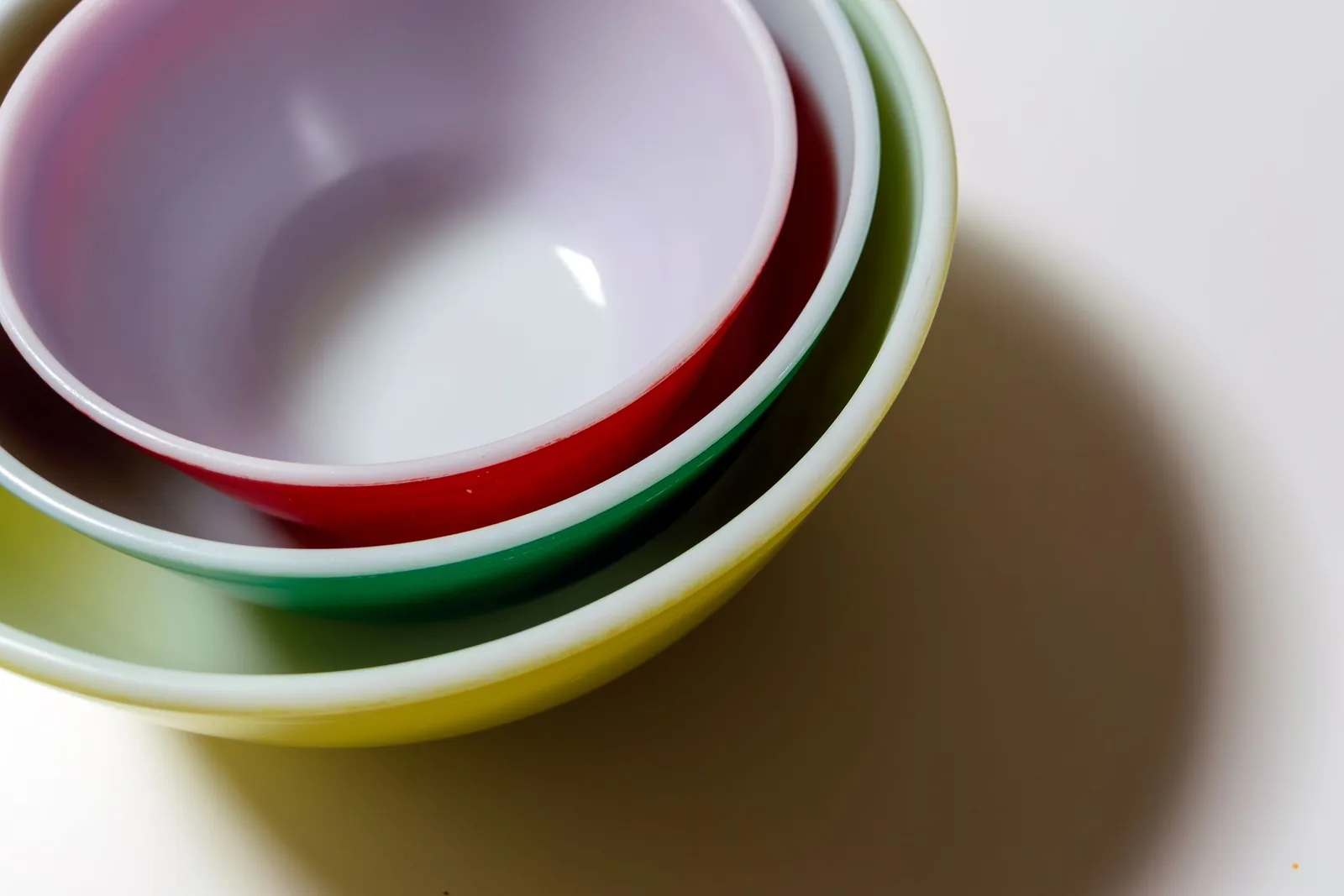
Plenty of families have the same four bowls: blue, red, green and yellow, nested in a cupboard for as long as anyone can remember. That's no accident. The Henry Ford museum's record for a four-color mixing bowl set says these sets, made from 1949 to 1957, were among the most popular the company ever made in the line. Popular then usually means plentiful now.
So here's the honest answer up front. A pattern is simply the name for a color scheme or printed design, and naming yours is the first step. Most vintage Pyrex patterns turn up often, because Corning sold them for years. What draws bidders is a pattern made in smaller numbers, color that hasn't worn, a set that's still complete and a mark that proves the maker. This guide shows how to check each one before you talk to us about selling.
What Pyrex patterns are, and where they came from
A Pyrex pattern is the color or printed design on a piece of Corning's glass kitchenware. Collectors use the pattern name the way a car buff uses a model year: it tells everyone exactly which piece you mean.
The glass started out clear. According to The Henry Ford's history of Corning's three kitchen brands, Corning launched the line in 1915 and "transformed Pyrex from colorless to colorful with the Primary Colors line, introduced in 1947." Printed designs followed. The museum's record for a casserole in Spring Blossom Green says Corning released an array of products in that pattern in 1972, redesigned it several years later and then discontinued it.
The same history notes that Corning sold its housewares division in 1998 and that the brand stayed a kitchen staple, with new products into this century. That's why the pattern and the mark matter more than the name alone: the brand name by itself doesn't tell you when a dish was made. If you're still sorting a whole house, start with what an estate auction is and come back to the cupboards.
How to identify vintage Pyrex patterns in five steps
You don't need a reference book to start. You need good light, a notepad and a few minutes per shelf. Work through each piece the same way, and keep your notes with the dishes when you plan the sale.
- Turn it over. Read the base for a maker's name, a number and any other words. Write them down exactly, spelling and capital letters included.
- Name the color or design. Solid color, printed flowers, a band of trim, a scene? Note the colors as you see them, not as you remember them.
- Measure and count. Note the shape (mixing bowl, casserole, refrigerator dish), the size, and how many pieces share the same design.
- Check for lids and partners. Refrigerator dishes and casseroles often had lids. Note which are present and which are missing.
- Compare against a museum source. The Corning Museum of Glass's Rakow Research Library guide points researchers to Pyrex Potluck, the museum's website for patterned opalware, built as the companion to its 2015 centennial exhibition.
Not every white or colored dish is Pyrex
Other glass companies made white and colored kitchen glass, and plenty of it looks alike from across the room. Our own catalogs show it. Lot 200 in our August 2026 sale included a white square dish with green daisies that the catalog lists as Glasbake, a different maker's name. Calling a piece by the wrong name sends a buyer hunting for the wrong thing, so name it only when the mark supports you.
The Pattern, Piece, Paint, Partners check
Here's the reframe we'd offer, and it's our editorial judgment rather than a published standard: the Pyrex pattern name gets the attention, but it's only one of four things a bidder reads. We call it the Pattern, Piece, Paint, Partners check. Run every piece through it before you decide what to keep, what to give to family and what to bring up at a free consultation.
| Check | What to write down | Why bidders care |
|---|---|---|
| Pattern | The name if you can confirm it, or a plain description of the color and design | A named pattern can be searched; a short run turns up less often than one sold for years |
| Piece | Shape, size and any number on the base | Collectors often hunt one shape or size to finish a set they already own |
| Paint | Faded or dull patches, scratches, worn spots and chips at the rim | Bright, even color is the first thing a photo shows |
| Partners | Lids, the rest of a nesting set and matching pieces | A complete set reads differently than four strays |
Our editorial guide, not a measurement. It tells you what to write down, not what anything will bring.
None of this asks you to know a price, and it shouldn't. A clear, accurate description of what you have does more for a sale than any number you find online.
Vintage Pyrex value: what really decides interest
It comes down to how many were made, how the color held up and whether the set is whole. That's the honest short version, and it's why we won't put a number on any pattern here.
Asking prices you see online are hopes, not results. A listing can sit for months at a figure nobody pays. At an auction the number that counts is the winning bid when the clock runs out, with bidders competing for the same piece.
Condition is mostly the color
On opalware, condition mostly means the outside color. Worn spots, dull patches, scratches and rim chips all show up in a photo, and bidders zoom in. Say what's there rather than hoping nobody notices. Our August 2026 catalog described Lot 183 with its wear in plain words.
Sets and singles
Four nesting bowls that came together tell a buyer a complete story; one bowl is just a bowl. If you have a partial set, keep the pieces together anyway. A bidder finishing their own set may be looking for exactly the one you have.
Before you sell a Pyrex collection: leave it as it is
The urge to scrub everything before strangers see it is understandable. Resist it. Leave every piece as it is until Marv has looked at it, and don't throw anything away in the meantime, including the chipped bowl and the lid without a dish.
- Keep lids on their dishes and nesting sets together.
- Leave stickers, old price tags and handwritten labels exactly where they are.
- Write down what the family knows: who used it, for what, and for how long.
- Box kitchen glass by cupboard rather than mixing it in with everyday dishes.
- Take a few phone photos in daylight before you call, so the first conversation is concrete.
Old dishes rarely travel alone. If the same cupboard holds Blue Cornflower CorningWare, pink or green glass from the 1930s, or a set of good china, our guides to Depression glass and what to do with old china cover those next.
Selling a kitchen glass collection from Deerfield
We run estate, household, antique and farm auctions from downtown Deerfield, about 15 minutes east of Madison, and all bidding happens online through HiBid. That suits kitchen glass: bidders well beyond Dane County can see every piece before they bid, because every lot is numbered, described and photographed.
A cupboard of Pyrex can go into a full estate sale or be consigned on its own, since single collections join our sales regularly. Either way, the first step is a free conversation. Tell us what you have, and bring your notes from the four-part check.
If you're on the buying side, we hold about seven or eight sales a year. Check current auctions or sign up for sale alerts so you hear when the next catalog opens.
Common questions
How can I tell what Pyrex pattern I have?
Turn the piece over and write down the mark, then describe the color or printed design, the shape and the size. Compare those notes with a museum source: the Corning Museum of Glass's library guide points to its Pyrex Potluck website for patterned opalware. If you still can't name it, a plain, accurate description works fine in a catalog.
What is the rarest Pyrex pattern?
There's no single honest answer, and claims online vary. In general, a pattern made for a short time turns up less often than one sold for years, and the Primary Colors bowl sets were among Corning's most popular. Condition and completeness matter as much as the name. We won't rank or price patterns here.
Is old Pyrex worth anything?
Some of it draws real interest, and much of it is common. Bidders look for a named pattern, bright color without worn spots, lids and complete sets, and a clear mark on the base. Asking prices online are not sold prices. The way to learn what a piece brings is to offer it where buyers compete for it.
Should I wash vintage Pyrex before I sell it?
No. Leave it as it is until Marv has looked at it. Anything you do to the surface is a decision the next owner would rather make for themselves. Keep lids with their dishes, leave labels and stickers in place, and take a few daylight photos before you call. The rest gets talked through at the free consultation.
Is all white milk glass bakeware Pyrex?
No. Other glass companies made white and colored kitchen glass, and many pieces look alike. Our August 2026 sale included a white daisy dish that the catalog lists as Glasbake, a different maker's name. Read the base, write the mark down exactly as it appears, and don't call a piece Pyrex unless the mark says so.
Can I sell a few Pyrex bowls without a whole estate?
Often, yes. Single pieces and single collections are consigned into our sales regularly, alongside full estates. Call Marv at (608) 628-1631, describe what you have, and keep a few photos handy. If an auction isn't the right route for your pieces, he'll tell you that instead of taking them, and the first conversation is free.
When did Pyrex bowls first come in colors?
The Henry Ford museum says Corning introduced its Primary Colors line in 1947, turning Pyrex from clear to colorful. The museum dates its own four-color mixing bowl set, in blue, red, green and yellow, to 1949 through 1957, and calls those sets among the most popular Pyrex products Corning ever made.
Sources
- Pyrex, Corning Ware and Corelle: Enduring Kitchen Icons from Corning, The Henry Ford
- Corning Pyrex Mixing Bowl Set, 1949 to 1957, The Henry Ford
- Pyrex Casserole Dish, 1979 to 1981 (Spring Blossom Green), The Henry Ford
- Pyrex: Overview, Rakow Research Library guide, Corning Museum of Glass