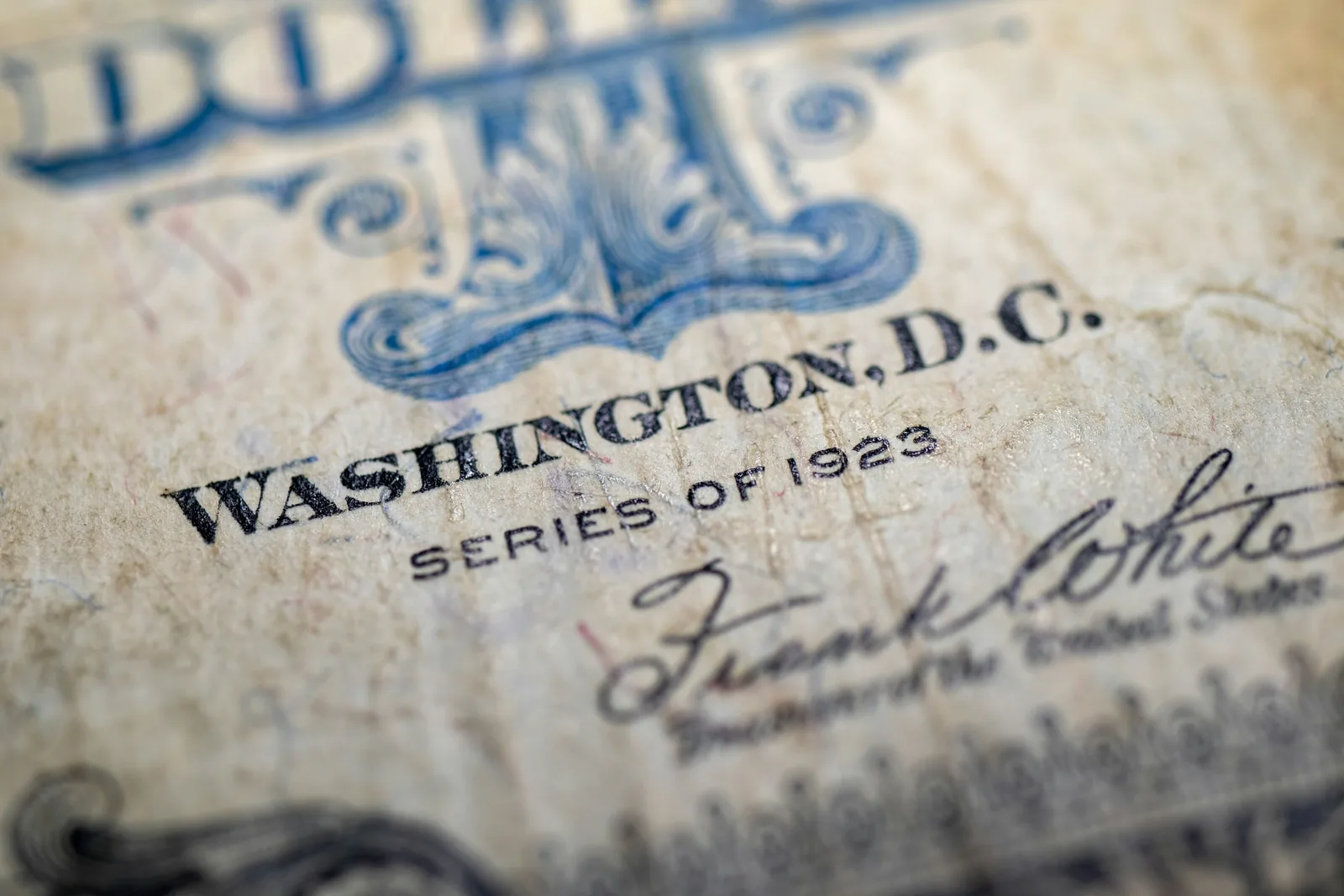
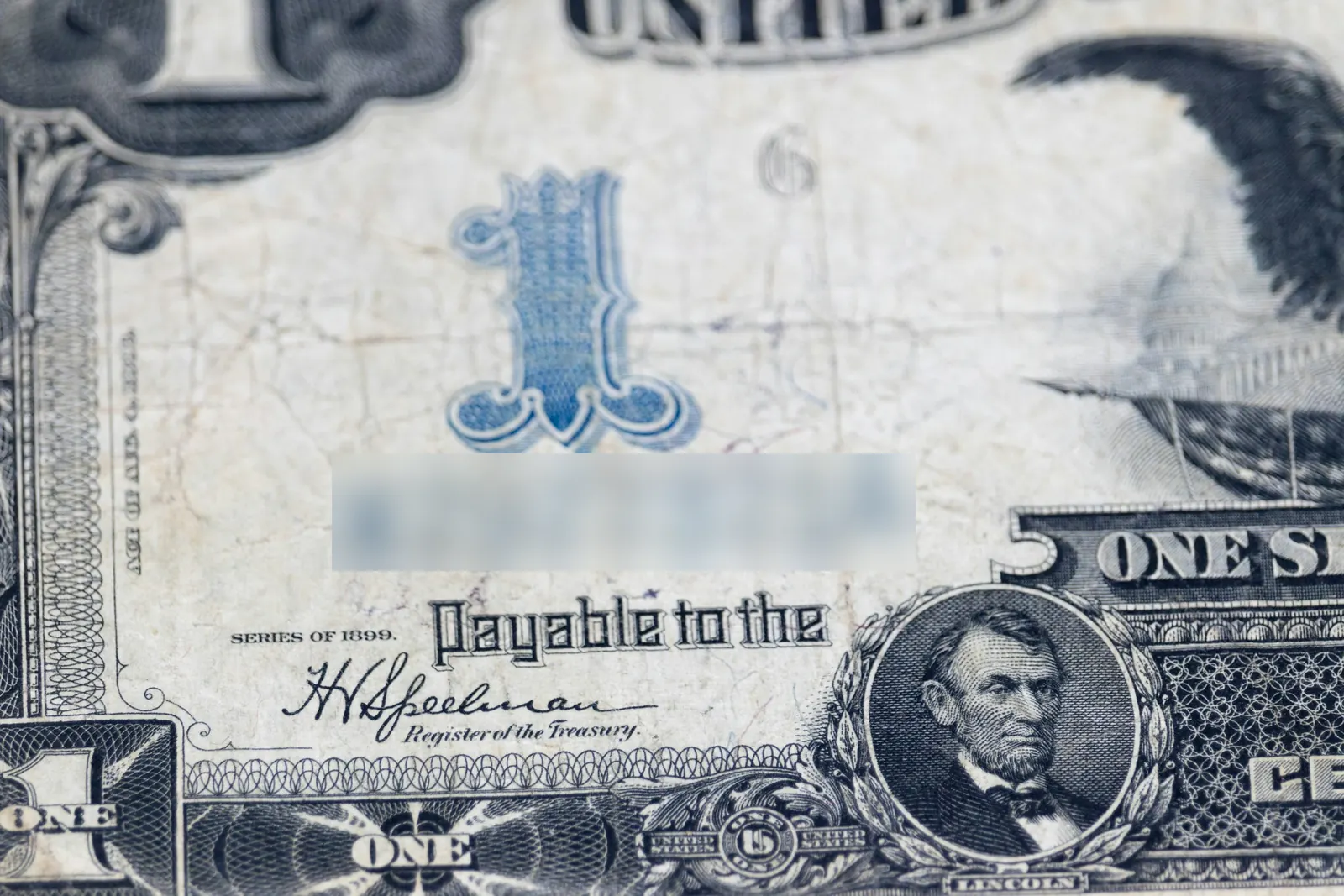
A silver certificate is old US paper money, marked by a blue seal, that could once be traded for silver. It's still valid currency, and most folded, circulated notes carry only their face value. Older large-size notes and crisp, unfolded ones draw collector interest. Keep them flat and with the rest of the collection.
Blue seal dollars turn up tucked into Bibles, wallets, cedar chests and coin albums. Someone set them aside because they looked different from everyday money, and they do: a blue seal instead of a green one, and a promise of silver printed right on the face.
That promise is long gone, but the notes are still real money, and a few draw genuine collector interest. Here's how to tell what you have, what decides which notes collectors look at twice, and how to keep them in shape until you decide.
Silver certificate value: the short answer
These notes are still legal tender, and the American Numismatic Association says some carry numismatic value as well (ANA FAQ). Its own breakdown is plain: early large-size notes are particularly sought after, later small-size notes in crisp, uncirculated condition may hold a premium over face value, and notes that have been folded or torn in circulation will probably carry only their legal-tender value.
In other words, most blue seal dollars that spent years in a wallet are common. That doesn't make them worth spending. Keep them with the coins they came with; our guide to selling a coin collection explains why paper money belongs in the same conversation.
What is a silver certificate?
A silver certificate is US paper money once backed by silver held by the Treasury. Congress authorized them in 1878, holders could trade them for silver until 1968, and the Bureau of Engraving and Printing says none have been issued since 1965.
According to the Bureau of Engraving and Printing, the Bland-Allison Act of February 28, 1878 let people deposit silver coin with the Treasury in exchange for certificates, an easier alternative to carrying bags of silver dollars. In 1886, Congress added one-, two- and five-dollar certificates, and they became a major form of currency into the twentieth century. As the Treasury's silver dwindled, Congress decided in 1963 to end them, and Federal Reserve notes took their place (BEP fact sheet).
Can you still redeem one for silver?
No. The ANA explains that in 1967 the Treasury offered to exchange the notes for silver to pull them out of circulation, and the redemption period ended June 24, 1968. The BEP adds that the notes are still considered valid currency. So a note can still change hands at face value, which is exactly why you shouldn't spend one before someone who knows paper money has seen it.
How to identify a silver certificate dollar bill
Start with the seal. The ANA lists the colors by type: blue seals for silver certificates, red for United States Notes, brown for National Bank Notes, yellow or orange for gold certificates, and green for the Federal Reserve notes in your wallet today. During World War II, the BEP also printed certificates with a HAWAII overprint and brown seals for use only in Hawaii (US Currency Education Program).
- Check the seal color. Blue, to the right of the portrait, marks the note.
- Read the top line. Small-size notes say SILVER CERTIFICATE across the face.
- Find the series year. It's printed near the portrait, sometimes with a letter, such as 1957 B.
- Compare the size. Notes issued before 1929 are noticeably larger than a modern bill.
- Note the condition honestly. Folds, tears and stains are part of the description, so leave them alone.
The photo shows the difference at a glance. The two-dollar note on top carries a red seal, the mark of a United States Note; our guide to two-dollar bills covers those. The blue seal dollar below says SILVER CERTIFICATE across the top and "ONE DOLLAR IN SILVER PAYABLE TO THE BEARER ON DEMAND" along the bottom. Its series, 1957, is the one the BEP says first carried the motto In God We Trust, in July 1957. You can see the full listing as lot 243.
The color, size and crispness read
This is our editorial guide, not a measurement or a grading system: three questions that sort a stack of old notes into "common" and "worth a careful look" without anyone handling them more than once. The "why" column comes straight from the ANA's answer on these notes.
| Question | What you see | What it tells a collector |
|---|---|---|
| What color is the seal? | Blue | A silver certificate; red, brown or yellow seals are other kinds of old notes |
| How big is it? | Larger than a modern bill | An early large-size note, the kind the ANA calls particularly sought after |
| How crisp is it? | No folds, sharp corners | Small-size notes in this state may hold a premium over face value |
| How crisp is it? | Folded, worn or torn | Probably legal-tender value only, per the ANA |
Size: the US Currency Education Program says Federal Reserve notes were made about 30 percent smaller in 1929.
Most notes from a family drawer land in the last row, and that's fine: they're still part of the collection, and they still sell as lots. The point of the read is to spot the exceptions before anyone folds, tapes or spends them. Unsure which row yours belongs in? Ask us on the sell with us page.
Selling blue seal notes and old paper money
Paper money is easy to damage and impossible to repair. Until you've talked to someone about selling, treat every old note as if it were the rare one.
- Don't spend or deposit old notes at face value.
- Don't iron, wash, tape or flatten them under weight.
- Keep them flat, in the envelope or wallet they came in.
- Keep them with the coins and any notes in the collector's handwriting.
- Don't write on them or add labels to the notes themselves.
Paper money comes through our sales alongside coins. Lot 243 was offered in a multi-estate sale next to Buffalo nickels, wheat pennies and a Peace dollar, and our past-sales list includes dedicated online coin auctions in April 2024 and April 2026. Every lot is numbered, described and photographed, then bidding runs about a week on HiBid. Commission is set at the consultation. Call Marv at (608) 628-1631 or start on our sell with us page.
When to talk to the estate's attorney or personal representative
If the notes belong to an estate, confirm who has the authority to sell them first. Small Wisconsin estates often pass property by affidavit, which our transfer by affidavit guide explains. Bring in the estate's attorney or personal representative if several heirs share the collection, a will names who gets it, or a probate case is open. This is general information, not legal advice.
Common questions
Are silver certificates still legal tender?
Yes. The Bureau of Engraving and Printing says silver certificates are still considered valid currency, although none have been issued since 1965, and the American Numismatic Association agrees they remain legal tender. That means it can still be spent at face value, so set yours aside and ask about it before spending or depositing it.
Can I exchange a silver certificate for silver today?
No. The ANA explains that in 1967 the Treasury offered to exchange silver certificates for silver to pull them out of circulation, and the redemption period ended June 24, 1968. Since then the notes have carried their face value as currency, plus whatever collector interest a particular note draws.
What does a blue seal on a dollar bill mean?
A blue Treasury seal marks a silver certificate. The ANA lists the seal colors by type: blue for silver certificates, red for United States Notes, brown for National Bank Notes, yellow or orange for gold certificates and green for today's Federal Reserve notes. Brown seals also appear on World War II HAWAII notes.
Is a 1957 silver certificate rare?
Not usually. The BEP notes that Series 1957 was the first to carry In God We Trust, in July 1957. The ANA says small-size notes that were folded or worn in circulation will probably carry only their face value, while crisp, unfolded ones may hold a premium over face value.
Should I flatten or clean an old silver certificate?
No. Don't iron, wash, tape or press old notes, and don't erase marks. Folds, stains and tears are part of a note's honest description, and repairs can't be undone. Keep the note flat in the envelope or wallet it came in, with the rest of the collection, until someone who knows paper money has seen it.
How do I sell old silver certificates?
Keep them flat, together and with any coins they came with, then talk to an auctioneer. Paper money is offered in our sales alongside coins, and our past-sales list includes dedicated online coin auctions. Call Marv at (608) 628-1631 or start on our sell with us page to set up a free consultation.
Sources
- BEP History Fact Sheet: Silver Certificates, Bureau of Engraving and Printing, US Department of the Treasury
- Coin Collecting FAQs, American Numismatic Association
- History of US Currency, US Currency Education Program (Federal Reserve Board, Treasury, BEP, Secret Service)