Almost every 1943 penny is zinc-coated steel: the Mint made nearly 1.1 billion of them to save copper for the war. A 1943 copper penny is a rare mint mistake, and almost every new "discovery" turns out to be a fake. A magnet is the first check: steel sticks, copper doesn't. Then look hard at the date.
Posts keep going viral claiming that a 1943 penny in your change jar could pay off the mortgage. The coin behind those posts is real: a handful of 1943 cents were struck in copper by mistake. What the posts rarely mention is that the 1943 penny in your hand is almost certainly the ordinary steel kind, and that fakes of the copper one are common.
Here's the plain story: why 1943 pennies are steel, how the copper mistake happened, a two-question check you can do at the kitchen table, and what to do if your coin passes it.
Why most 1943 pennies are steel
World War II made copper a strategic material. Pennies were then 95 percent copper, 4 percent zinc and 1 percent tin, and after trying glass and plastic, the government settled on a low-grade steel coin with a thin zinc coating to keep it from rusting, the National Park Service explains. Nearly 1.1 billion 1943 steel cents were minted in Philadelphia, Denver and San Francisco, saving enough copper for 1.25 million artillery shells.
The American Numismatic Association puts it simply: "In 1943, for one year only, the Mint made cents from steel with a zinc coating" (ANA FAQ). People mistook the silver-gray cents for dimes, and from 1944 to 1946 the Mint made pennies from brass salvaged from spent shell casings instead, according to the Park Service.
So a gray 1943 penny is not an oddity. It's the regular coin for that year, and old jars often hold one. Our guide to what's in a jar of old pennies covers the rest of the dates you're likely to find.
The 1943 copper penny: a mistake, not a series
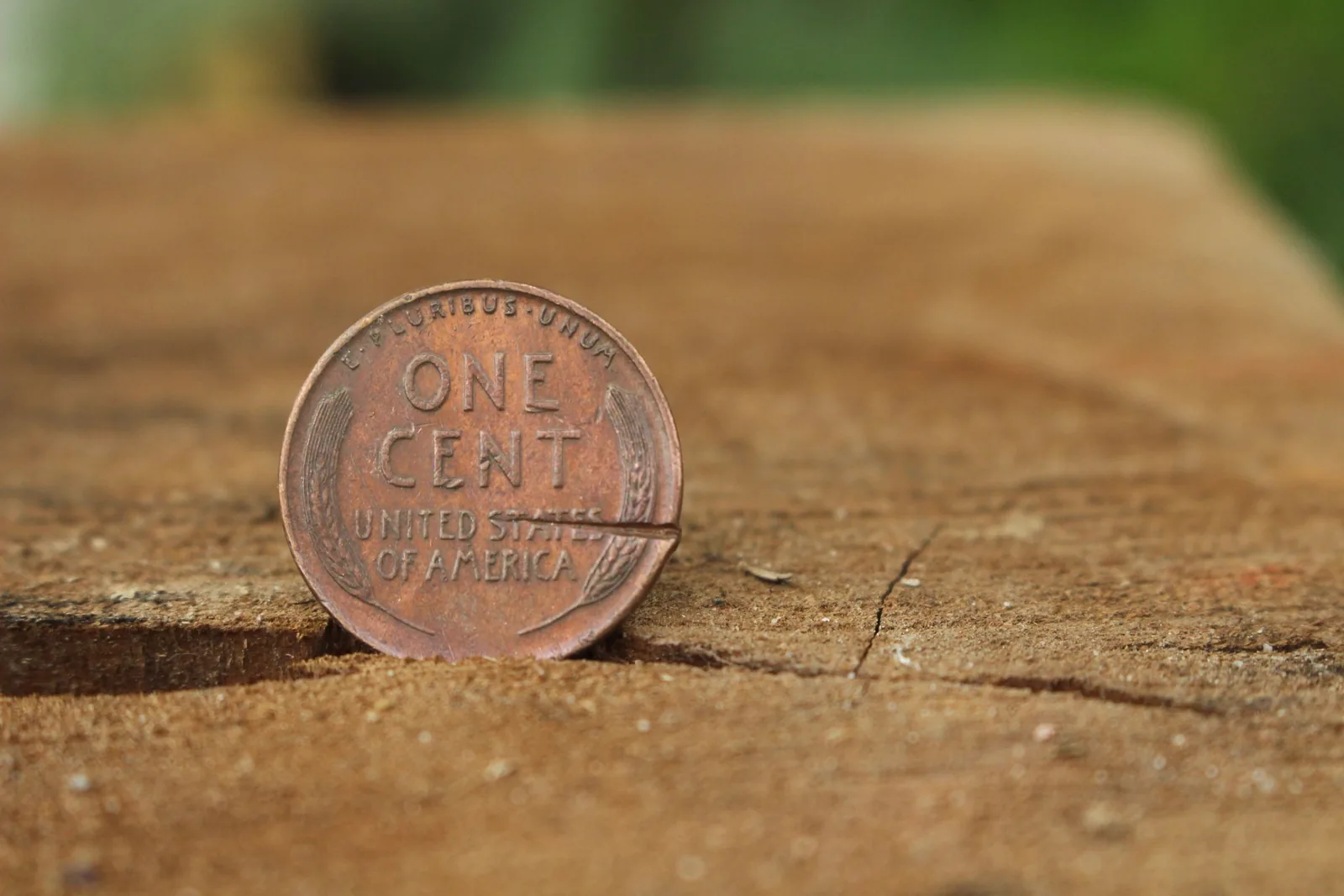
A 1943 copper penny is a 1943-dated cent struck by mistake on a leftover bronze blank from 1942, instead of the zinc-coated steel blank used for every other cent that year.
The ANA's Money Museum calls these coins errors that "were never intended to be struck." The mistake happened when leftover planchets, the blank discs coins are struck on, from 1942 production got mixed in with the planchets meant for 1943 (ANA Money Museum).
How many? In an ANA video, the association's education director says they believe about 40 were struck and only a dozen or so are thought to survive (ANA video). The Money Museum adds a warning the viral posts skip: almost all new "discoveries" turn out to be counterfeits or cases of mistaken identity.
That doesn't mean you should toss the coin. It means you should check it before anyone gets excited, and keep it with whatever collection it came from. Our coin collection guide explains why a coin is best left exactly where and how you found it.
The magnet-and-date check
This is our editorial guide, not a measurement or an authentication: two questions, asked in order, that settle almost every 1943 cent at the kitchen table. It follows the ANA's own advice in its 1943 cent video: start with a magnet, then look hard at the date.
Question one: does it stick to a magnet?
Steel cents are attracted to a magnet and copper cents aren't, the ANA says. Any 1943 cent that jumps to a refrigerator magnet is steel, even a copper-colored one. The ANA warns that people have plated steel 1943 cents with a thin layer of copper to pass them off as the rare version, and the Money Museum notes some companies once sold copper-plated steel cents as novelty items. The magnet catches those, because the core is still steel.
Question two: is the date really 1943?
A cent that doesn't stick can still be an ordinary coin with a doctored date. The ANA says a common trick is to take a 1948 cent and change the last digit, so a copper-colored coin that ignores the magnet is a reason to look closer, not a reason to celebrate. The ANA's advice is examination of the date under magnification by someone experienced; third-party authentication exists for exactly this question.
| What you see | What it most likely is | Next step |
|---|---|---|
| Silver-gray, sticks to a magnet | An ordinary 1943 steel cent | Keep it with the jar or collection |
| Copper-colored, sticks to a magnet | A copper-plated steel cent | Keep it; it isn't the rare one |
| Copper-colored, no pull, last digit looks reworked | An altered date, often a 1948 cent | Keep it with the collection |
| Copper-colored, no pull, date looks right | Unproven until an expert examines it | Leave it untouched until it's authenticated |
A magnet and good light settle most cases. Neither one authenticates a coin; only an expert examination does.
1943 penny value: what decides it
For the steel cents, the honest answer is short. The ANA's FAQ notes that over a billion were made, so they aren't rare, and says circulated 1943 cents have "a very modest value." Condition decides how much interest a single steel cent draws, which is one more reason never to scrub one.
For a copper-colored 1943 cent, nothing about its value is settled until it has passed the magnet, the date and an expert examination, in that order. Until then, treat it as part of the collection it came in. The same goes for a silver dollar or a worn Buffalo nickel from the same drawer: no viral post or phone photo can stand in for a careful look.
What to do if you think you have a 1943 copper penny
- Don't clean it, file it or scratch it. Scraping a coin to see what's underneath damages it for good.
- Keep it with the jar or collection it came from, and note where it was found.
- Try the magnet, then read the date under good light.
- Get it authenticated before anyone talks money. A viral post or a phone photo can't settle it.
- Talk to us about the whole collection. Start on our sell with us page or call Marv at (608) 628-1631.
Coins come through our sales regularly. Our past-sales list includes dedicated online coin auctions in April 2024 and April 2026, and single collections are consigned into our sales regularly. You can see how coin lots are cataloged in our past auctions.
When to talk to the estate's attorney or personal representative
If the coin belongs to an estate, settle who has the authority to sell it first. Small Wisconsin estates often pass property by affidavit, which our transfer by affidavit guide explains. Bring in the estate's attorney or personal representative if several heirs share the coins, a will names who gets them, or a probate case is open. This is general information, not legal advice.
Common questions
How can I tell if my 1943 penny is copper or steel?
Use a magnet. The American Numismatic Association says steel cents are attracted to a magnet and copper ones aren't. A copper-colored 1943 cent that sticks is copper-plated steel. One that doesn't stick still needs a close look at the date, because altered 1948 cents are a common trick, and then an expert examination.
Why were pennies made of steel in 1943?
To save copper for World War II. The National Park Service says pennies were then 95 percent copper, and after trying glass and plastic the government chose low-grade steel with a thin zinc coating. Nearly 1.1 billion steel cents were made, saving enough copper for 1.25 million artillery shells.
How many 1943 copper pennies exist?
Very few. In an ANA video, the association's education director says they believe about 40 were struck and only a dozen or so are thought to survive. They were made by mistake on leftover 1942 bronze blanks. The ANA's Money Museum notes that almost all new discoveries turn out to be counterfeits or mistaken identity.
Is a 1943 steel penny rare?
No. Over a billion were minted at three mints, and the American Numismatic Association says circulated 1943 cents have a very modest value. Condition matters most for collectors, so don't clean or scrub one. Keep it with the rest of the jar or collection, since collectors look at the whole group, not one coin.
What is a copper-plated 1943 penny?
It's an ordinary 1943 steel cent coated with a thin layer of copper. The ANA's Money Museum says companies once sold them as novelty items, and the ANA warns some are made to pass as the rare copper error. A magnet exposes them, because the steel core still sticks.
Can a 1948 penny be altered to look like a 1943?
Yes. The American Numismatic Association says a common trick is to take a 1948 cent and change the last digit of the date. Because that coin really is copper, it passes the magnet test, which is why the date needs a careful look under magnification from someone experienced before anyone treats the coin as rare.
Can I sell a 1943 penny through an auction?
Yes. Our past-sales list includes dedicated online coin auctions, and single pieces and collections are consigned into our sales regularly. Try the magnet and date checks first, and keep the coin with whatever it came with. Call Marv at (608) 628-1631 or start on our sell with us page for a free consultation.
Sources
- Currency on the World War II Home Front, National Park Service
- Coin Collecting FAQs, American Numismatic Association
- 1943 and 1944 Cents (virtual exhibit), American Numismatic Association Money Museum
- The 1943 Cent Video, American Numismatic Association