
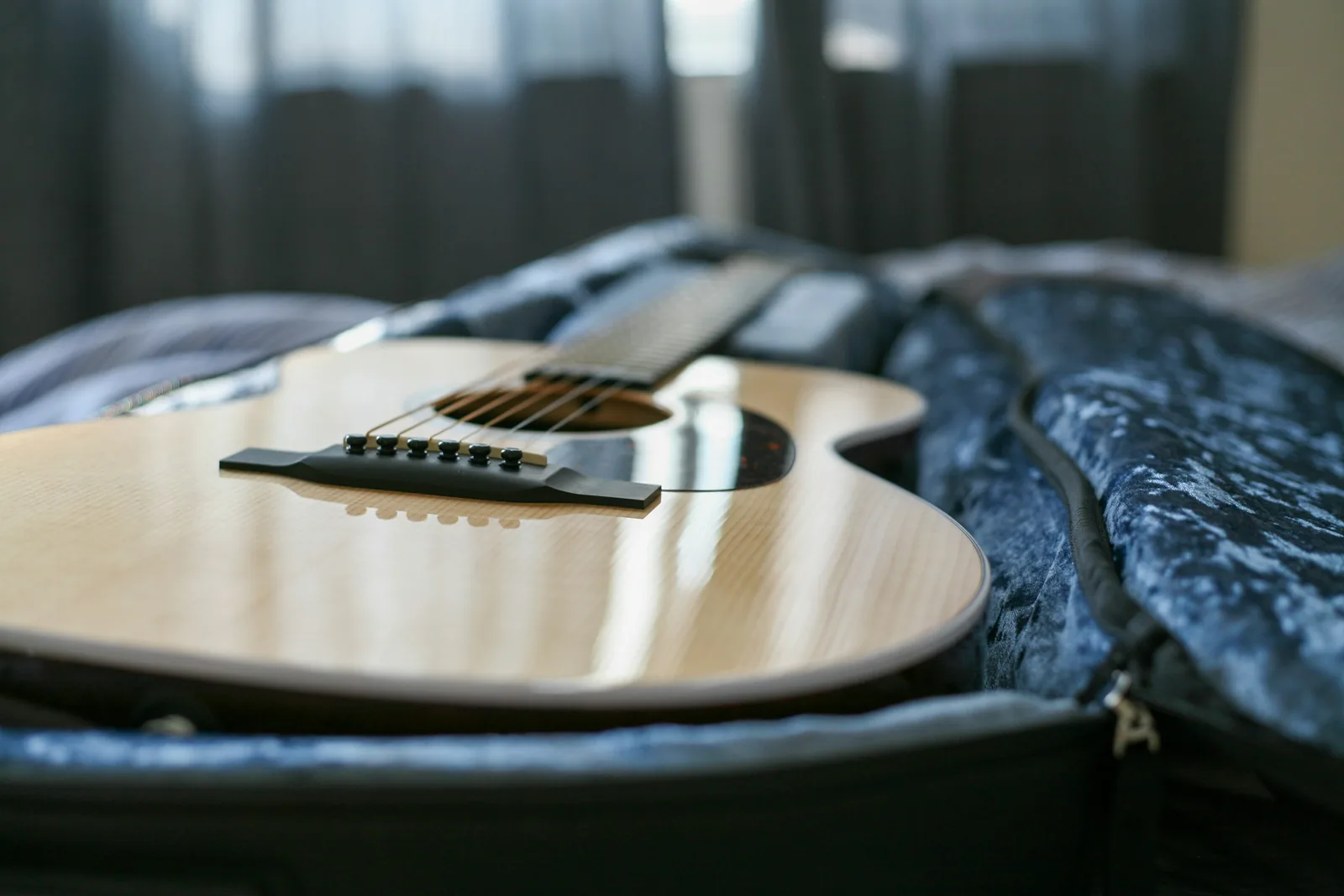
To sell a guitar from an estate, find the maker, model and serial number, keep the case, strap and paperwork with it, and leave it exactly as it is: no new strings, polish or repairs. Then let players and collectors compete for it at auction instead of taking the first offer.
A guitar in a closet is one of the most common things families find while settling an estate, and one of the hardest to read. It might be a student model from a department store or an instrument a collector has been hunting for years, and from across the room the two can look a lot alike.
The good news: you don't have to know anything about instruments to sell one well. You need to find a few facts printed on the instrument, keep everything that came with it, and resist the urge to fix it up. Our sell with us page explains how instruments go into our sales; this guide covers what to do first.
How to sell a guitar you inherited: the short version
Here's the whole job, in order. The sections below explain the steps people most often get wrong.
- Find the maker and model on the headstock and on any label or stamp inside the body.
- Write down the serial number and photograph wherever it appears.
- Keep the case, strap, tags and paperwork with the instrument.
- Leave it exactly as it is: no new strings, no polish, no repairs.
- Store it in its case in a lived-in room, not the attic or a damp basement.
- Call for a free consultation at (608) 628-1631, or use the form on our sell with us page, before you accept any offer.
Vintage guitar value: what collectors look at
Nobody can honestly tell you what an instrument will bring before bidding closes. What we can tell you is what bidders weigh. Plenty of the instruments found in closets are recent, factory-built models; they still sell, but "old" and "vintage" are not the same thing as collectible.
| Factor | What it means | Where you find it |
|---|---|---|
| Maker and model | Which company built it, and which line: makers build student, import and premium lines | Headstock logo, label, model number |
| Age | When it was built | Serial number, read against the maker's own chart |
| Originality | Original finish, tuners, pickups and bridge | Signs of refinishing or swapped parts |
| Condition | Cracks, neck problems, worn frets, working electronics | Close photos, cataloged honestly |
| Completeness | Original case, strap, tags, receipts and manuals | The closet, the case pocket |
Our editorial guide, not a measurement. No single factor decides it; bidders weigh them together.
Guitars rarely leave a house alone. If an amplifier came with it, our guide to vintage tube amps explains how to tell a tube amp from a solid state one.
Read it, record it, leave it
This is our editorial framework for heirs selling an instrument, not a rule from any maker. Each step protects something a buyer is paying for, and the last one is the step people most regret skipping.
Read it: maker, model and serial number
On many acoustics, a paper label or stamp is visible through the soundhole. On many electrics, look at the back of the headstock or the metal plate where the neck bolts to the body. Some makers publish charts that turn a serial number into a year: Martin's own serial number lookup tells owners to use the serial number to identify the production year.
A famous name on the headstock is a start, not an answer. The same maker can build several lines in more than one country, and the label is where those details show. The label inside lot 199, an Ibanez GA35TCE acoustic electric from the same sale, prints its model number, a serial number and the country where it was made.
Record it: photos and a short list
Take photos of the front, back, headstock, label or serial number, the case and any damage you can see. Write down the maker, model and serial number for each instrument, and list the amps, pedals and cases nearby. That short list is all you need to start a conversation about selling.
Leave it: no strings, polish or repairs
Don't restring it, polish it, oil the fretboard, tighten anything, glue a crack or swap a part. Collectors of older guitars pay close attention to original finish and parts, and a well-meant fix can't be undone. Leave it as it is until Marv has looked at it.
Keep the case, strap and paperwork together
The case is part of the instrument's story. A hard case protects it, and an original case, hang tag or receipt helps a bidder trust what the catalog says. Cases even go to auction on their own: lot 205 in our August 2026 sale was an MBT guitar case by itself.
Until the sale, keep it in its case in a room people live in. The Canadian Conservation Institute notes that musical instruments can easily be damaged and are often very sensitive to humidity fluctuations and high humidity, so skip the attic, the garage and the damp corner of the basement. If the house is being cleared at the same time, our estate cleanout guide explains what to set aside before anything goes.
How to sell a vintage guitar at auction
An auction suits instruments because players and collectors compete for them, and online bidding through HiBid lets them bid from anywhere. Guitars, amps and vintage audio show up in our past catalogs: the August 2026 sale alone offered the Martin and Ibanez above, a Dean bass, a Chromacast acoustic and a Kala acoustic electric U-bass.
It works like any consignment auction: every lot numbered, described and photographed, bidding open about a week on HiBid with a soft close, buyers collecting in a posted pickup window, then settlement with a clear accounting of what sold and for how much. Commission is set at the consultation.
Everything at our sales sells as is, where is, so the photos and the description do the talking. A crack, a missing tuner or an output jack that crackles belongs in the catalog line, where a bidder can weigh it, not hidden. If something about the instrument is unknown, the catalog can simply say so.
When to talk to the estate's attorney or personal representative
Before you consign anything, make sure you're the person who can sell it. If several heirs share the estate, a will names who gets the instrument, or a probate case is open, ask the estate's attorney or personal representative first. Our guides to transfer by affidavit in Wisconsin and how long probate takes in Wisconsin explain who has authority, and when. This is general information, not legal advice.
Common questions
How do I find out what my old guitar is worth?
Start with the facts bidders use: the maker, model and serial number, whether the finish and parts are original, its condition, and whether the case came with it. Asking prices online are not sold prices. At auction, the bidders decide the price when the lot closes. Nobody can honestly promise a price before the sale.
Should I put new strings on a guitar before I sell it?
No. Leave the guitar exactly as you found it, old strings and all, until the auctioneer has seen it. Restringing, polishing, oiling the fretboard or adjusting the neck can cause problems, and collectors of older guitars care about original parts and finish. A buyer can set an instrument up after the sale.
Where is the serial number on a guitar?
On many acoustic guitars, look through the soundhole for a paper label or a stamp inside the body. On many electrics, check the back of the headstock or the metal plate where the neck meets the body. Photograph it and write it down; some makers, Martin among them, publish charts that turn the number into a year.
Is it better to sell a guitar with its original case?
Yes, keep them together. The case protects the guitar and helps show its history, and an original case, hang tag or receipt can matter to collectors. Cases go to auction on their own too: our August 2026 sale offered a guitar case as its own lot. Mention every case, strap and paperwork at the consultation.
Can I sell a guitar and amplifier together?
You can, and the decision is easier once everything has been seen. Guitars, amps and vintage audio all appear in our past catalogs, sometimes as separate lots and sometimes grouped. Bring the whole setup to the conversation, including pedals, cords and cases, and decide together how the instruments and gear are best lotted.
Where can I sell a guitar near Madison, Wisconsin?
Dorshorst Auctions is in Deerfield, about 15 minutes east of Madison. Single instruments and small collections are consigned into our sales, and bidding runs online through HiBid, so players and collectors anywhere can compete. Call Marv at (608) 628-1631 or use the form on our sell with us page for a free consultation.
What makes a guitar vintage?
There is no single official rule, and people use the word loosely. Collectors generally mean an older instrument from a maker and era they follow, in original condition. Age alone doesn't make a guitar collectible, and a recent guitar can still sell well as a good player. The maker, model and serial number tell the real story.
Sources
- Dating Your Martin: A Quick Reference (serial number lookup), C. F. Martin & Co.
- Musical instruments (care of objects), Canadian Conservation Institute, Government of Canada