
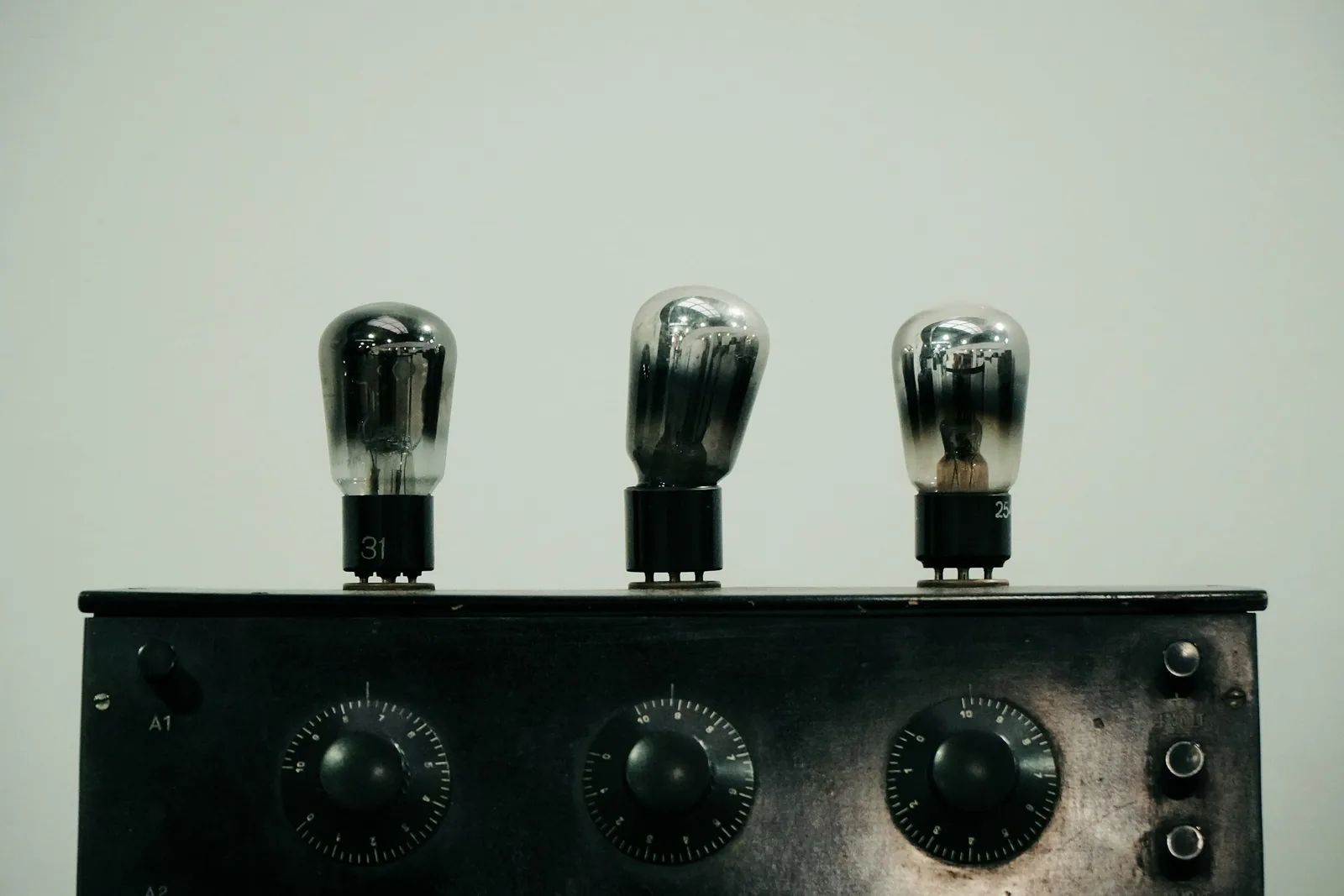
Vintage tube amps use glass vacuum tubes to make a signal louder; most later amps and receivers use transistors instead. You can often tell which you have without plugging it in: look through the back, read the model plate and look up the model. Leave old gear unplugged, and let bidders who test it decide.
An amplifier in the basement can be almost anything: a practice amp from a few years ago, a stereo receiver from the family room, or one of the vintage tube amps guitarists go looking for. They can look alike under a layer of dust, and the word "vintage" on a listing doesn't settle it.
The honest short answer: most amps and receivers in a house are ordinary, working-or-not equipment, and some draw real interest. What decides it is the maker and model, whether it runs on tubes or transistors, how original it is and its condition. You can learn most of that without ever plugging it in, which is exactly how we suggest you do it. When you're ready, our sell with us page explains how audio gear goes into a sale.
What makes vintage tube amps different
A tube amp uses glass vacuum tubes to make a weak signal from a guitar, turntable or radio strong enough to drive a speaker. A solid state amp does the same job with transistors and other semiconductor parts.
Tubes came first. The Computer History Museum explains that a Bell Labs research group went looking for semiconductor replacements for unreliable vacuum tubes used in the telephone system, and that in December 1947 John Bardeen and Walter Brattain produced the first successful semiconductor amplifier, the point-contact transistor. Many guitarists still prefer the sound and feel of tube amps.
If the amp came with a guitar or two, our guide on how to sell a vintage guitar covers the instruments.
Tube or solid state: the unplugged inspection
This is our editorial checklist for heirs, not a manufacturer's procedure. Every step happens with the amp unplugged and the back panel left on.
- Look through the back. Many guitar combos have an open or vented back. Glass tubes standing in sockets are the clearest sign of a tube amp.
- Look on top. On a lot of older hi-fi tube amplifiers, the tubes stand on top of the chassis where you can see them.
- Read the plate. The rating plate or back panel gives the maker, model and often the output and where it was made.
- Look for paperwork. A paper chart listing tube types, an owner's manual or a schematic in the cabinet is a strong clue.
- Write down the model, then look it up in the maker's own documentation rather than guessing from how old it looks.
Not every amp in an estate is old. Our August 2026 sale also offered a modern Spark Mini portable smart guitar amplifier as lot 157, next to the classic-looking gear.
Old stereo receivers and hi-fi gear
A stereo receiver puts a radio tuner and an amplifier in one box, usually with a long dial across the front. Old stereo receivers turn up in estates too, along with turntables, tape decks, CD changers and speakers. Vintage audio is one of the categories in our past catalogs, including Sansui receivers, Onkyo and Polk.
A wood case and a silver face don't tell you what is inside, so treat a receiver the same way as an amp: note the maker and model on the front, keep the speakers, remote and manual with it, and leave it unplugged. If records came with the stereo, our guide to vinyl records worth money covers the crates.
Guitar amp value: what bidders weigh
Nobody can honestly tell you what an amp will bring before a sale closes. What we can tell you is what bidders look at.
| Factor | What it means | How to show it |
|---|---|---|
| Maker and model | Which company built it and which model it is | A clear photo of the front panel and rating plate |
| Tube or solid state | What does the amplifying inside | The model number, looked up in the maker's documentation |
| Originality | Original speaker, knobs, covering and grille cloth | Leave everything as found; mention any known repairs |
| Condition | Cabinet wear, torn grille, missing knobs, damaged cord | Honest photos, damage included |
| Completeness | Footswitch, cover, remote, manual, speakers | Keep them with the amp or receiver |
Our editorial guide, not a measurement. Working or not is for a qualified tester to say, not a guess.
Everything at our sales sells as is, where is, so the photos and description do the talking. Our FAQ explains how bidders can book a preview before they bid.
Safety first: leave old gear unplugged
The safest thing an heir can do with an old amp or receiver is leave it unplugged. The Consumer Product Safety Commission's Home Electrical Safety Checklist covers electrical cords and entertainment equipment together. It asks whether any cord is frayed, cracked, or otherwise damaged, and warns that damaged cords may have exposed live wires that can be shock and fire hazards. It adds that damaged appliances can become a shock or fire hazard.
- Don't plug it in to see if it works, especially if the cord is stiff, cracked or frayed.
- Don't open the back panel or chassis. Leave the inside to a qualified technician.
- Don't swap tubes, fuses or plugs. Leave every part as it is until Marv has looked at it.
- Move it gently. Glass tubes are fragile, so carry the amp upright and avoid bumps.
If the house is being cleared on a deadline, set the audio gear aside with the instruments; our estate cleanout guide explains what else to hold back.
How to sell vintage amps and audio gear
- Keep the setup together: amps, receivers, speakers, turntables, cords, footswitches and manuals.
- Photograph the front, back and rating plate of each piece, as it sits.
- Write down makers and model numbers. That list is plenty to start.
- Leave everything unplugged and unrepaired.
- Call Marv at (608) 628-1631 or use our sell with us page for a free consultation.
From there it works like any consignment auction: every lot numbered, described and photographed, bidding open about a week on HiBid with a soft close, buyers collecting in a posted pickup window, then settlement with a clear accounting of what sold and for how much. Whether a receiver sells with its speakers or on its own is a decision to make once everything has been seen.
Common questions
How can I tell if my amp has tubes in it?
Start with the amp unplugged. Look through the back panel and on top of the chassis for glass tubes standing in sockets, check for a paper tube chart or manual, and read the model on the rating plate. Then look the model up in the maker's own documentation. Don't remove panels to find out.
Are old tube amps worth anything?
Some draw real interest from guitarists and collectors, and many ordinary amps sell as working gear. Bidders weigh the maker and model, whether it is tube or solid state, original parts, condition and accessories. Nobody can honestly promise a price before the sale; at auction, the bidders decide when the lot closes.
Is it safe to plug in an old amplifier to test it?
Don't. The Consumer Product Safety Commission warns that damaged cords may have exposed live wires that can be shock and fire hazards, and that damaged appliances can become a shock or fire hazard. Leave old amps and receivers unplugged and let a qualified technician, or the buyer, do any testing after the sale.
Should I replace the tubes before selling an amp?
No. Leave the tubes, fuses, cord and every other part exactly as you found them. Original parts can matter to collectors, and work inside an amp belongs with a qualified technician. Mention anything you know about past repairs at the consultation so the catalog can describe the amp honestly.
Do old stereo receivers sell at auction?
Yes. Vintage audio is one of the categories in our past catalogs, including Sansui receivers, Onkyo and Polk. Our August 2026 sale offered a Sansui Stereo Receiver 331 with four speakers, listed as working. Keep the speakers, remote and manual with the receiver and leave it unplugged until it has been seen.
What is the difference between a tube amp and a solid state amp?
Both make a weak signal strong enough to drive a speaker. A tube amp does it with glass vacuum tubes, the older technology. A solid state amp uses transistors and other semiconductor parts, which came out of research in the late 1940s. Many guitarists still prefer the sound and feel of tubes.
Where can I sell vintage audio equipment near Madison, Wisconsin?
Dorshorst Auctions is in Deerfield, about 15 minutes east of Madison. Guitars, amps and vintage audio appear in our sales, and bidding runs online through HiBid, so buyers anywhere can compete. Call Marv at (608) 628-1631 or use the form on our sell with us page for a free consultation.
Sources
- 1947: Invention of the Point-Contact Transistor (The Silicon Engine), Computer History Museum
- Home Electrical Safety Checklist (Publication 513), US Consumer Product Safety Commission