
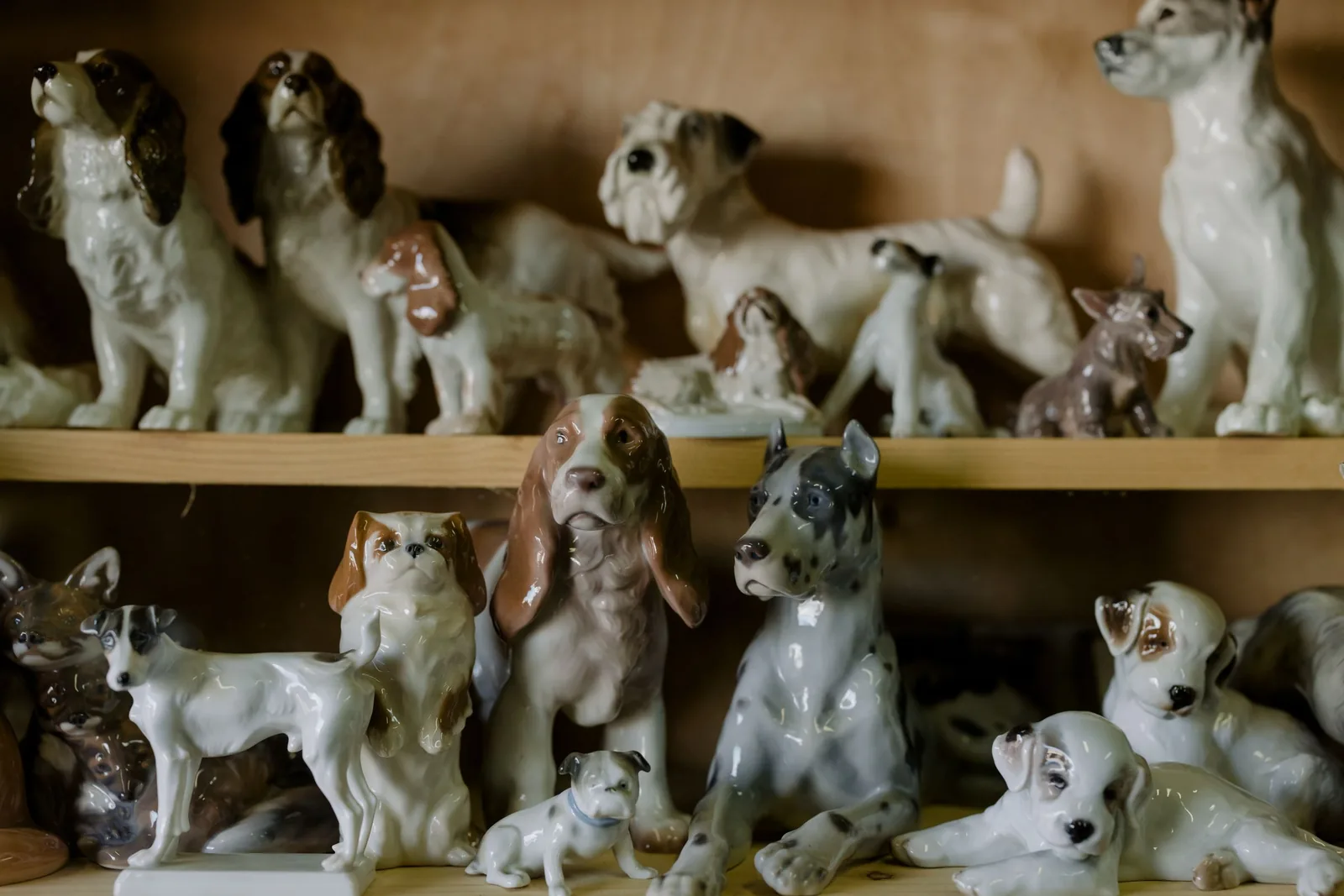
Most Hummel figurines in a family cabinet are common, because they were made for decades and bought widely as gifts. Some draw real collector interest, and the mark on the base, the model, the size and the condition decide which. Precious Moments work the same way. Handle them gently and leave them exactly as they are.
You'll hear that nobody collects figurines anymore. That's not quite true. The official Hummel Club still serves collectors in North America, and Precious Moments marked a new collection again in 2026. What is true is that the common pieces are common, so the details on each figurine decide which ones draw interest and which ones sell as part of a group.
This guide covers how to read those details, how to handle the pieces until the sale, and how to sell a cabinet full of them. When you're ready, our sell with us page explains how collections go into our sales.
Are Hummel figurines worth anything? The honest answer
Some are, many are ordinary, and nobody can tell which from across the room. The figurines were made for decades and sold widely, so plenty of familiar models turn up in nearly every family that collected them. Bidders look harder at older trademarks, less common models and sizes, and pieces with no chips, cracks or repairs.
Asking prices online are not sold prices, and nobody can honestly promise what a figurine will bring before a sale. What you can do is keep the collection together and leave it as it is. If the figurines share a cabinet with dishes, our guide on what to do with old china covers the rest of the shelves.
Where the figurines came from
The figurines grew out of one artist's drawings. According to the official Hummel Club site for North America, Berta Hummel was born in Bavaria in 1909, studied art in Munich and joined the Franciscan convent of Siessen, where she became Sister Maria Innocentia Hummel. Her drawings of children inspired the first M.I. Hummel figurines, introduced in 1935 through her collaboration with Franz Goebel. She died in 1946, at just 37.
The figurines outlived her by decades. As of November 2026, the same site says the pieces are handmade in Rödental, Germany, and that Hummel Manufaktur carries on the tradition and manages product development and the Hummel Club. That long run is why the mark on the base matters so much: it is the main clue to when a figurine was made, much as stamps and marks help date the antique crocks in a Wisconsin basement.
The base, body and box check
This is our editorial guide for heirs, not a measurement or an authentication method. It tells you what to look at and what to mention so a catalog can describe each figurine honestly.
Base: the trademark, signature and number
Turn the figurine over carefully, holding it by its base. The trademark on the underside changed several times over the decades, and collectors sort pieces into trademark periods they call TMKs. The earliest is a crown mark; a series of bee marks followed (Hummel is German for bumblebee), and later marks changed again. Look also for the incised M.I. Hummel signature, usually low on the figure or its base, and the model number pressed into the bottom.
Lookalike figurines from other makers exist too, and the Goebel name also appears on porcelain that has nothing to do with Sister Maria Innocentia's drawings. Look for the signature and the trademark together. A piece without them may still be charming, but it should be described for what it is.
Body: chips, cracks and repairs
Check the fragile points first: fingers, noses, hat brims, umbrella tips and anything that sticks out. Note chips, cracks and any old glue line or repainting. A repair isn't something to hide; it belongs in the catalog line, where a bidder can weigh it.
Box: packaging and papers
Original boxes, certificates, club papers and receipts help a bidder trust what they're looking at. Keep each box with its figurine, even if the box is worn.
| Check | What to look at | What to write down |
|---|---|---|
| Base | Trademark, incised signature, model number | A photo of the underside of each piece |
| Body | Chips, cracks, repairs, worn paint | Every flaw you can see, plainly |
| Box | Original box, certificates, club papers | Which box goes with which figurine |
Our editorial guide, not a measurement. Only an experienced eye with the piece in hand can judge a mark or a repair.
Precious Moments figurines value: the same rules
Precious Moments figurines, the teardrop-eyed porcelain children created by founding artist Samuel J. Butcher, follow the same logic. The company says that since 1981 it has marked each year's new collection with a unique annual production mark, found on the bottom of every porcelain figurine. The first, for 1981, is a triangle. Its guide, dated February 12, 2026, runs through the 2026 mark.
That small symbol is the quickest guide to the year a piece was made. Beyond that, bidders weigh the same things as with the German figurines: the model, condition, the original box and whether it's part of a complete set. If the cabinet also holds a 1990s plush collection, our guide to Beanie Babies covers that craze.
Handling and packing figurines until the sale
Most damage to figurines happens in the hands, not on the shelf. The Canadian Conservation Institute's guide to handling heritage objects advises using both hands to carry one object at a time, with one hand at the base to support its weight. It warns that protruding parts may have been weakened by use or a poor repair and may no longer support the object's weight if used to lift it.

- Never lift a figurine by an arm, a head or an umbrella.
- Don't wash, glue or touch up anything. Leave every piece as it is until Marv has looked at it.
- If you must move them, wrap each piece separately and pack them standing, with padding between. Never move a curio cabinet with the figurines still on its shelves.
- Keep the boxes and papers in the same carton as the figurines they belong to.
If the cabinet is coming out of a family home, our downsizing tips for seniors cover the rest of the move.
How to sell a figurine collection
- Keep the collection together. Don't give away the common pieces or pull out favorites first.
- Photograph each shelf as it sits, then the underside of a few pieces.
- Count by type: figurines, plates, bells, ornaments and boxes.
- Note any damage you already know about.
- Call Marv at (608) 628-1631 or use our sell with us page for a free consultation.
From there it works like any consignment auction: every lot numbered, described and photographed, bidding open about a week on HiBid with a soft close, then settlement with a clear accounting of what sold and for how much. Whether figurines sell one at a time or in groups is a decision to make after Marv has seen the whole collection. If you're sorting a parent's home a room at a time, our guide to Swedish death cleaning is a gentle place to start.
Common questions
How can I tell how old my Hummel figurine is?
Look at the trademark on the underside. The mark changed several times over the decades, and collectors group pieces into trademark periods, starting with a crown mark and moving through a series of bee marks to later designs. Photograph the base and the incised signature, and let an experienced eye match the mark to its period.
What does the bee on the bottom of a Hummel mean?
It is part of the trademark used on many Hummel figurines, and a nod to the name: Hummel is German for bumblebee. The bee's style changed over the years, which is one way collectors tell older pieces from newer ones. A figurine with no signature or trademark at all may be a lookalike from another maker.
Should I repair a chipped Hummel before selling it?
No. Leave every chip, crack and old repair as it is until the auctioneer has seen the piece. A fresh repair can't be undone, and bidders want to judge the original condition for themselves. Point out any damage you know about at the consultation so the catalog can describe each figurine honestly.
Do Hummel figurines sell without their original boxes?
Yes. Many figurines in a family cabinet have long since lost their boxes, and they still go to auction. An original box, certificate or club paper is a plus because it helps a bidder trust the piece. If you have boxes, keep each one with its figurine rather than storing them separately.
How do I find the year on a Precious Moments figurine?
Turn it over and look for a small symbol. Precious Moments says it has marked every porcelain figurine with an annual production mark since 1981, starting with a triangle, and it publishes a guide to what each year's symbol looks like. Figurines made before the marks began in 1981 won't carry one.
Is it better to sell figurines one at a time or as a collection?
Start by keeping the collection whole. Pulling out favorites or giving away the common pieces can't be undone, and a complete collection lets bidders see everything at once. Whether figurines are offered one at a time or in groups is a decision to make with the auctioneer after the whole collection has been seen.
Where can I sell Hummel figurines near Madison, Wisconsin?
Dorshorst Auctions is in Deerfield, about 15 minutes east of Madison. Collections are consigned into our sales, and bidding runs online through HiBid, so collectors anywhere can compete for your figurines. Call Marv at (608) 628-1631 or use the form on our sell with us page for a free consultation.
Sources
- About Us (M.I. Hummel Gifts, the official shop serving the Hummel Club community in North America), Hummel Gifts, LLC, for Hummel Manufaktur
- The Authentic Meaning Behind The Precious Moments Annual Production Marks (February 12, 2026), Precious Moments
- Handling heritage objects, Canadian Conservation Institute, Government of Canada