Vintage gas station signs are popular with collectors, and that demand has filled the market with reproductions, many of them real porcelain. Porcelain alone doesn't prove age. Check the back, the edges and the wear, leave the sign exactly as it is, and let an honest catalog description do the rest.
Old oil company signs are some of the most recognizable things that come out of a Wisconsin garage or barn. They are also some of the most copied. Reproductions are sold openly as decor, and some of them are very good, which is why a sign that looks like it hung over a 1950s service bay deserves a closer look before anyone calls it original.
The honest short answer for heirs: an original advertising sign in good shape can draw real collector interest, and a reproduction is decor that sells as decor. You don't have to decide which one you have. You just need to leave it alone, photograph all of it, and let the catalog say what it is. Our sell with us page explains how signs and advertising go into a sale.
Why vintage gas station signs draw collectors
Signs were how oil companies told one station from another. The National Park Service's Preservation Brief 46 on historic gas stations (September 2008) explains that gasoline is essentially a commodity customers rarely notice a difference in, so companies "have long tied their products to specific logos and signs," naming Texaco's star, Shell's pecten and Mobil's pegasus. The same brief notes that box-type stations built between the 1930s and the 1960s were often finished in porcelain enamel panels, and it shows a 1930s Milwaukee station rehabilitated as a coffee shop.
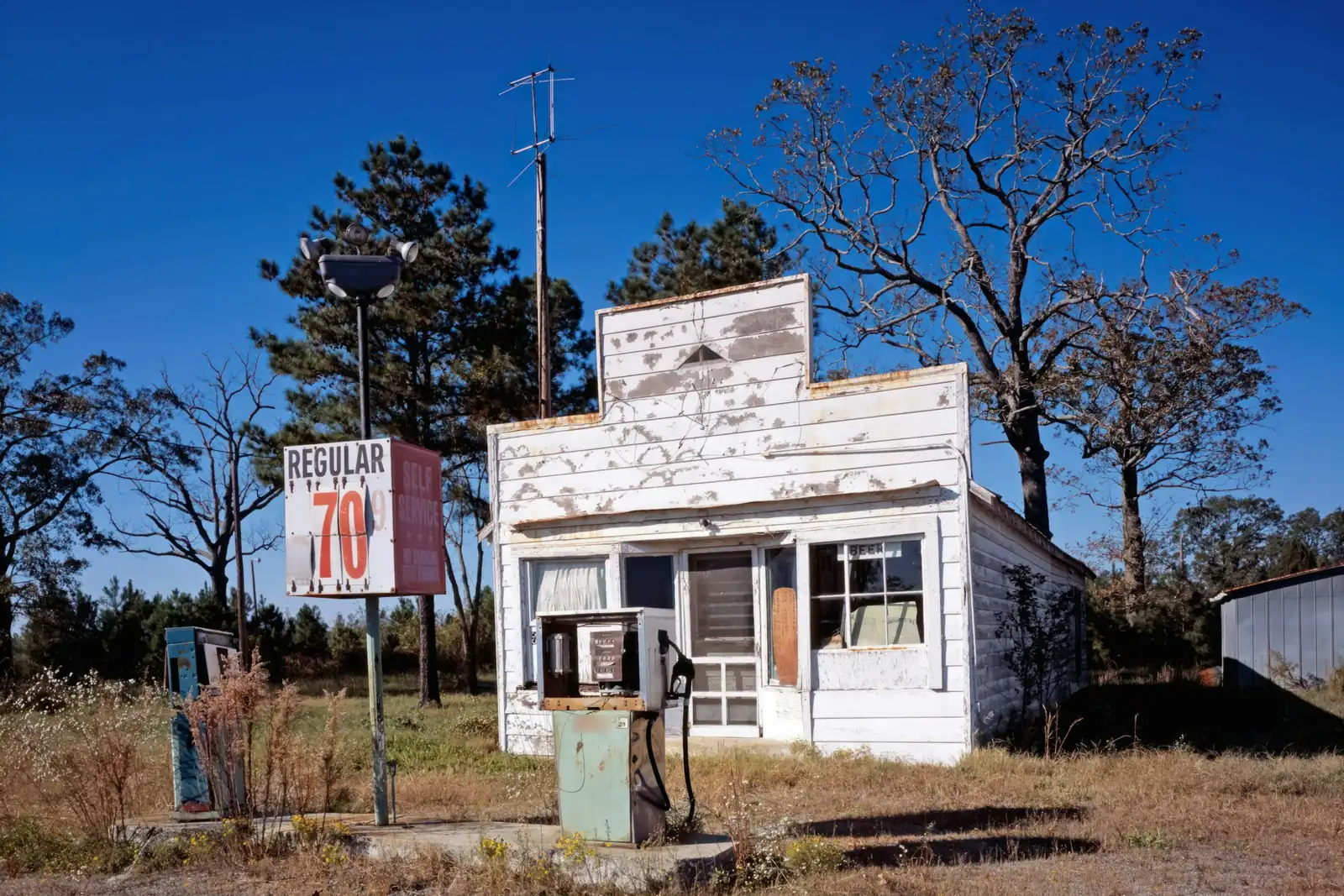
The brief also uses the collectors' word for this field: replacement signs for historic stations, it says, are available from collectors and dealers in "petroliana." Signs are the best-known part of it, but cans, displays and other station advertising belong to the same family. Advertising from other trades has its own following too; our guide to breweriana covers the beer side of the garage wall.
Porcelain doesn't prove a sign is old
Porcelain enamel is glass fired onto metal. The International Enamellers Institute describes it as an inorganic and vitreous coating used on metals, fired at a very high temperature, and notes its long use protecting steel. That glassy, heavy feel is part of why porcelain signs read as old. It is also why the material alone settles nothing: reproductions are made the same way.
Turn lot 44 over and the back tells you more. A paper label from its maker, Ande Rooney, describes the company's porcelain enameled advertising signs as "made in the U.S.A." reproductions, handmade by layering enamels onto steel plates and kiln firing them. That is an honest reproduction, labeled as one by its maker, and the second photo in our catalog listing shows that label.
The four sides check for porcelain signs
This is our editorial guide for heirs, not a measurement or an authentication method. It won't prove a sign is original; it tells you what to photograph and what to mention so the catalog can describe the sign honestly. Look at four things.
| Side | What to look at | What it can tell you |
|---|---|---|
| Back | Labels, stamps, paint, dirt and rust | A reproduction label settles it; a back that looks new on a front that looks ancient deserves a question |
| Edges | Maker's names, dates and code lines along the border or frame | A starting point for research, not proof, since copies can copy the lettering |
| Holes | Mounting holes and grommets, and the wear around them | Whether and how the sign was hung |
| Face | Chips, fading and scratches | Whether the wear is uneven, the way sun, weather and handling leave it |
Our editorial guide, not a measurement. Only an experienced eye with the sign in hand can judge, and even then reasonable people disagree.
Write down what you know, too. If you know where a sign hung, for how long and who put it up, that history helps a bidder, as long as it can be checked. A family story without anything behind it is still worth mentioning; just call it a story.
Edges carry more than people expect. The frame of lot 322, a vintage Pepsi-Cola chalkboard menu sign in our August 2026 sale, is printed with a code and the line "Stout Industries, Inc. St. Louis, Mo." A maker's line like that gives a bidder something to research.
Porcelain signs value: what bidders weigh
Nobody can honestly tell you what a sign will bring before bidding closes. Bidders tend to weigh the same handful of things:
- Original or reproduction, and whether the catalog can say which.
- The brand and the subject: oil companies, soda, farm co-ops, dairies and local businesses each have their own collectors.
- Condition: chips, fading, rust and bends, especially in the middle of the design.
- Material: porcelain enamel, painted or printed metal, or a newer aluminum or plastic sign.
- Size and display: whether it fits a garage wall or needs a barn.
Not every collectible sign is advertising. Wisconsin signs show up in our sales too: our August 2026 catalog included a metal Wisconsin Dairies sign and a vintage Wisconsin Department of Natural Resources sign, below.
A reproduction is not a failure. Plenty of buyers want the look for a garage or a game room, and an honestly described reproduction sells to them. The only real mistake is calling a reproduction original, or an original a reproduction, without looking.
How to sell old gas station signs and petroliana
- Leave every sign exactly as it is. No washing, polishing, waxing, rust removal or touch-up paint before Marv has looked at it.
- Don't pry a sign off a barn or building yourself. Note where it hangs and bring it up at the consultation.
- Photograph the front, back, every edge and any label, plus the mounting holes.
- Keep the related pieces together: oil cans, display racks, thermometers and anything else from the same station or business.
- Call Marv at (608) 628-1631 or use our sell with us page for a free consultation.
From there it works like any consignment auction: every lot numbered, described and photographed, bidding open about a week on HiBid with a soft close, then settlement with a clear accounting of what sold and for how much. If the signs are part of a bigger cleanup, read our estate cleanout guide before anything in the garage goes to the curb, and our guide on what to do with old tools for the workbench under them.
Common questions
How can you tell if a porcelain sign is real or a reproduction?
Start with the back: a maker's reproduction label settles it, and a fresh-looking back on a battered front deserves a question. Then check the edges for maker's lines, the mounting holes and the pattern of wear. None of these proves age on its own, so photograph everything and let an experienced eye judge.
Do reproduction porcelain signs sell?
Yes, as decor. Plenty of buyers want the look of an old oil company or soda sign for a garage or game room, and they bid on reproductions knowingly. What matters is an honest description. A reproduction should be cataloged as one, which is why photos of the back and any labels are so important.
What is petroliana?
Petroliana is the collectors' name for gas station and oil company memorabilia: signs, cans, displays, thermometers and other station advertising. The National Park Service's brief on historic gas stations uses the word when it notes that replacement signs are available from collectors and dealers in petroliana. Cans and displays belong to the same family as signs.
Should I clean an old metal sign before selling it?
No. Leave it exactly as you found it, dirt, rust and all, until the auctioneer has seen it. Washing, polishing, waxing or touching up paint can't be undone, and bidders want to judge the original surface for themselves. Photograph it as it is and mention anything you know about where it hung.
Is a porcelain sign the same as a tin sign?
No. Porcelain enamel is a glassy coating fired onto metal at very high heat, so it has a hard, glossy surface that tends to chip when struck. Painted or printed metal signs carry paint or ink on the surface. Both can be old or new, and both have collectors, so describe each honestly.
Where can I sell old gas station signs near Madison, Wisconsin?
Dorshorst Auctions is in Deerfield, about 15 minutes east of Madison. Wisconsin advertising and signs appear in our past catalogs, and bidding runs online through HiBid, so collectors anywhere can compete. Call Marv at (608) 628-1631 or use the form on our sell with us page for a free consultation.
Sources
- Preservation Brief 46: The Preservation and Reuse of Historic Gas Stations (Chad Randl, September 2008), National Park Service, Technical Preservation Services
- What is Enamel?, International Enamellers Institute