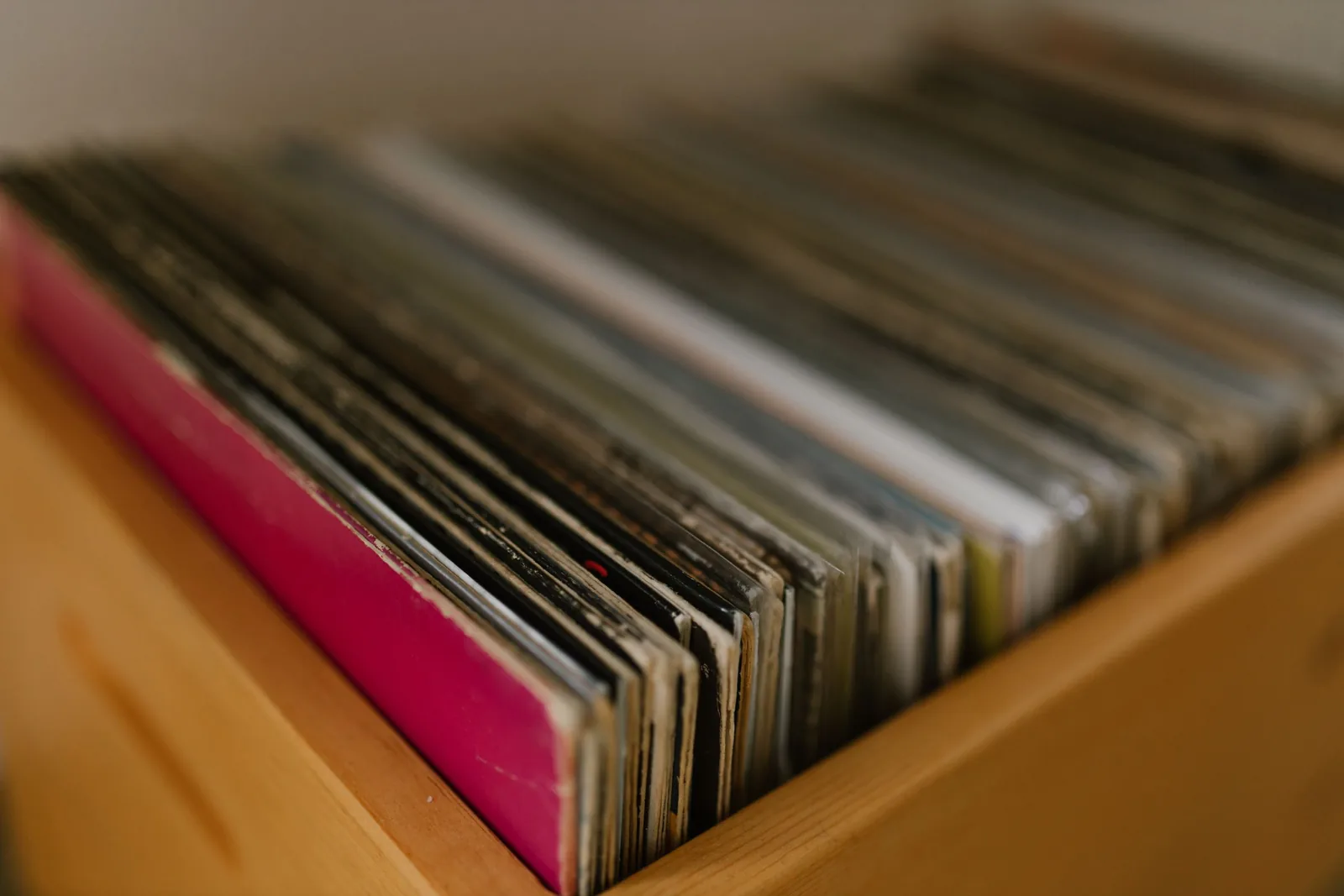
Most records in a family collection are common, because popular albums were pressed in large numbers. Vinyl records worth money usually combine the right pressing, clean playing condition and a complete jacket. Keep the collection together, store it upright, and let collectors compete for it at auction.
Vinyl is having a long second act. The Recording Industry Association of America reports that US vinyl sales grew for a 19th consecutive year in 2025, with 46.8 million units sold. That steady comeback is why so many families pull the record crates out of the basement and wonder what they're holding.
Here is the plain truth first: most of those records are common. The RIAA figures track new records sold through the labels, not the secondhand copies in your parents' basement. What decides collector interest in an old record is the pressing, the condition and the jacket, and the only way to find the exceptions is to keep the whole collection together until someone who knows records has looked at it. When you're ready, our sell with us page explains how a collection goes to auction.
Are vinyl records worth money? The honest answer
Some are, most are not, and the album title alone rarely decides it. The records that sold best were pressed in the largest numbers, so a well-loved copy of a chart-topping album is easy to find. Collectors save their attention for scarcer things: early pressings, small and regional labels, records that never got a big reissue, and any copy that survived clean and complete.
Asking prices are not sold prices. A record listed online for a big number tells you what one seller hopes for, not what a bidder paid. Nobody can honestly promise what a record will bring before a sale; the bidders decide that when the lot closes.
The worn and the boring still matter, too. A crate of common albums can sell as a lot, and the record that looks like nothing is sometimes the one a collector wanted. If the records came out of a house you're clearing, read our guide to an estate cleanout before anything goes to the curb.
LPs, 45s and 78s: sort the crate by format
Start by sorting by size and speed, because the formats come from different eras. The Library of Congress notes that Columbia Records released the first long-playing microgroove record in June 1948, spinning at 33 1/3 revolutions per minute and holding about 23 minutes a side. Before that, a long work took a stack of 78 rpm discs. A 1949 Columbia catalog quoted in the same post calls LPs "nonbreakable Vinylite" and compares them with "conventional shellac records."
| Format | Size and speed | Made of | What to watch for |
|---|---|---|---|
| LP (long-playing album) | 12 inches, 33 1/3 rpm | Vinyl | The jacket, inner sleeve and any inserts belong with it |
| Single | 7 inches, 45 rpm | Vinyl | Often kept in stacks or boxes; keep any paper sleeves with them |
| 78 | Usually 10 or 12 inches, 78 rpm | Shellac on older discs | Breakable: never stack them loose or drop a box |
Keep each size together: the Library of Congress advises against storing discs of different diameters together.
The same sort-first habit works on any shelf of old media, from records to the boxes of old VHS tapes that usually sit beside them.
The jacket, label and wax check
Here is a quick way to look at any record. It is our editorial guide, not a measurement or a grading system, and it asks three questions. A record that answers all three well is the kind collectors compete for; most records answer one or two.
Wax: which pressing is it?
A pressing is the run of copies your record came from. Collectors read the label design, the catalog number and the codes stamped or etched in the smooth run-out area near the label to tell an early pressing from a later reissue. You don't need to decode any of it. Just don't assume a record is an original because it looks old, or a reissue because it looks new.
Label and surface: what condition is it in?
Collectors look at the playing surface for scratches, scuffs and warps, and at the label for writing or stickers. Grading scales for records exist, but a grade is a judgment someone makes, not a fact printed on the disc. Handle records the way the Library of Congress advises, by the edge and label areas only, and leave them exactly as you found them: no wiping, washing or sprays before Marv has looked at them.
Jacket: is everything there?
The jacket (the printed cardboard cover), the inner sleeve and any lyric sheet, poster or insert all belong with the record. A record in the wrong jacket, or a jacket with no record, is incomplete. Keep every disc in the jacket it came in, even when the jacket is tired.
| Question | Draws collector interest | Holds interest back |
|---|---|---|
| Wax (pressing) | Early pressings, small or regional labels | Later reissues of common best sellers |
| Label and surface (condition) | Clean, flat discs with clean labels | Deep scratches, warps, writing on the label |
| Jacket (completeness) | Original jacket, inner sleeve and inserts | Missing or mismatched jacket, water damage |
Our editorial guide, not a measurement. No single row decides a record; collectors weigh all three.
Storing vinyl records until the sale
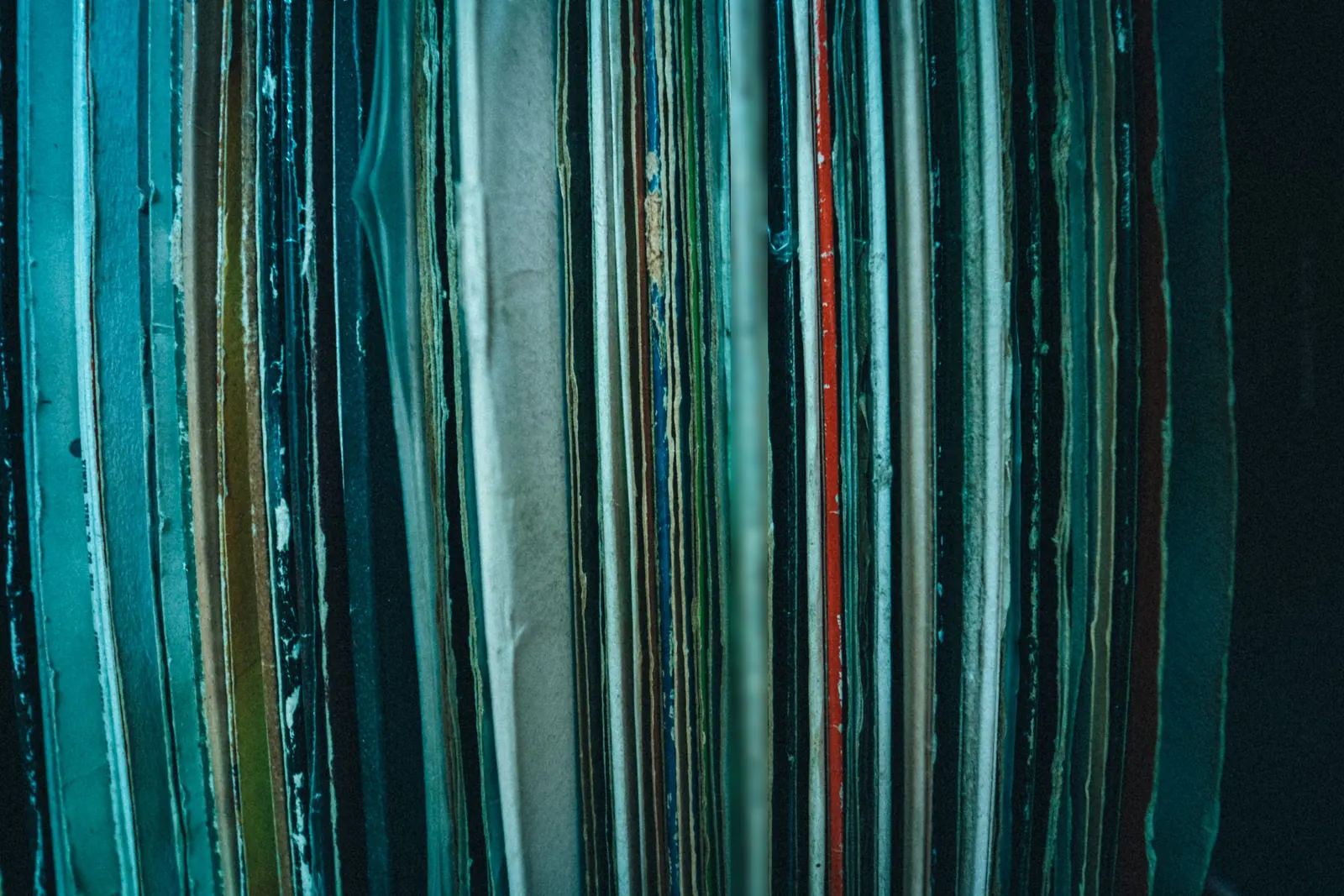
How records sit for the next few weeks matters more than most people think. The Library of Congress guidance on caring for sound recordings gives home collections a short list:
- Stand them upright, on edge.
- Use sturdy dividers every 4 to 6 inches so the discs don't lean.
- Keep sizes apart: LPs with LPs, 45s with 45s, 78s with 78s.
- Pick a cool, relatively dry room, away from attics, basements, radiators and vents.
- Plan for the weight: the Library notes grooved discs average more than 35 pounds per shelf-foot.
If the house is being emptied on a deadline, move the crates as they are to a room upstairs and leave the sorting to the sale. Our downsizing tips for seniors cover the rest of the move.
How to sell vinyl records from an estate
An auction suits a record collection because collectors compete for it instead of one buyer naming a price. Here's how to get one ready:
- Keep the collection together. Don't pull out favorites, give away the worn ones or toss the heavy 78s.
- Leave everything as it is until Marv has looked at it: no cleaning, no swapping jackets, no new sleeves.
- Count by container: crates of albums, boxes of 45s, albums of 78s. Photograph each one as it sits.
- Note the gear, too. Turntables, receivers and speakers are a category in our past catalogs, and our guide to vintage tube amps explains how to tell what you have.
- Call Marv at (608) 628-1631 or use the form on our sell with us page for a free consultation.
From there it works like any consignment auction: every lot numbered, described and photographed, bidding open about a week on HiBid with a soft close, then settlement with a clear accounting of what sold and for how much. How a collection is divided into lots is a decision to make after Marv has seen all of it.
Clearing other shelves at the same time? Our guide to old encyclopedias covers the books that usually sit next to the records.
Common questions
How do I know if my old records are worth anything?
Look at three things: the pressing (label, catalog number and run-out codes), the condition of the disc and label, and whether the jacket and inserts are complete. Most popular albums are common because they were pressed in large numbers. An asking price online is not a sold price, so let bidders decide at auction.
Are old 78 rpm records worth anything?
Some draw real collector interest and many are common, just like LPs. Older 78s were pressed in shellac, which breaks far more easily than vinyl, so condition matters a great deal. Keep them upright, away from other sizes, and don't stack them loose. Leave the sorting to the people bidding on them.
Should I clean old vinyl records before selling them?
No. Leave every record exactly as you found it until the auctioneer has looked at it. Handle records by the edge and label only, as the Library of Congress advises. Don't wipe, wash or spray them. Collectors judge condition for themselves, and a well-meant cleaning can't be undone if it goes wrong.
Is it better to sell a record collection all at once or one by one?
Start by keeping it whole. Pulling out favorites or tossing worn albums can't be undone, and a complete collection lets bidders see everything at once. How the records are divided into lots is a decision to make with the auctioneer after they have seen the entire collection at a free consultation.
Do records without their covers sell?
They can, but collectors want records complete, so a bare disc usually draws less interest than one in its original jacket with the inner sleeve and inserts. If jackets and records got separated, don't try to match them up yourself. Keep everything together and mention it at the consultation, so it can be cataloged honestly.
Where can I sell a vinyl record collection near Madison, Wisconsin?
Dorshorst Auctions is in Deerfield, about 15 minutes east of Madison. Single collections are consigned into our sales, and bidding runs online through HiBid, so collectors anywhere can compete for your records. Call Marv at (608) 628-1631 or use the form on our sell with us page for a free consultation.
Should the turntable and stereo be sold with the records?
Keep them, and mention them at the consultation. Turntables, receivers and speakers are a category in our past catalogs, and our August 2026 sale offered an Audio-Technica turntable listed as working alongside a Sansui receiver. Whether audio gear sells with the records or as its own lots is decided once everything has been seen.
Sources
- 2025 Year-End Recorded Music Revenue Report, news release (March 16, 2026), Recording Industry Association of America
- Inside the Archival Box: The First Long-Playing Disc, Library of Congress, Now See Hear! blog
- Care, Handling, and Storage of Audio Visual Materials, Library of Congress