
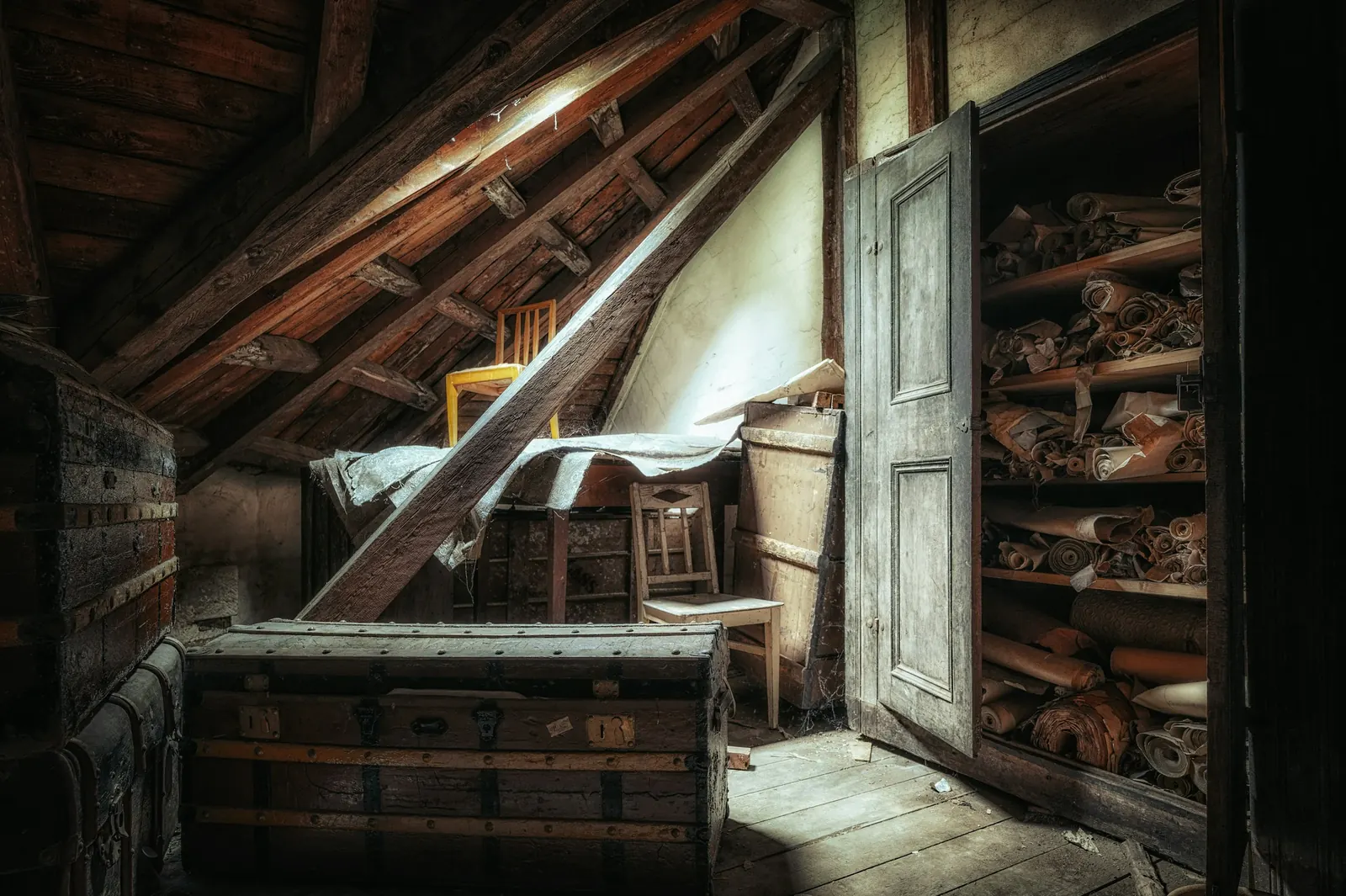
Many old trunks are more common than families expect, and age alone decides little. Interest comes from the type, a maker's label, original hardware, lining and key, condition, and any travel history. Disable or remove any automatic lid latch, as CPSC advises, keep the contents together, and otherwise leave it as it is until someone has looked.
It's in the attic, the barn loft or the back of the basement: a big trunk nobody has opened in years, sometimes with a key taped to the handle and sometimes with no key at all. Someone always says it came over on the boat.
Here's the honest short answer on antique trunk value: what decides interest is the kind of trunk, who made it, how much of it is original, and its condition, not the family story by itself. Many trunks that look old are 20th-century storage trunks. And sometimes the most important thing about the trunk is what's inside it. If it's one item in a whole house, start with our guide to what an estate auction is.
Antique or vintage? Many old trunks are younger than they look
In everyday use, "antique" means roughly a hundred years old or more; "vintage" is looser and usually means mid-20th century. A dusty trunk with brass-colored trim can be either. In our August 2026 sale, for example, several trunk lot titles said simply vintage, with the size and whether the key came along, rather than claiming an age.
That's not a knock on vintage pieces. It's a reason to describe what you have accurately, which is the first thing a buyer checks. Our guide on how to sell antique furniture makes the same point about recording evidence instead of guessing.
Types of old trunks, and how a steamer trunk differs
The shape of the lid tells you a lot. The National Park Service, describing two family trunks at Longfellow House, explains that domed lids were designed to make water run off instead of pooling on top, a design popular in the mid-19th century, while later flat lids let trunks be stacked. The same article notes that by the late 1920s, steamer trunks were falling out of fashion as travelers switched to the more portable and affordable suitcase.
| Type | Recognize it by | Worth noting |
|---|---|---|
| Dome-top trunk | A rounded or humped lid | A design the NPS calls popular in the mid-19th century |
| Flat-top steamer trunk | A flat lid made to stack, often with a tray inside | Faded from fashion by the late 1920s as suitcases took over |
| Wardrobe trunk | Stands on end and opens like a small closet | Hangers, drawers and fittings should stay with it |
| Storage trunk | A smaller flat-top trunk for home, school or camp | Often 20th century; check the label and latch |
| Plain or painted wooden trunk | Simple box construction, sometimes a name or place painted on | Family history and paint should be left exactly as they are |
Our editorial guide, not a dating method. Trunks were repaired, relined and reused, so one clue proves little.
Some family trunks really did cross the ocean. The National Park Service displays trunks typical of those arriving at Ellis Island, where luggage was checked like a coat and returned after inspection. If your family's story says so, write it down and keep any tags or papers with the trunk, the same way you'd keep a family's paper trail with its furniture. Let the evidence carry the story.
The lid, label and lining check
Here's how we'd suggest reading any old trunk, from the outside in. It's our editorial guide, not a measurement or a pricing method, and the contrarian part is the last step: the contents can matter more than the trunk.
Lid and latch
Note the shape of the lid, and check whether it latches by itself when it shuts. The CPSC warns that lids on millions of storage chests and trunks can automatically latch shut, locking children inside. For a chest that hasn't been recalled but has an automatic latch, CPSC says to disable or remove the lock. Our Lane cedar chest guide covers the best-known recall.
Label and maker
Look inside the lid, on the end panels and on the lock plate for a maker's name, a paper label or a stamped number. Write down exactly what it says.
Hardware and key
Check the lock, latches, handles, corners and hinges. Are they original, matching and complete? Is there a key, and does it fit? One that still has its own key is one less question for a buyer. Several trunks in our August 2026 sale were listed plainly as with key or no key.
Lining and inside fittings
Paper, fabric or wood linings, trays and dividers all count. A torn original lining is still original. A new one hides what a buyer wants to see.
Contents and travel labels
Old shipping labels are history. At Longfellow House, the NPS notes, labels on one trunk show its owner took it to Europe in 1923 and 1928. Labels, tags, letters, photos and papers inside can tell a family's story and interest a collector of their own.
Antique trunk value: what decides interest
Online listings mix asking prices with sold prices, and a photo of somebody else's trunk tells you little about yours. The things that actually move interest are plain:
- Type and age, backed by construction and labels rather than the family story alone.
- Maker, when a label or stamp shows it.
- Originality: lid, hardware, lining, trays and key all as they left the maker.
- Condition that matches honest use, with damage noted plainly.
- History you can show: travel labels, names, tags and papers that stay with it.
- Size and use: a trunk that works as a coffee table or end-of-bed storage suits more homes.
That last point is our editorial judgment, and it fits what's happening with older wood furniture generally; our guide to brown furniture explains the trend.
What not to do before you sell an old trunk
- Don't strip, sand or repaint the outside, and don't scrape off old labels.
- Don't reline it or pull out a tired lining.
- Don't swap hardware, and don't force a stuck lock; note it instead.
- Don't empty it into a dumpster. Go through the contents first, and keep papers, photos and tags together.
- Don't leave a self-latching lid as it is where children can reach it; follow CPSC's advice above.
If you find letters or photographs inside, get them out of the attic. The National Archives advises storing family papers and photographs out of damp basements, garages and hot attics, below 75 degrees Fahrenheit and below 65 percent relative humidity. Beyond that, leave the rest as it is until Marv has looked at it. Our estate cleanout guide covers what else deserves a second look before anything is thrown away.
Selling an old trunk with the rest of the estate
Antique furniture and trunks are among the categories in our past catalogs, and the August 2026 sale alone included several trunks, such as Lot 328, a vintage Seward trunk with key. On our sales, every lot is numbered, described and photographed, and all bidding happens online through HiBid. Larger lots are pickup only, so a full-size trunk goes home with a bidder during the posted pickup window.
We work out of downtown Deerfield, about 15 minutes east of Madison. When you're ready, tell us what you're working with. If an auction isn't the right route for it, Marv will say so.
Common questions
How can I tell how old my trunk is?
Start with the shape of the lid, then look for a maker's label, stamped numbers, original hardware and lining, and any travel labels or tags. A domed lid points to an older design, but trunks were repaired, relined and reused, so no single clue settles it. Write down what you find and photograph it before changing anything.
What is the difference between a steamer trunk and a dome top trunk?
A dome-top trunk has a rounded lid; the National Park Service says domed lids were designed to make water run off, a design popular in the mid-19th century. A steamer trunk has a flat lid that lets trunks stack. By the late 1920s, the NPS notes, steamer trunks were giving way to suitcases.
Is an old steamer trunk worth anything?
Some draw real interest and many are common. What decides it is the type, the maker, how original the hardware, lining and key are, condition and any travel history you can show. Asking prices online aren't sold prices. Have the trunk looked at before you refinish it, reline it or give it away.
Should I refinish or reline an old trunk before selling it?
No. A refinished outside or a new lining hides the evidence a buyer uses to judge age and originality, and it can't be undone. Don't scrape off labels or swap hardware either. Leave the trunk exactly as it is until Marv has looked at it, and note any damage or a stuck lock instead of fixing it.
What should I do with old papers found inside a trunk?
Keep them together and don't throw anything out until the family and Marv have seen them. Move letters and photographs to a living area: the National Archives advises keeping family papers out of damp basements, garages and hot attics, below 75 degrees Fahrenheit and below 65 percent relative humidity.
Can an old trunk be dangerous for children?
Yes, if the lid latches by itself. The CPSC warns that lids on millions of storage chests and trunks can automatically latch shut, locking children inside. For a chest or trunk that hasn't been recalled but has an automatic latch, CPSC says to disable or remove the lock and ask the maker about replacement hardware.
Sources
- Longfellow Luggage, National Park Service, Longfellow House Washington's Headquarters National Historic Site
- 30 Minute Walking in the Immigrant Footsteps Tour, National Park Service, Statue of Liberty National Monument and Ellis Island
- CPSC Warns Consumers of the Deadly Dangers of Storage and Toy Chests (March 5, 2014), U.S. Consumer Product Safety Commission
- How to Preserve Family Archives: Storing, National Archives