
Most VHS tapes are common, including Disney's Black Diamond editions, which a 2016 fact-check found were neither rare nor regularly selling for big sums. Sealed tapes and harder-to-find titles draw some collector interest. The tapes that matter most are usually your home movies, and magnetic tape fades, so rescue those first.
Every few years the same post comes back around: check your old Disney tapes, because the ones with a black diamond on the spine could pay off your car. Families clearing a basement pull out a stack of The Little Mermaid and Beauty and the Beast, look up listings, and see sellers asking a fortune.
Here is the straight answer. Most VHS tapes, Black Diamond editions included, are common. A few sealed tapes and harder-to-find titles interest collectors. But the tapes that deserve your attention first usually aren't movies at all. They're the birthday parties, weddings and Christmas mornings someone recorded on a camcorder, and those are slowly fading.
Are VHS tapes worth anything?
Most store-bought VHS tapes are common, and most draw little collector interest. Interest centers on sealed copies, tapes in excellent condition and harder-to-find titles. Home recordings rarely interest buyers at all, but to a family they can be the most important tapes in the house.
You can see the demand picture close to home. The Madison Public Library's donation guidelines, as of November 2026, list VHS tapes and audio cassettes among the items it is unable to accept, "due to space limitations and lack of demand." That's not a judgment on your family's movies. It is an honest signal that store-bought tapes are plentiful.
So the useful question isn't what a tape might bring. It is which tapes are irreplaceable and which are just copies of a movie millions of people bought. When you are ready to talk about the rest of the house, our sell with us page is the place to start.
The Black Diamond VHS myth
The black diamond is real. According to a 2016 Snopes fact-check, which quotes reporting from PhillyVoice, the diamond on the spine marked Disney's "Classics" line and appeared on Disney's animated features as they first came out on VHS in the 1980s and early 1990s.
The value claim is not. Snopes found Black Diamond tapes regularly listed at very high asking prices, but those listings drew no bids, and active bidding appeared only far down the list. Its 2016 conclusion, rated Mostly False, was that the tapes are neither rare nor regularly selling for the sums the posts claimed. A collector Snopes quoted from an online answer said Disney fans may pay more for harder-to-find movies or tapes in excellent condition.
Why does the claim keep coming back? Each time, someone sees a listing rather than a sale and shares it, and every family that bought those movies in their day finds a stack that seems to match the photo. The more households that own a tape, the more convincing the post feels, and the more common the tape actually is.
The lesson reaches beyond Disney. An online asking price is a wish. A completed sale is a fact. Viral posts almost always quote the first and skip the second, the same way they do with Beanie Babies and two dollar bills.
Rescue first, sell second: the home movie rule
Here's the rule we'd follow in any basement. It is editorial judgment, not a measurement: before anyone asks what the tapes might sell for, find the ones nobody else in the world has a copy of, and get them off the tape. A store-bought movie can be replaced. Your father's voice at a 1989 graduation can't.
Time matters here. The Library of Congress, in its guide to transferring video from tape, says analog videotape "is fragile and could become unplayable after a few years," and that the more you play a tape, the more you wear it down. NPR reported in 2017 that magnetic tape slowly loses its magnetic properties, and that most home tapes were recorded in the 1980s and 1990s.
Playing a fragile tape can hurt it. The National Archives' video playback and digitization guidance warns against risking your records on a machine in questionable condition and suggests a trained professional for transfers, with a preservation copy kept for the long term and an access copy for viewing. For tapes you keep, the Library of Congress suggests storing them away from direct sunlight in a cool, low-humidity room, in sleeves or plastic cases.
How to sort a shelf of VHS tapes
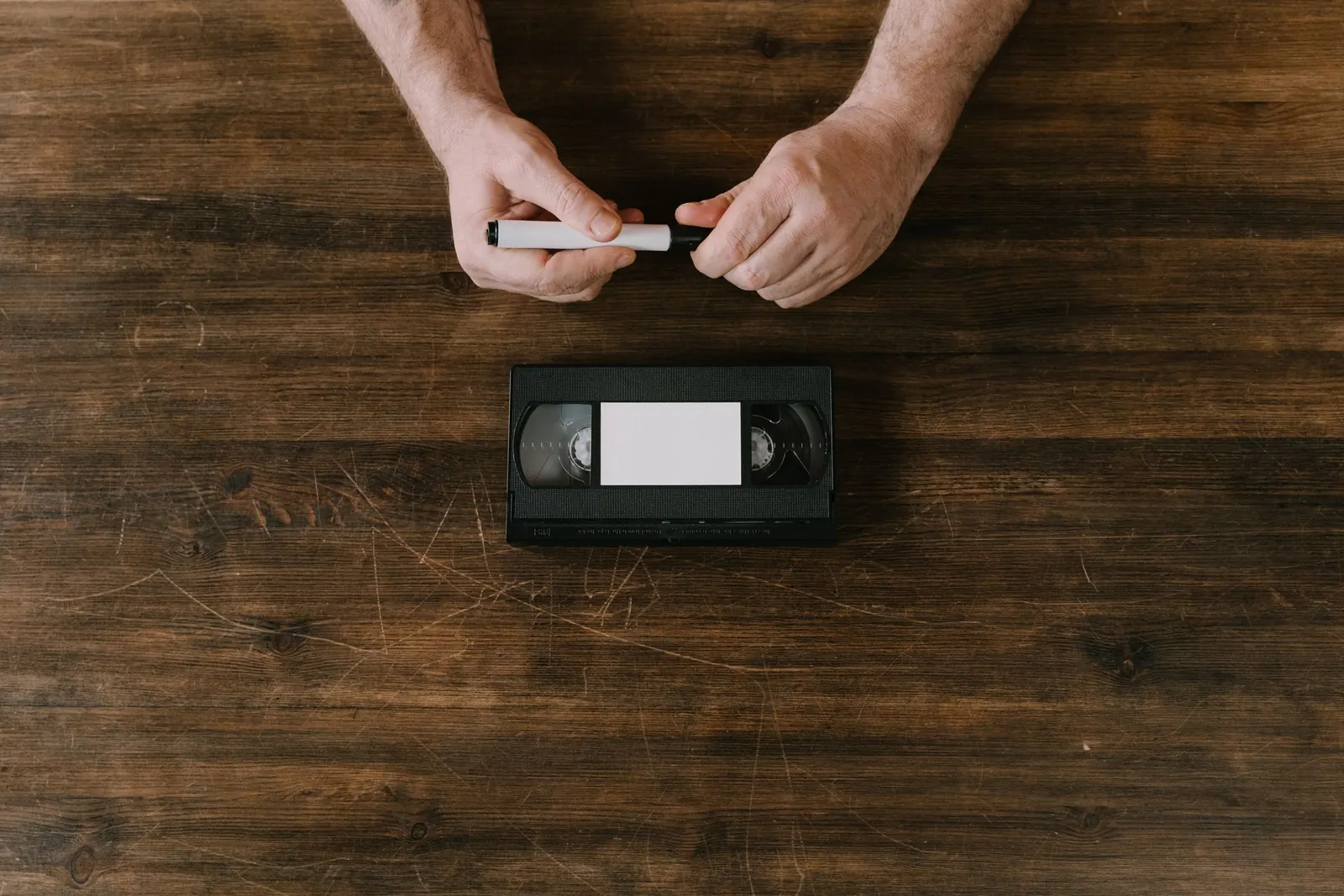
You don't need to watch every tape. Sort by how each one was made, using the clues on the outside. This table is our editorial guide, not a measurement.
| Pile | How to spot it | What to do |
|---|---|---|
| Home recordings | Handwritten labels, blank-tape brands, camcorder cassettes, dates and names in pen | Keep and transfer first; these are the irreplaceable ones |
| Unlabeled or relabeled tapes | No label, a peeled label, or a movie case with a different tape inside | Treat as home recordings until someone checks; a wedding can hide in a movie box |
| Sealed store-bought tapes | Factory shrink-wrap still intact | Leave sealed and set aside for a look |
| Opened store-bought movies | Printed labels and studio cases, played and rewound | Usually common; let family pick favorites first |
Only copy what you have the right to copy. The Library of Congress notes that its transfer steps assume tapes without copy protection, and that trying to digitize copy-protected commercial tapes can produce blurry, dark or scrambled images. Home recordings are the ones worth the effort. For everything else, our estate cleanout guide explains why nothing should leave the house before someone has looked at it.
VCRs, camcorders and the rest of the media shelf
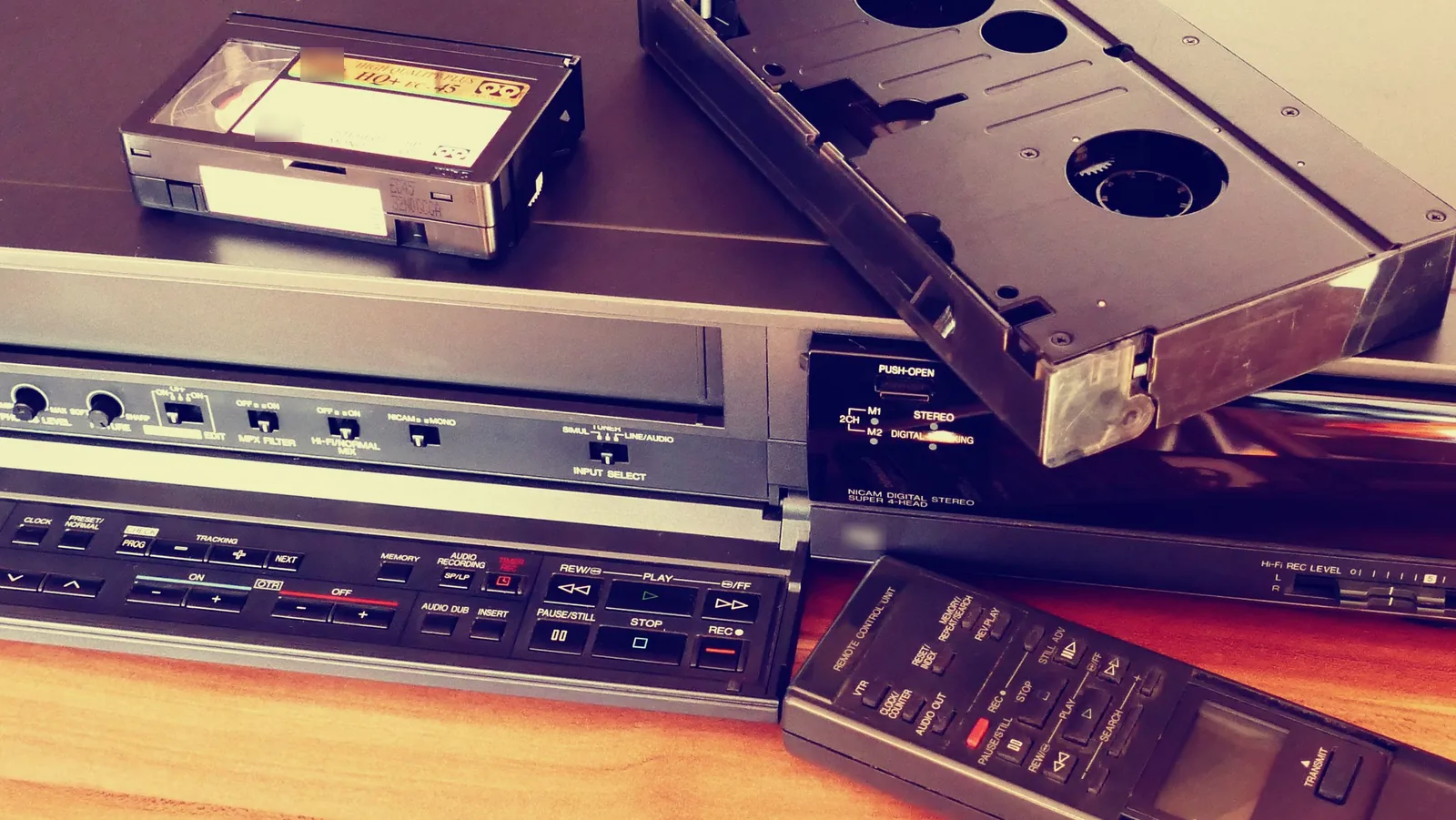
Don't toss the VCR before the home movies are transferred. If you plan to transfer tapes yourself, you'll need a working player, and a camcorder that recorded the tapes may be the easiest machine to play them on. Leave the gear as it is, and don't force a tape that sticks.
The rest of the media shelf may hold more interest than the tapes. Vintage audio is a real category in our past catalogs, from Sansui receivers to Onkyo and Polk gear, and record collections are a subject of their own. Our guides to vinyl records worth money and vintage tube amps cover what to look for and what not to plug in.
When an auction makes sense for old tapes
A box of opened VHS movies rarely justifies an auction on its own, and we would rather tell you that up front. What changes the picture is the rest of the house. In an estate or household sale, media and electronics can ride along with furniture, tools and collections, each lot described and photographed, with bidding open for about a week on HiBid. Selling ordinary tapes one at a time usually takes a family more effort than it returns.
Sealed tapes, a large themed collection, or a basement full of audio gear deserve a conversation. Call Marv Dorshorst, Registered Wisconsin Auctioneer #344, at (608) 628-1631, or start on our sell with us page. If an auction isn't the right route for your tapes, he'll say so. To watch for upcoming sales, see current and upcoming auctions.
Common questions
Are Black Diamond Disney VHS tapes rare?
No. A 2016 Snopes fact-check rated the claim Mostly False. The black diamond marked Disney's Classics line of animated features first released on VHS in the 1980s and early 1990s. Snopes found high asking prices drew no bids and concluded the tapes are neither rare nor regularly selling for large sums.
Which VHS tapes do collectors look for?
Collector interest centers on tapes still sealed in factory shrink-wrap, copies in excellent condition, and harder-to-find titles that never had wide release. Ordinary opened copies of popular movies are common because so many were sold. Leave sealed tapes sealed, and don't judge a tape by its asking price online; only completed sales show real demand.
How long do VHS tapes last?
Not forever. The Library of Congress says analog videotape is fragile and could become unplayable after a few years, and every play wears it further. NPR has reported that magnetic tape slowly loses its magnetism over time. If a tape holds family memories, plan a transfer soon rather than waiting until it fails.
Should I digitize home movies before selling the house?
Yes, ideally before anyone sorts or hauls tapes away. Pull out anything with handwritten labels or no label, and treat it as a home recording. The National Archives suggests a trained professional for transfers and keeping both a preservation copy and an access copy. Store tapes somewhere cool and dry until then.
Can I donate old VHS tapes to the library?
Often not. As of November 2026, the Madison Public Library lists VHS tapes and audio cassettes among the items it can't accept, citing space limitations and lack of demand. Other libraries and charities set their own rules, so call ahead. Keep home recordings out of any donation box until they've been transferred.
What should I do with old VHS movies I don't want?
Let family members pick favorites first, then check what local charities and your town's waste program accept. Before you donate a whole box, check for unlabeled tapes and home recordings hiding in movie cases. If the tapes are part of a larger estate, describe everything to an auctioneer before deciding what goes.
Sources
- Are 'Black Diamond' Disney VHS Tapes Worth Thousands of Dollars?, Snopes (fact-check, June 2, 2016)
- Transferring Video from Tape, DVD or Camera to Your Computer (Personal Digital Archiving Series), Library of Congress
- Video Guidance: Playback and Digitization of Materials, National Archives and Records Administration
- Videotapes Are Becoming Unwatchable As Archivists Work To Save Them, NPR (reporting, June 3, 2017)
- Book Donations, Madison Public Library