
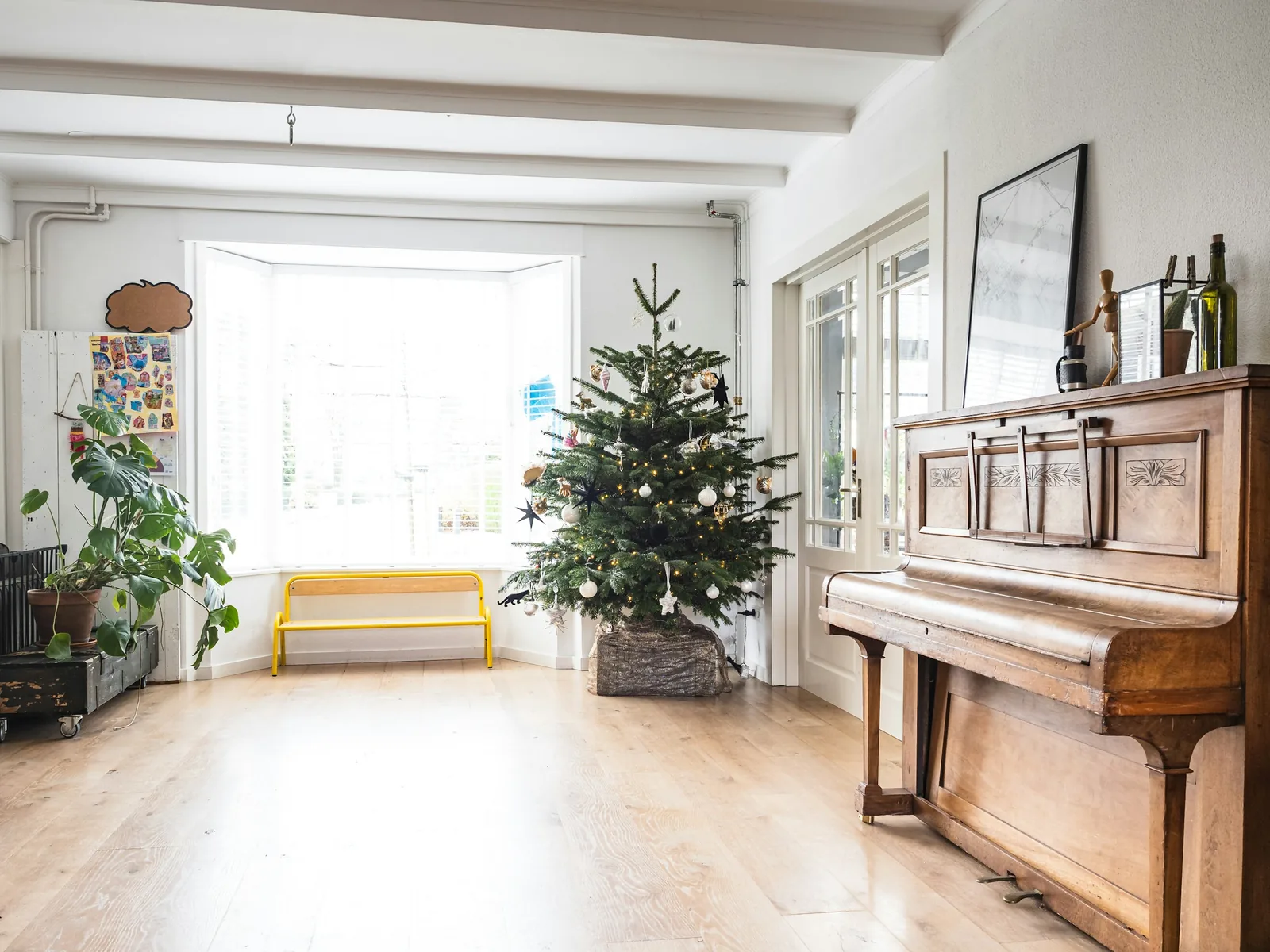
Many old upright pianos are heavy, costly to move and draw little resale interest, so start with an honest question: will anyone play it? Find the maker and serial number, have a piano technician check its condition, offer it to family or a school or church, and treat selling or disposal as later steps.
Almost every estate has one big object nobody knows what to do with, and in a lot of Wisconsin houses it's the piano. Somebody learned on it. It went to every holiday. Now the house is being sold, and the family is finding out that an old upright is hard to give away, let alone sell.
That's the honest picture, and it's better to hear it now than in closing week. Many old pianos have little resale interest, they're heavy and costly to move, and some aren't sound enough to play. Some are, and some have a family member who wants them. The steps below help you figure out which piano you have and what to do with it. If the piano is one piece of a whole house, our guide to what an estate auction is covers the bigger picture.
Why so many old pianos are hard to place
The piano was once the center of home entertainment. The Historic New Orleans Collection explains that the upright piano supplanted the square piano in the late 19th century, and that for many consumers the upright was a player piano. One expert quoted in that history puts the end of the player bluntly: "Radio killed off the player piano." Families bought them for the parlor, and many are still in the house generations later.
Three things make an old upright hard to place today. It is big and heavy. Its condition is hard to judge by looking: the Piano Technicians Guild (PTG), the professional association for piano technicians, warns that "free" or "cheap" pianos can actually be the most expensive if the instrument needs complete rebuilding to be playable. And in a private sale, PTG notes, the moving cost is usually the buyer's responsibility, so every buyer weighs the move along with the instrument.
None of that means yours has no future. It means you should find out what you have before anyone promises it to a cousin or calls a hauler. If a parent is moving rather than settling an estate, our downsizing tips for seniors help with the timeline.
Find out what you have: maker, serial number, type
Start with the name on the fallboard (the hinged cover over the keys) and the serial number. PTG's FAQ says pianos almost always have a serial number somewhere, and uprights usually have it stamped on the metal plate near the top or in a window in the plate. One trap: dates cast into the plate are the year the company was founded, not the year yours was made.
- Type: grand, upright, console, spinet or player piano. A player has a mechanism for paper rolls, usually behind sliding doors above the keys.
- Maker and serial number: write both down exactly, with a photo.
- Condition you can see: keys that stick or stay down, missing ivory or key tops, cracks, water damage, mice.
- What goes with it: the bench, player rolls, sheet music, keys to the lid and any service records. Keep them together, the way you'd keep keys and parts with old furniture.

The three-question piano test
Before you decide what to do with an old piano, answer three questions in this order. This is our editorial guide, not a measurement or a pricing method.
- Will someone actually play it? Not "someone might want it someday." A person, with a room for it, who will keep it tuned.
- Is it sound? Only a technician can tell you. PTG lists the expensive problems: cracks in the soundboard with ribs coming unglued, a pinblock that can't hold the tuning pins tightly, and hammers with deep grooves cut by the strings.
- Who will move it, and to where? An instrument with nowhere to go and nobody to move it is a problem no matter how good it is.
| Your answers | Where it usually points |
|---|---|
| Someone will play it, and it's sound | Keep it in the family and move it properly |
| Nobody will play it, and it's sound | Offer it to a school, church or community group, or talk about selling it |
| Nobody will play it, and it isn't sound | Retire it responsibly, after checking the bench and rolls for anything worth keeping |
| Unsure on any question | Get a technician's opinion before deciding |
Our editorial guide, not a measurement or a guarantee of what any route will bring.
The PTG's FAQ for owners points to its searchable database of Registered Piano Technicians, who have passed exams given by their peers in tuning, action regulation and repairs.
How to sell a piano, give it away or retire it
Keep it in the family
If someone will play it and it's sound, this is the best outcome. Budget for proper moving and a tuning once it has settled in its new home.
Give it to a school, church or community group
Call first, describe it honestly and send photos. Not every group has the room, the players or the budget to move and tune one, and a donation that isn't playable becomes their problem instead of yours.
Sell it
A private sale works best for a sound instrument that a buyer can try, with the buyer usually arranging the move. In an estate, it can also be talked through at the same consultation as everything else; Marv will tell you whether an auction is the right route for yours. On our sales, larger lots are pickup only, so a buyer would arrange the move during the posted pickup window. Other instruments have their own guide: how to sell a vintage guitar.
Retire it responsibly
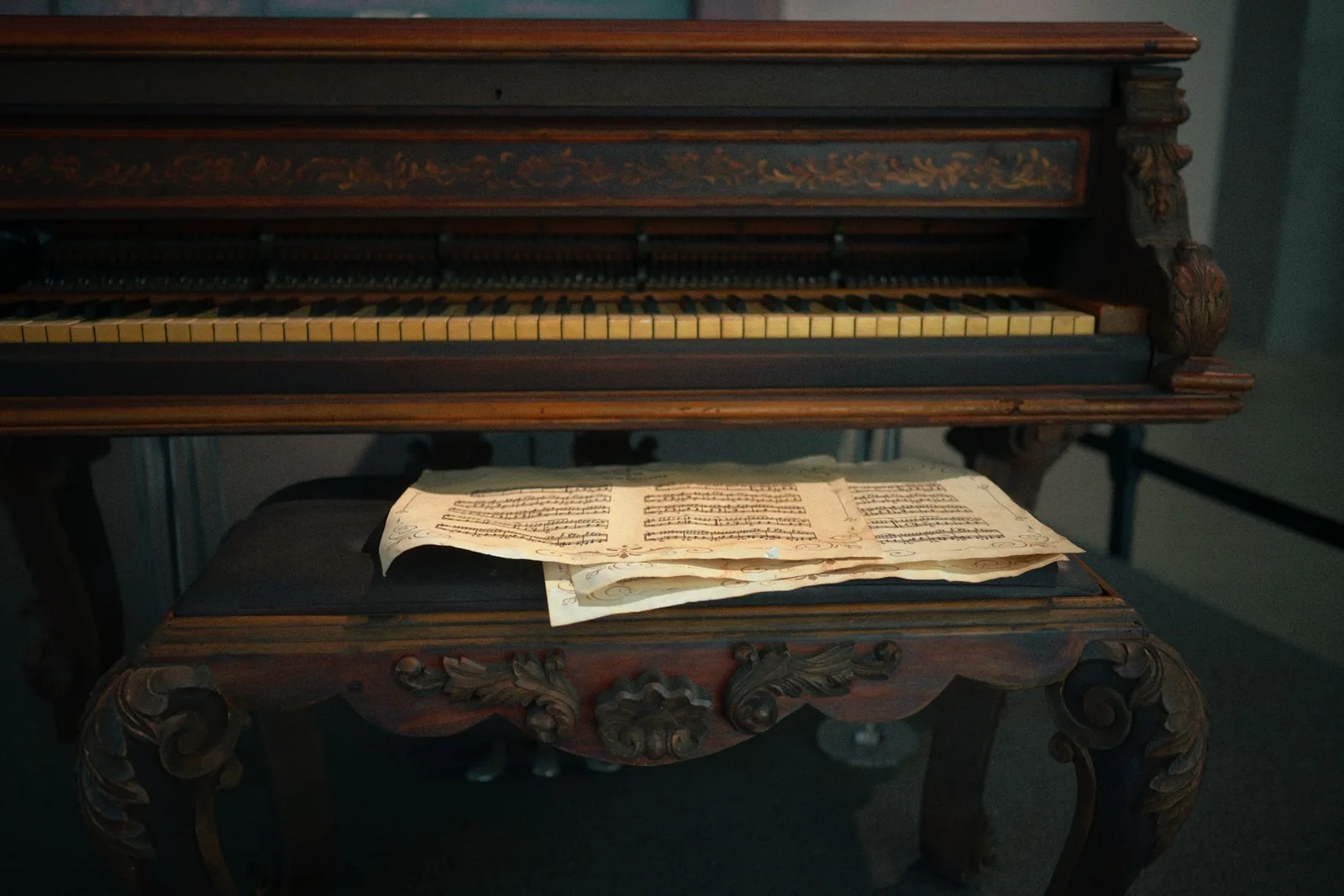
When it isn't sound and nobody wants it, removal is an honest answer. Ask your municipality what it accepts, and go through the bench, the cabinet and the player mechanism first: old sheet music, rolls and papers sometimes turn up inside.
Moving an old piano without getting hurt
Pianos are heavy, awkward and top-heavy on stairs. This is not a job for three cousins and a dolly. Hire people who move pianos for a living, ask how they'll protect the floors and the stairs, and clear the route before they arrive. Don't take it apart to make it lighter; that's a technician's job, if it's done at all.
Otherwise, leave it alone while it still stands. No refinishing the cabinet, no glue on loose keys and no cleaning inside the action before a technician or Marv has seen it. Our estate cleanout guide covers the rest of the house the same way: look first, then decide.
When the piano is part of an estate
Before anything leaves the house, make sure the person selling or giving it away has the authority to do so. For a small Wisconsin estate, our guide to transfer by affidavit explains one common route.
When to talk to the estate's attorney or personal representative
If the estate needs a formal value for the piano, for example for tax reporting, a court or dividing property among heirs, ask the estate's attorney or personal representative what is required. PTG draws a clear line here: a Registered Piano Technician may be able to help you settle on an asking price for a private sale, but when someone else will rely on the value, such as a court or the IRS, PTG says you will generally need a professional appraisal prepared by a qualified, accredited appraiser. This is general information, not legal or tax advice.
The same house usually holds more wood furniture that families wonder about; our guide to brown furniture covers it. When you're ready to talk about the whole estate, start with a free consultation. We work out of downtown Deerfield, about 15 minutes east of Madison.
Common questions
Is an old upright piano worth anything?
Often less than families expect. The Piano Technicians Guild says a piano's value can be influenced by its condition, age, make and model, and the market where it would be sold. Many old uprights draw little interest, largely because of condition and the cost of moving them. A technician's look tells you whether yours is the exception.
How do I find out how old my piano is?
Find the serial number. PTG says pianos almost always have one, and uprights usually have it stamped on the metal plate near the top or in a window in the plate. Don't trust a date cast into the plate: PTG says those dates mark when the company was founded, not when your piano was made.
Will a school or church take my old piano?
Some will and some can't, so call first. Describe the piano honestly, send photos, and say whether a technician has looked at it. A group needs the room, the players and the budget to move and tune it. A piano that isn't playable becomes their problem, so don't be surprised by a polite no.
Who pays to move a piano after it's sold?
In a private sale, the Piano Technicians Guild notes, the moving cost is usually the buyer's responsibility. If a piano goes into one of our sales, larger lots are pickup only, so the buyer arranges the move. Either way, the move is part of every buyer's math, which is one reason old pianos can be hard to place.
Should I have my piano tuned before selling it?
Talk to a technician first, and don't start repairs or refinishing on your own. A technician's look tells you whether the piano is sound, which matters more to a buyer than a recent tuning. If it may go into one of our auctions, leave the piano as it is until Marv has seen it.
What do I do with an old piano nobody wants?
Confirm nobody in the family will play it, have a technician check whether it's sound, then offer a sound piano to a school, church or community group. If it isn't sound and nobody wants it, removal is an honest answer. Check the bench and cabinet for sheet music, rolls and papers before it goes.
Sources
- Parlor Music and Player Pianos: Home Entertainment before the Broadcast Era, The Historic New Orleans Collection
- Piano Info and Resources: Buying a Piano, Piano Technicians Guild
- Ask an Expert: Frequently Asked Questions About Pianos, Piano Technicians Guild